It’s going about how I expected it would. (I wasn’t expecting any amazing results. Especially since all I’ve done is post a few links and email a few people. If that was all it took to successfully promote something, then many things would spread like wildfire.)
If I kept doing this kinda stuff for a while and it resulted in you having some new fans or a new forum member or someone having a proper debate with you, I’d be very happy with that.
People are wary of outsiders. There are signal/noise issues on the internet. Actually spending time in communities and chatting/bonding with people more can help.
Think about your audience and their point of view and what they care about. E.g. on an Objectivism group, they probably don’t know or care who David Deutsch is. They’d also probably be more interested in a defense of Rand than a smear of Rand.
One thing I’ve found effective is offering to read things or debate other people if the person can refer you to good stuff on their side. E.g.:
Can you point me to writing which you think makes a correct, reasonably complete (across multiple sources is fine), and persuasive case for this reasonable chance of revival?
If I’m mistaken about this I’d like to find out (and sign up for cryonics), and I am willing put in the effort to find out.
This discussion went on much longer after I said this and his response began “I can’t point you to anything better than what is posted at Alcor’s and CI’s sites, no. Instead let’s look at what you say below.”
You could similarly ask people, if they don’t want to debate, if they know anyone who agrees with their position who does, or if their entire side is closed to debate (in which case, arguably, the more popular their side is, the worse they look – it kinda inverts the value/impressiveness of popularity if it means an even larger group of people all won’t debate).
I don’t have experience with debate websites like those.
I did, however, do debating as an extracurricular activity in high school and recall that nobody (as far as I remember, including myself at the time) cared about the ideas or truth per se. It was just a sport. So it may be better to find people who already sincerely believe something and try to change their mind rather than engage with people who view it merely as a sport and don’t care much about the truth. (I don’t know if the people on those debate sites are different from my high school experience though.)
Would the idea be to try to use those sites to recruit advocates and promote CF and Paths Forward? Or what did you have in mind?
I had in mind debating someone but I looked at them a bit and didn’t see anything that looked like an active site where I could get anything resembling a debate attempting to rationally reach a conclusion (rather than get audience upvotes within time and length limits). I also didn’t get the impression that the sites have many members who read many books or know much about philosophy.
Zulu recently made a video calling out Dave Smith. It is broadly about whether the libertarian movement ought to be pragmatist or principled, and he attacks Smith for moving the libertarian movement in a pragmatist direction. What’s interesting to us is that Zulu critiques Smith for posing as a principled representative intellectual for the libertarian movement, but not actually being knowledgeable about libertarian theory and being bad at debate and then refusing to debate with Zulu and others.
The problem with Dave’s performance here is not just that he lost a debate on a technical level or anything. The problem is that he is representing himself as not only a spokesman of libertarianism, but the best spokesman of libertarianism.
So I’m thinking we should tell Zulu and his community about debate policy and how intellectuals ought to have them or otherwise be discredited and connect it with how they would expect Smith not to survive as the spokesman of the libertarian movement if debate policies were the norm. We could also say how debate policies could save the libertarian movement from the pragmatists, since the principled proponents generally have the upper hand in debates. I don’t really have a position on this myself, but the point is more that people how are confident in their positions shouldn’t fear Paths Forward, but should rather champion it since they should think they’ll win lots of debates.
There’s also pointing out how Austrian economics and liberal/libertarian ideas claim rational and logical basis and think they would win and get implemented in society if only rational debate were had more often. That’s maybe not necessary to point out, they would likely extrapolate it themselves.
I would like to have it posted on his discord channel (if he has one, I kind of assumed he has) and not just let it be an email sent to Zulu. He’s part of a community of other libertarian creators who all seem to like debate, I would expect some of them to be in his discord channel. So if Zulu doesn’t like the idea some of his fans, some of whom are creators and intellectuals, might like them.
I thought we could suggest Zulu to challenge Elliot using his debate policy to get him used to it, but Elliot’s policy is for written debate. I would like to bring up the superiority of written debate with Zulu’s community as well. Zulu might have bias against written debate because it would lessen the value of all the voice debates he has done and put on youtube, and written debates aren’t as easy to make content of. I don’t know his psychology, maybe he’ll be excited to find a better truth-seeking method. Anyway, what’s the point if he doesn’t want to do text debates?
I sent an email to Zulu asking to join his discord server.
Quotes from the video transcript that are relevant to debate.
That is, he must restrict his debates to being against regime pundits and leftist infiltrators because he just does not know the philosophy even 1% as much as he thinks he does. He feels emboldened to prance around and claim that he knows his stuff and that people like me don’t, but the truth is revealed the instant that Dave steps out of the hug-box debates he has made a name in dominating.
Dave has said that he refuses to debate me, and that he “genuinely [doesn’t] know who the opponent would be”18 on the topic of his support for immigration restrictions; and that he is “thorougly unimpressed with the arguments that everyone was making” in his twitter space on the topic; and that he “[doesn’t] have interest in beating up on weak libertarians.”
He’s able to argue against Andrew Cuomo, or Laura Loomer because they are fundamentally unimpressive people, by Dave’s own admission. He says outright on the Your Welcome podcast that he has a policy of refusing to debate anybody who knows more about the topic than him:
An organisation reached out to me about debating Benny Morris. And I was like: “no! That’s ridiculous! That’s just like absurd!” I’ve read a lot of books about the Israel-Palestine conflict but he’s written a lot of books—like I’ve read his books.29
What is extra funny is that Dave attempts to spin this into a dunk on Destiny, saying that Destiny is a person who is more interested in winning debates than being correct in his ideas. But he says this with respect to Destiny actually debating Benny Morris. Surely it is the man who refuses to debate people who are more well-read than him who is concerned only with winning debates, rather than the people who go into such debates.
It is worth noting that this podcast was recorded shortly after his debate with Wilson. Perhaps it is a new policy in the wake of his utter failure to win debates with competent people.
In this very stream where you completely embarrassed yourself by not being able to answer basic questions any libertarian has faced, I was specifically called out twice as a better proponent of this stuff than you. There just is no denying my prowess when you have two separate people telling you, to your face, that I am better at this shit than you are.
You can keep running whatever gambits you want to get out of debating me, but they keep falling one after the other. You can say that you won’t debate me because I’m just not good enough on libertarian theory so you would easily crush me, but that has been shown as completely false by this debate.
You can say that you won’t debate me because I’m just too irrelevant for you, but that has been shown to be false by my double-citing in the debate you are having as a better proponent than you, and by the fact that my top video easily sits in your top five videos of all time, and I did it without interviewing fucking presidential candidates.
Dave, you can keep giving out these excuses to not debate me, or you can give whatever the real reason is. Maybe you just don’t like me; well, you debated Andrew fucking Cuomo, so I guess you guys are best buds.
Maybe I just fit into that category of people who are far more well-read on this topic than you are and who are therefore banned from debating you. It would just be nice if you would embrace this fact, explain to everyone that you are a coward who prefers preaching to the choir, and then we can all move on.
It’s not just that he is bad at expounding these ideas beyond a few carefully selected soundbites—its that he does this whilst painting himself as nothing less than “the most consistent motherfucker you know.”
The fact that he has chosen to put himself in this position leaves him open to extensive criticism on how he is performing in that role. If you cultivate a career built around being a prominent libertarian who knows all of the facts and can beat anybody in a debate, it reflects on the wider movement when you fail so miserably. I am not interested in criticising everyone who has ever lost a debate before. But in this particular case Dave has branded himself as an expert and has used that expert branding as a justification to refuse to debate me or anybody on my side of these issues.
I’m open to some voice debates as long as the format is OK. I think flexibility for debates is important. For format, unstructured talking or a good structure is fine but not:
What does “it” refer to? I assume some Paths Forward or debate policy promo/explanation?
One difficulty I foresee is trying to convince them of debate policies. Like I feel like people have little patience for outsiders who are trying to pitch something (e.g., consider people’s attitude to door-to-door salesmen). So I assume we’d either have to have a very brief pitch or, alternatively, become more genuine members of the community first.
Yeah I like that idea. It definitely seems like it could be a good idea to mingle with and target some of his fans and Zulu-adjacent creators too.
Speaking of that, the other day I connected with two small Zulu-adjacent/Zulu fan YouTubers on X/Twitter: Tucker Marlor (YT, X) and Rational Frontier (YT, X). So I can try DM them stuff if you think that might be helpful. I could perhaps try connecting with some more people in that community too—maybe by finding some more ppl like that on X/Twitter and commenting on their stuff and then DMing them. (Btw, do you have an X/Twitter account? If so, I can try connect you with those two Zulu fan creators I mentioned if you think that could be helpful.)
Also, since the preferred media format of Zulu fans is presumably YouTube videos (vs forum posts lol), it occurred to me that I could maybe even create a YouTube video explaining our plan for saving libertarianism from the menace of irrational grifters etc etc (or however they view the issue—I’d have to study their perspective more before creating such a video (and I haven’t watched Zulu’s vid yet since it’s quite long)). And maybe we could share my YT vid in the Discord or wherever we end up. And maybe even try to team up with or collaborate with other Zulu-adjacent creators like the ones I mentioned.
These are not firm plans btw. I’m not sure I’d be comfortable making a video. I’d have to think about it more. I’m just thinking out loud—not committing to anything yet. Let me know your thoughts anyway. (Btw I’m dreadful at speaking off the cuff so don’t suggest I try do a live debate/interview lol. I would fail miserably at that. But a scripted YT video I could maybe do if I thought it would be significantly helpful.)
And going back to the idea of connecting with other Zulu fans, maybe another strategy could be to create a sort of “grassroots” movement? What I mean is like if we convince a few other Zulu fans of our plan, then we can get them to ask Zulu too. And if there’s like several of us requesting the same thing from Zulu, maybe he will be likelier to acquiesce than if it’s just one or two of us. This indirect approach could be better. It could also give us a “practice run” (so to speak) where we get the opportunity to sharpen our pitch by practicing it on lower status people and iterate on it to make it more convincing before approaching Zulu himself.
Let me know your thoughts.
I wouldn’t be surprised.
If we can get Zulu to debate Elliot, that might still win Elliot a couple of fans from Zulu’s audience who could then become rational debate advocates.
Also, even if Zulu doesn’t go all in on text debate, he could still adopt a written debate policy for who he’ll debate on video. And then that might inspire others to adopt written debate policies too.
He could also perhaps still engage with written material by doing video responses to written stuff.
Or maybe we could agitate for him to create a forum which could operate in conjunction with his YT channel.
I’m not exactly sure though—I’d have to think about this some more. Let me know if you have any ideas.
Let me know how that goes. I guess I should do the same.
How could Elliot’s offer to do voice debates fit into our plan? Maybe if Zulu disagrees with our mini grassroots movement we can all beg him to debate Elliot about it instead? Idk.
Anyway, here’s a little to-do list or list of reminders for myself (you’re welcome to answer some of them):
What is our goal? What exactly do we want Zulu to do?
What’s the larger goal? How’s it connect to the 20 Advocates Plan? Or Paths Forward (or rational debate methods) becoming a cultural norm? Or ET getting 1000 paying fans?
Should I try to connect with more Zulu fans on X? (If so, what for?)
Should I create a video? (Promoting what exactly?) (If so, what for? Is there other stuff like that I could do that could be helpful?)
What’s the point if Zulu doesn’t want to do text debates? (What are backup goals we could achieve?)
Join Zulu’s Discord
Where does ET’s voice debate offer fit into our plans?
I told them I wanted to do Zulu’s course and ask question and share notes in their discord server. I’m genuinely curious to learn what ancap is about. I want to try learning with discussion like I’ve done here with other ideologies/philosophies in other communities.
IIRC @Elliot has recommended we talk in other forums. I do like CF and all the philosophies Elliot likes, but I still want to learn about different philosophies before I really commit to automatizing the ideas I currently like.
That’s a way to possibly gain a good reputation with a community. I don’t think one should do this just to later promote some other ideas. One should genuinely want to learn their ideas. Promotion can come as a bonus once it’s convenient.
I wouldn’t necessarily call myself a libertarian though. I don’t care that much about the pragmatism vs radicals debate and don’t have a firm position on it. I don’t know what you think about these issues but it’s important not to lie in any way in order to pander to them.
So talking about it in the discord server could do that. Are you thinking about talking more directly to specific people? Sure we can do that. Not everyone will be active in the server when we talk about debate policies.
Yeah. Just popularizing Paths Forward is good. Whether Zulu specifically becomes an effective truth seeker isn’t so important.
The primary goal is to popularize Paths Forward. Either getting people to adopt some or demand intellectuals to use them.
Secondarily get people to become rational debaters, get specific debates, or get new CF forum members.
I would say if you find it interesting to do in and of itself. You can decide you want to get involved because you think it can lead to good intellectual relationships, e.g. they could become CF members or they can become someone to debate later.
If we talk some with them it’ll probably come up a situation where it’s natural to say they can challenge Elliot to a debate.
Yeah, speaking of genuinely wanting to learn their ideas, there’s some stuff about the homesteading principle that I read an excerpt of Rothbard’s about that I found helpful for understanding the homesteading principle (especially Rothbard’s airport example in that excerpt). So I kinda vaguely intended to read some more Rothbard on homesteading (haven’t done it yet though).
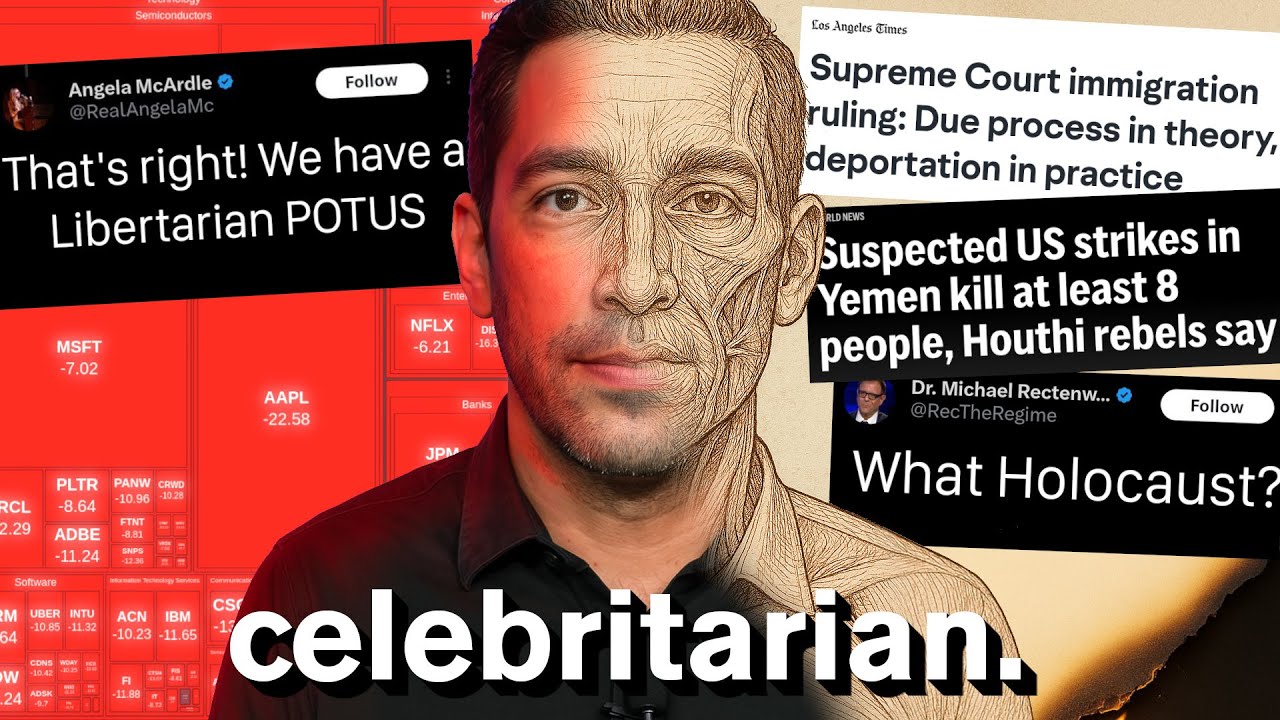
Also, I finally got around to watching the Anatomy of a Celebritarian video and I enjoyed it. Especially the first ~20–30 minutes or so where Zulu explained pragmatism.
That said, personally I’m less keen on prioritizing learning politics atm because I feel like it’s less important/fundamental. I think I want to master CF first.
Going on a bit of a digression regarding promoting Paths Forward in politics (these are more notes for myself):
If rational epistemology and debate methods spread amongst politics fans (including policy wonks), then it could spread elsewhere too. So maybe politics is the best potential “patient zero” (so to speak) for rational debate methods. Especially given that politics fans love to challenge each other to debate already. So maybe they’re slightly more receptive than average to different/new debate methods than, e.g., nutritionists or pedagogues or animal consciousness experts. Also, now I think of it, another benefit of politics fans (or political junkies, to use a derogatory term) is that they’re super online (or terminally online, to use another derogatory term) and so presumably slightly more open to online text debates than some stodgy old academics who only care about peer review and annual in-person conferences or whatever.
One downside to politics as patient zero, though, is that I feel like many politics fans care less about truth and more about gaining power (like Zulu explained re pragmatism in his video). But I suppose for all the pragmatists there’s probably still enough people that care about truth. Also, pragmatism is itself something that can be debated.
Anyway, if politics fans are a good patient zero, I might consider trying to promote Paths Forward to other political groups in the future. Also, if one mastered CF, one could apply CF stuff like binary epistemology and mapping out the state of the debate to politics. Like I could imagine a future where there’s content creators who break down the state of debates (e.g., YIMBYism, immigration, etc.), analyze the arguments, point out how many of them are flawed, and update the state of the debate as new non-refuted arguments come in.
Yeah genuinely wanting to learn would be the best attitude. But, as I said, I’m personally less keen on prioritizing studying politics atm. So maybe I’m not the best candidate for engaging this community atm. I can still help out though, but I probably just won’t be quite as eager to learn as much of their stuff atm as you. (My preferences might change tho since I do have a bit of a love-hate relationship with politics lol.)
Good point.
Hmm, I think I meant talking more directly to specific people. But like you said, not everyone will be active in the server at the same time; I forgot about that.
I appreciate your perspective on finding it interesting in and of itself (and also engaging with the community in a genuine way). I guess I’ve been a bit too outcome oriented.
Me too, to some degree. I could prioritize learning Bayesian epistemology if I want to learn something other than CF in a different forum. But I think ancap is closer to what I already believe and they seem like a more pro debate community than others.
I think minority/non-mainstream groups are best, too. They’re the ones who think they’re being overlooked by society. They’re the ones who ought to think they would win a lot by getting rational debates.
For groups who are mainstream it might just seem having to a lot of extra defending which they didn’t use to have to do. But I think even mainstream economists feel like they’re not being listened to enough and that their policy recommendations don’t get implemented. So being the mainstream in your field doesn’t necessarily mean being listened to by society.
So maybe the best target is some small group of scientists, or even just one scientist, who believes in some new theory which isn’t getting recognition.
So just being low-status isn’t enough. But I think there are always people who want to challenge the way the status hierarchy works and change it for their benefit. They could believe it unconsciously and act that way implicitly. That could be the lone scientist not getting recognition for example. I think such people would be good candidates for PF.
It’s tempting to start with more famous intellectuals because then more people would see PF quickly and it would carry authority and thus other intellectuals would feel pressured to get debate policies too. But maybe the way it has to go is to convince less famous people and get them to challenge other intellectuals and gradually over a long time increase the prominence of PF in higher social status ranks.
I suppose it depends what your goals/interests are. I feel like you should study whichever seems more interesting to you, regardless of Paths Forward promotion opportunities (to parrot your own good advice about doing stuff because it’s “interesting to do in and of itself” back to you :P).
Though debate culture would be helpful for learning. Like I’m not sure what Bayesian forums/communities are like (or if there are any) but I imagine that ancaps would be much keener to argue with you about (and teach you) the finer points of their ideology. Maybe.
(Btw, you don’t need to read it. I’m just linking in case anyone wants to.)
Some quotes (and some of my old off the cuff comments from when I initially read it) (all bold is mine):
Especially astounding:
Most of my fellow detectives remain anonymous, operating under pseudonyms such as Smut Clyde or Cheshire. Criticizing other scientists’ work is often not well received, and concerns about negative career consequences can prevent scientists from speaking out. Image problems I have reported under my full name have resulted in hateful messages, angry videos on social media sites and two lawsuit threats.
If they don’t like criticism, they’re hardly even real scientists then. Wtf. Shouldn’t they be glad to be closer to the truth?!
Several things could lead researchers to cheat. For a start, most scientists feel the pressure to publish.
I wonder if this pressure to publish is due to government involvement in science? Idk. (Not that that excuses the cheating/fraud.)
In general, studies reporting successful outcomes have a higher chance of getting published than those failing to confirm a hypothesis.
This seems irrational and anti-CF.
Unfortunately, many scientific journals and academic institutions are slow to respond to evidence of image manipulation — if they take action at all. So far, my work has resulted in 956 corrections and 923 retractions, but a majority of the papers I have reported to the journals remain unaddressed.
Journals lack Paths Forward (most errors remain unaddressed). Besides, it sounds like they don’t want to address them. They’re hostile to truth. Also, I wonder if government has a role in policing fraud in journals (like the ppl paying for the journals probably expect better).
Journals should pay the data detectives who find fatal errors or misconduct in published papers, similar to how tech companies pay bounties to computer security experts who find bugs in software.
Cool suggestion. Maybe in the future companies (and research institutions) could do the same for Paths Forward.
Final sentence:
But science needs to be quicker and better at correcting itself.
Reminds me of CF and Paths Forward emphasis on error correction.
And I think ET has shared lots of other examples as well.
That said, maybe scientists overall/on average are still better than other groups? Idk. Tbh I’m not convinced. (But then again I haven’t really thought about it much so I don’t really have an intellectual right to a firm opinion on the matter.)
Also, they not only have a lot to win—they presumably also feel like they have less to lose. (Whereas the mainstream view has prestige/status etc. to lose which presumably disincentivizes debate.)
Reminds me of Eric Weinstein who I think(?) claims to have a theory of everything (or something like that) in physics. I think he calls it geometric unity or something.
Actually yeah I just looked him up and yep. That’s him.
I wonder if he could be worth approaching? He’s a popular podcaster so while he’s a minority/outsider in academic physics he’s otherwise very famous so he’s maybe not the perfect example of what you’re describing. I could try emailing him anyway (unless you have better ideas about how to approach him).
Also, now I think of it, his brother Bret Weinstein has some unorthodox ideas too I think (e.g., this among others). (To summarize the linked video (from memory): lab mice bred for drug testing are bred to give results that make it seem like potentially dangerous pharma drugs are actually not dangerous so that big pharma can get drugs approved more easily. And also that those same altered lab mice might invalidate a lot of non-pharma scientific studies in general.) But he’s famous too, so despite being an academic outsider he’s still not really the kind of person you’re describing.
Yeah I agree. Plus super famous people are I think way harder to reach and get a response from.
The idea of an outsider scientist reminded me of ET’s article about Derrick Lonsdale. (I just looked him up and he died last year. But maybe he has some followers/disciples.) Also, there’s another dead nutritionist named Ray Peat who has heaps of fans on X/Twitter (Peat was the original anti-seed oil guy). I wonder if he has any followers who might be open to Paths Forward. I might DM some and ask if they have an intellectual leader who is open to debate. Also, one of Peat’s fans (who I think is doing a PhD in something to do with biology like biophysics) claims that cell pump theory (I forget exactly what it’s called) is wrong and that Gilbert Ling (edit: here’s a paper by him) and structured water theory (or whatever it’s called) is right. Apparently this is a view that virtually nobody agrees with (except this guy and Gilbert Ling I suppose) so it fits your description. Also, in the X/Twitter link, he mentions several other such “non-mainstream views on health/biology”—so maybe they could be good leads for finding people receptive to Paths Forward as well.
Briefly looking at some of those non-mainstream views (including the ones in the comments of that X/Twitter post), I wonder if there is a downside to Paths Forward’s early adopters being quacks or cranks (to use derogatory terms). Like might that ruin the reputation of Paths Forward? (Especially if they don’t have the integrity to admit they’re wrong or change their mind if it does in fact turn out they’re wrong.)
I don’t think the majority of scientists are principled truth seekers or that the average level is necessarily much higher, but I think there’s a higher percentage of individuals who really care about truth. But it seems like those are dropping out quietly:
I think the population of true truth seekers has always been a small and eccentric one:
I don’t think scientists ought to be mystical and irrational. What I think is happening here is just that these great scientists are independent and honest thinkers (when it comes to science at least), which means they are eccentric. Being willing to investigate esoteric ideas can lead to being willing to try out wilder hypotheses.
Having an attitude that reason is effective is necessary for science, otherwise why did science progress so much in the enlightenment and later but not in the dark ages?
The idea that rationality hampers science is based on a wrong conception of what rationality is. For one rationality does not mean ignoring intuition, which Elliot has showed. It also fits in with Popper’s evolutionary epistemology since it says there is no sure method of creating good theories. Instead you need creativity which means being bold and eccentric is good for creating new theories.
It seems Erik Hoel is only aware of Popper as a falsificationist (standard misconceived view of Popper) instead of as a general epistemologist (from the last link):
Attempts to define science as merely an abstract machine for falsification, like Karl Popper did, leads to the problem of exactly how one chooses which hypotheses—of which there are infinite—to try to falsify.