# FI grammar article Part 2-5 \[AM\]
**URL:** https://discuss.criticalfallibilism.com/t/fi-grammar-article-part-2-5-am/1968
**Category:** Projects
**Created:** [October 12, 2024, 9:16am UTC](https://discuss.criticalfallibilism.com/t/fi-grammar-article-part-2-5-am/1968 "2024-10-12T09:16:04Z")
**Posts on this page:** 20
**Page:** 1
### Author:  [@ActiveMind](https://discuss.criticalfallibilism.com/u/ActiveMind)
#### Post date: [October 12, 2024, 9:16am UTC](https://discuss.criticalfallibilism.com/t/fi-grammar-article-part-2-5-am/1968/1 "2024-10-12T09:16:04Z")
## Project Summary
This project builds on the mini-project [FI Grammar Article Part 1 [AM]](https://discuss.criticalfallibilism.com/t/fi-grammar-article-part-1-am/1964). The project is to learn basics of grammar by reading the rest of the FI grammar article and doing the exercises.
## Goal
_What’s your goal? Why do you have that goal? How will you judge success and failure? What bigger picture goals or values are you pursuing? How is this relevant to CF?_
My goal is to learn the basics of grammar. I want to learn grammar because I think it’s useful for text analysis, which is useful for philosophy in general.
The success criteria are reading the whole article, doing all the exercises, create grammar trees for each practice sentence, and addressing any mistakes I make. For example by making a corrected version of a tree.
I later say I expect the project to take a week, I’ll consider completing the project within 10 days a success.
## Plan
_What’s your plan? How big is the project? What resources do you expect it to require and what have you allocated for it? How confident are you about succeeding? What sort of errors or error rate do you expect and how will you deal with that? Got any error correction mechanisms? What are the risks of not finishing the project or failing and do you have any plan to address those risks?_
I found out that the article was used in the [Max tutoring sessions](https://www.youtube.com/watch?v=-nUP-Xqh_Dw&list=PLKx6lO5RmaetREa9-jt2T-qX9XO2SD0l2). I’ll follow along the videos and stop to read the article and do the exercises. I’ll compare my answers with answers on the forum and on blog sites like [Justin’s](https://oldblog.justinmallone.com/category/grammar/page/25/).
I would expect to make around 2 errors on each exercise set. If the error is due to a grammar misunderstanding I’ll read up on the topic and perhaps search the web for alternative explanations, then I’ll explain the error and show how to correct it.
In the previous project I made a mistake of forgetting to include a word. In this project I’ll make sure to do check over each sentence and the analysis to check specifically whether all words were included.
Doing the exercise part of part 1 only took 40 minutes, but the whole project took more like 3-4 hours to complete. I think that each part will take about 3 hours (everything between when a part starts to when it finishes). I will have around 2 hours each day to spend on this project. That would take 3 hr/part \* 4 parts / 2 hr/day = 6 days. Part 5 doesn’t have any exercises though, but then there’s concluding the project and any unexpected errors, so I’ll say I expect to finish within a week.
I’m 90% confident that I’ll read through the article and attempt all exercises. I’m less confident that I will handle all the errors correctly, perhaps 70%, because I may have bias for not finding errors and not wanting to admit them.
I’m not sure of a plan to address the risk of not finishing the project. Put more effort in? Ask for help when the project seem so to be in danger?
## Other People
_What help are you asking from others? What value are you offering to others? Will you complete the project independently if no one else participates? Why are you sharing this with others? What sort of criticism do you want?_
I would appreciate if other people would look at my answers and critique them. I will complete the project regardless of whether other people help or not.
I think beginners can look at the project to compare answers and if they want to do same project they can look for things that went right or wrong with the project. I think people who are at intermediate skill level would benefit from repetition/refreshing. I don’t think I can offer any value to people at an advanced skill level.
I’m sharing the project such that; I can learn from people critiquing it, others can look at it as an example of a grammar learning project, I build a public track record of completing learning projects related to CF.
I can’t say I want unbounded criticism. I would want criticism on grammar, how I filled out this template, methods used in the project, my time management, the prioritization of this project over doing other things, my plan for the project. These aren’t the only things I accept criticism of, just some I thought of that could be useful. Otherwise give me criticism you think would be helpful.
## Context
_What’s the context? What’s your relevant background and track record? Why are you prioritizing this over alternative projects? Why are you doing it right now? What have you already done?_
I have successfully completed two mini-projects, one of which this project directly builds on.
I’m not a native english speaker, so I think learning better grammar is especially important for me to learn philosophy. It is also a project that many others have done successfully, and I’m still early on in doing projects on CF, so I think doing a project others have done successfully is good idea to find a project with high chance of success.
---
### Author:  [@ActiveMind](https://discuss.criticalfallibilism.com/u/ActiveMind)
#### Post date: [October 12, 2024, 7:23pm UTC](https://discuss.criticalfallibilism.com/t/fi-grammar-article-part-2-5-am/1968/2 "2024-10-12T19:23:21Z")
I spent 1 hour and 30 minutes filling out the form. I think I should spend less time on that for the next project.
I skimmed/speed read through the article for 30 minutes. Then I watched tutoring Max 1 and 2 (until 54:00) for 1 hour and 30 minutes.
I read the article for 43 minutes.
The exercises, which I’ll post after this post, took 1 hour and 45 minutes.
---
### Author:  [@ActiveMind](https://discuss.criticalfallibilism.com/u/ActiveMind)
#### Post date: [October 12, 2024, 7:49pm UTC](https://discuss.criticalfallibilism.com/t/fi-grammar-article-part-2-5-am/1968/3 "2024-10-12T19:49:39Z")
I did some of the exercises in the wrong order because I ignored them by mistake at first. I have ordered this post in the order I did the exercises.
I’ll check tomorrow for errors.
# exercises
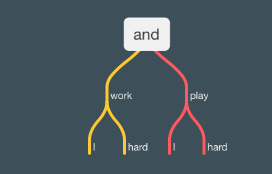
> I work hard and I play hard.
coordinating conjunction: and
clause: I work hard
- verb: work
- subject: I
- adverb hard
clause: I play hard
- verb: play
- subject: I
- adverb hard
3 min
* * *
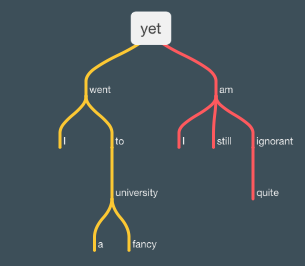
> I went to a fancy university, yet I’m still quite ignorant.
coordinating conjunction: yet
clause: I went to a fancy university
- verb: went
- subject: I
- prepositional phrase: to a fancy university
- preposition: to
- noun: university
- determiner: a
- adjective: fancy
clause: I’m still quite ignorant
- linking verb: am
- subject: I
- adverb: still
- complement: ignorant
- adverb: quite
Thinking about whether “still” modifies “am” or “ignorant”. I think it is “am”, because it says you are still _something_. It doesn’t work to say that ignorant is still, still what? Ignorant is not still “quite” at least. So “still” modifies “am”.
9 min
* * *
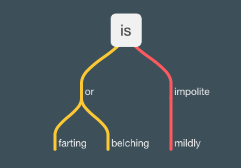
> Farting or belching is mildly impolite.
linking verb: is
subject: farting or belching
coordinating conjunction: or
- noun phrase: farting
- noun phrase: belching
complement: impolite
adjective: mildly
6 min
* * *
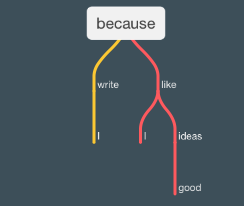
> I write because I like good ideas.
subordinating conjunction: because
main clause: I write
- verb: write
- subject: I
subordinating clause: I like good ideas
- verb: like
- subject: I
- object: ideas
- adjective: good
14 min
* * *
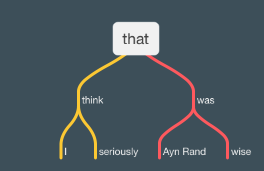
> I seriously think that Ayn Rand was wise.
subordinating conjunction: that
main clause: I seriously think
- verb: think
- subject: I
- adverb: seriously
subordinating clause: Ayn Rand was wise
- linking verb: was
- subject: Ayn Rand
- complement: wise
5 min
* * *
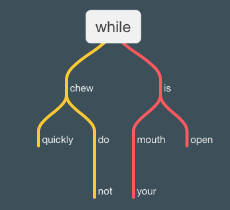
> - Don’t chew quickly while your mouth is open.
subordinating conjunction: while
main clause: don’t chew quickly
- verb: chew
- adverb: quickly
- verb phrase: don’t
- verb: do
- adverb: not
subordinating clause: your mouth is open
- linking verb: is
- subject: mouth
- determiner: your
- complement: open
10 min
* * *
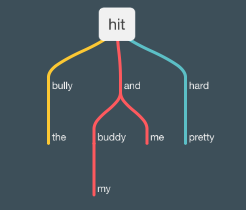
> The bully hit my buddy and me pretty hard.
verb: hit
subject: bully
determiner: the
object: my buddy and me
coordinate conjunction: and
- noun phrase: my buddy
- noun: buddy
- determiner my
- noun phrase: me
- adverb: hard
- adverb: pretty
I almost forgot “pretty hard”, but made a check so I included it.
5 min
* * *
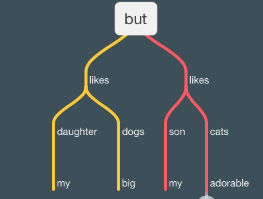
> My daughter likes big dogs, but my son likes adorable cats.
coordinating conjunction: but
clause: my daughter likes big dogs
- verb: likes
- subject: daughter
- determiner: my
- object: dogs
- adjective: big
clause: my son likes adorable cats
- verb: likes
- subject: son
- determiner: my
- object: cats
- adjective: adorable
4 min
* * *
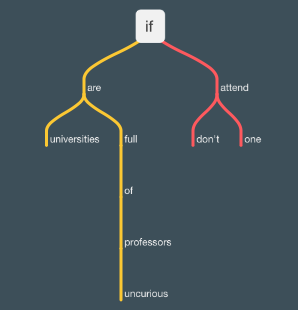
> If universities are full of uncurious professors, don’t attend one.
subordinating conjunction: if
main clause: don’t attend one
- verb: attend
- subject: you (implied)
- adverb: don’t
- verb: do
- adverb: not
- object: one (a university)
subordinating clause: universities are full of uncurious professors
- linking verb: are
- subject: universities
- complement: full of uncurious professors
- prepositional phrase: of uncurious professors
- preposition: of
- noun: professors
- adjective: uncurious
13 min
* * *
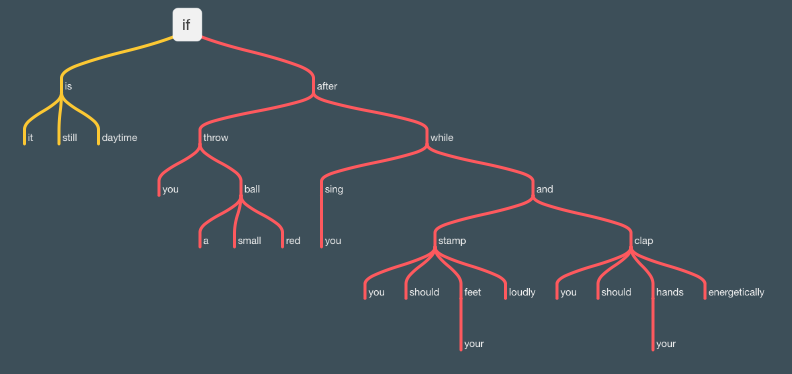
> After you throw a small, red ball, while you sing, you should stamp your feet loudly, and you should clap your hands energetically, if it’s still daytime.
subordinating conjunction: if
main clause: After you throw a small, red ball, while you sing, you should stamp your feet loudly, and you should clap your hands energetically
- subordinating conjunction: after
- main clause: while you sing, you should stamp your feet loudly, and you should clap your hands energetically
subordinating clause: it’s still daytime
- linking verb: is
- subject: it
- adverb: still
- complement: daytime
24 min
I thought most about whether “if it’s still daytime” should apply to the whole sentence, or whether it should only apply to “you should stamp your feet loudly, and you should clap your hands energetically,”. My reasoning now is:
if it is not daytime then no action will be taken whether it applies to the whole sentence or only a part. However if there was another comma like “, otherwise do some other things” then that could mean while you sing “you should do some other things” if it’s not daytime, and you should clap your hands energetically while you sing if it’s daytime. However it could also mean that “you should do some other things” without throwing the ball first and singing at the same time, as long as it’s not daytime.
I don’t know how to differentiate these things. Would the sentence with the “, otherwise do some other things” added be ambiguous?
the above paragraph: 11 min
---
### Author:  [@LMD](https://discuss.criticalfallibilism.com/u/LMD)
#### Post date: [October 13, 2024, 3:26am UTC](https://discuss.criticalfallibilism.com/t/fi-grammar-article-part-2-5-am/1968/4 "2024-10-13T03:26:19Z")
> [@ActiveMind](#):
>
> Thinking about whether “still” modifies “am” or “ignorant”. I think it is “am”, because it says you are still _something_. It doesn’t work to say that ignorant is still, still what? Ignorant is not still “quite” at least. So “still” modifies “am”.
A way that I’ve found really helpful to check things like this is to change where the modifier is in the sentence. Elliot taught me this in my tutoring thread:
> [@LMD Async Tutoring](https://discuss.criticalfallibilism.com/t/lmd-async-tutoring/1933/602):
>
> In English, simple modifiers tend to modify something within the next few words to their right. (And prepositional phrases tend to modify something a little to their left.)
> [@LMD Async Tutoring](https://discuss.criticalfallibilism.com/t/lmd-async-tutoring/1933/602):
>
> This has direct relevance to analyzing the sentence and also can be used for testing things. If you think a word modifies something, try putting it in front and reread to see how it works.
In your case I think these two versions of your clause means the same exact thing:
> I am **still** quite ignorant
> I **still** am quite ignorant
And I think these two don’t mean the same thing. (The second one intuitively doesn’t even make good sense to me):
> I am **still** quite ignorant
> I am quite **still** ignorant
With modifiers of verbs I’ve found some work well immediately after as well as before what they modify. Since ‘still’ works well immediately in front of and after ‘am’, I would consider that a good clue that it modifies ‘am’.
Another clue, is that it works well at the very beginning and very end of the clause (which is lead by ‘am’), so could be thought of as modifying the whole clause:
> **Still** , I am quite ignorant
> I am quite ignorant **still**
A tree diagram of those two would be the same as the first two that had ‘still’ immediately before or after ‘am’.
---
### Author:  [@LMD](https://discuss.criticalfallibilism.com/u/LMD)
#### Post date: [October 13, 2024, 3:49am UTC](https://discuss.criticalfallibilism.com/t/fi-grammar-article-part-2-5-am/1968/5 "2024-10-13T03:49:43Z")
> [@ActiveMind](#):
>
> > - Don’t chew quickly while your mouth is open.
>
> subordinating conjunction: while
> main clause: don’t chew quickly
>
> - verb: chew
> - adverb: quickly
> - verb phrase: don’t
> - verb: do
> - adverb: not
>
> subordinating clause: your mouth is open
>
> - linking verb: is
> - subject: mouth
> - determiner: your
> - complement: open
>
> 
One issue with this is that your clause “Don’t chew quickly” doesn’t have a subject. A clause must have a verb and a subject.
I can tell you the answer if you like but it’s probably worth thinking about 🙂
---
### Author:  [@LMD](https://discuss.criticalfallibilism.com/u/LMD)
#### Post date: [October 13, 2024, 5:00am UTC](https://discuss.criticalfallibilism.com/t/fi-grammar-article-part-2-5-am/1968/6 "2024-10-13T05:00:52Z")
> [@LMD](#):
>
> One issue with this is that your clause “Don’t chew quickly” doesn’t have a subject.
Sorry, I should’ve said that you haven’t _indicated_ what the subject of that clause is.
---
### Author:  [@ActiveMind](https://discuss.criticalfallibilism.com/u/ActiveMind)
#### Post date: [October 13, 2024, 7:18am UTC](https://discuss.criticalfallibilism.com/t/fi-grammar-article-part-2-5-am/1968/7 "2024-10-13T07:18:30Z")
> [@LMD](#):
>
> One issue with this is that your clause “Don’t chew quickly” doesn’t have a subject.
I think that it’s implied that the sentence is talking to you, so the subject is “you”. I think it’s a command like from the article:
> There are minor exceptions to these patterns, e.g. in the command “Walk the dog.” the subject (you, the person being spoken to) is implied instead of stated.
I noticed the error with there not being a subject for a clause in the other sentence that there was a “don’t”.
> [@ActiveMind](#):
>
> main clause: don’t attend one
>
> - verb: attend
> - subject: you (implied)
> - adverb: don’t
> - verb: do
> - adverb: not
> - object: one (a university)
I’m not sure why I didn’t do the same thing for the first of these. I think that I thought the you was implied, but my memory might be unreliable.
---
### Author:  [@ActiveMind](https://discuss.criticalfallibilism.com/u/ActiveMind)
#### Post date: [October 13, 2024, 7:28am UTC](https://discuss.criticalfallibilism.com/t/fi-grammar-article-part-2-5-am/1968/8 "2024-10-13T07:28:14Z")
That’s a good technique. The way I have resolved uncertainty of what modifies what is by imagining it modifying the different things and see how that makes sense. This technique seems quicker since you can use your intuition of what sentences sounds right.
---
### Author:  [@ActiveMind](https://discuss.criticalfallibilism.com/u/ActiveMind)
#### Post date: [October 13, 2024, 7:34am UTC](https://discuss.criticalfallibilism.com/t/fi-grammar-article-part-2-5-am/1968/9 "2024-10-13T07:34:26Z")
Bonus tree from article:
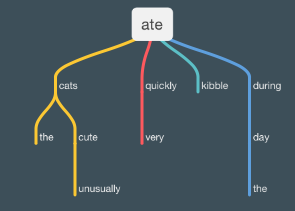
EDIT: the sentence: “The unusually cute cats very quickly ate kibble during the day.”
---
### Author:  [@LMD](https://discuss.criticalfallibilism.com/u/LMD)
#### Post date: [October 13, 2024, 11:11am UTC](https://discuss.criticalfallibilism.com/t/fi-grammar-article-part-2-5-am/1968/10 "2024-10-13T11:11:57Z")
> [@ActiveMind](#):
>
> I think that it’s implied that the sentence is talking to you, so the subject is “you”.
Cool yup. I think that’s right. Also, that type of sentence is called an imperative sentence.
What I do with an implied word is put it in the tree but with square brackets around it.
* * *
I believe there is another error in that tree, but I am not completely sure how to explain it, so I’m worried that I might just confuse you. It has to do with the verbs in the clause ‘don’t chew quickly’. I can see that the concept of verbals comes up in section 3 after these exercises you’ve done, and I don’t think I can explain it without those concepts. I’m not sure if you’ve read that section yet or not.
Related to verbals, I found [this](https://curi.us/2563-nonfinite-verbs) article of Elliots helpful for understanding the conceptual difference between finite and non-finite verbs. That could be helpful to read after you cover verbals.
---
### Author:  [@ActiveMind](https://discuss.criticalfallibilism.com/u/ActiveMind)
#### Post date: [October 13, 2024, 12:54pm UTC](https://discuss.criticalfallibilism.com/t/fi-grammar-article-part-2-5-am/1968/11 "2024-10-13T12:54:40Z")
> [@LMD](#):
>
> I’m not sure if you’ve read that section yet or not.
I had only skimmed it.
> [@LMD](#):
>
> I believe there is another error in that tree, but I am not completely sure how to explain it, so I’m worried that I might just confuse you. It has to do with the verbs in the clause ‘don’t chew quickly’.
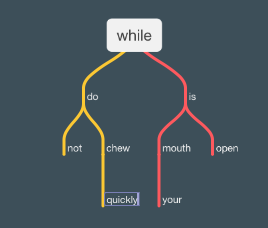
Perhaps “chew” shouldn’t be the root of that sub-tree. The action is the “doing”, except we are not doing it because of “not”, and “chew” is the concept that we are talking about to not do. Taking a quick glance at [Curiosity – Nonfinite Verbs](https://curi.us/2563-nonfinite-verbs) I guess that “chew” is a nonfinite verb (infinitive?).
The tree I’m imagining now is:
---
### Author:  [@ActiveMind](https://discuss.criticalfallibilism.com/u/ActiveMind)
#### Post date: [October 13, 2024, 12:58pm UTC](https://discuss.criticalfallibilism.com/t/fi-grammar-article-part-2-5-am/1968/12 "2024-10-13T12:58:10Z")
I’ll revisit this exercise and “If universities are full of uncurious professors, don’t attend one.” after I’ve read part 3.
---
### Author:  [@Eternity](https://discuss.criticalfallibilism.com/u/Eternity)
#### Post date: [October 13, 2024, 1:02pm UTC](https://discuss.criticalfallibilism.com/t/fi-grammar-article-part-2-5-am/1968/13 "2024-10-13T13:02:53Z")
[https://www.grammaring.com/do-does-did-bare-infinitive](https://www.grammaring.com/do-does-did-bare-infinitive)
You should look at that too when you start covering the part with infinitives.
---
### Author:  [@LMD](https://discuss.criticalfallibilism.com/u/LMD)
#### Post date: [October 13, 2024, 1:17pm UTC](https://discuss.criticalfallibilism.com/t/fi-grammar-article-part-2-5-am/1968/14 "2024-10-13T13:17:11Z")
> [@ActiveMind](#):
>
> Perhaps “chew” shouldn’t be the root of that sub-tree. The action is the “doing”, except we are not doing it because of “not”, and “chew” is the concept that we are talking about to not do.
Yup I think that’s right.
> [@ActiveMind](#):
>
> Taking a quick glance at [Curiosity – Nonfinite Verbs](https://curi.us/2563-nonfinite-verbs) I guess that “chew” is a nonfinite verb (infinitive?).
And yup. It is an infinitive. Infinitives often have ‘to’ in front like e.g ‘to swim’ but following certain verbs the ‘to’ is dropped. ‘Do’ is one of those verbs.
Infinitives function like nouns, so the infinitive ‘chew’ can be the object of ‘do’.
---
### Author:  [@ActiveMind](https://discuss.criticalfallibilism.com/u/ActiveMind)
#### Post date: [October 13, 2024, 4:03pm UTC](https://discuss.criticalfallibilism.com/t/fi-grammar-article-part-2-5-am/1968/15 "2024-10-13T16:03:49Z")
> If it’s a weekday, I relax after I snore through school.
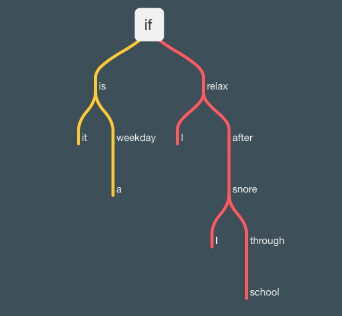
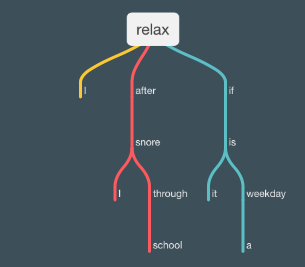
These trees were made when I was reading the clauses section, so before the conjunctions section.
EDIT: the sentence is from that section of the article.
I made both trees because I wasn’t sure whether I wanted to do subordinating conjunctions where the main clause and subordinating clause were at the same level (in the tree), or to have the subordinating clause at a lower level by making the subordinating conjunction and clause act like a modifier on the root.
The second tree was supposed to be the subordinating clause being deprioritized, while the first tree was sort of like what I felt gave each part their right amount of prioritization. It wasn’t either one of the models (same level or subordinating clause lower level), which is what Elliot discourages:
> A subordinating conjunction can either be viewed as a conjunction _or_ it can be viewed as _governing a clause which it converts into an adverb by relating that clause to another part of the sentence_ , but not both at once. As long as you don’t mix them, either viewpoint can analyze sentences successfully. I recommend viewing subordinating conjunctions as conjunctions because it organizes sentences better. And a subordinate clause is a complete thought, which is more important than a mere modifier.
For the exercises I viewed subordinating conjunctions as conjunctions, and not as governing a clause.
I hadn’t read this from the article yet:
> The subordinating conjunction always goes immediately in front of the clause it subordinates. In front of a main clause is either no conjunction or a coordinating conjunction.
So I wrote notes in order to figure out what I thought was the subordinating clause and the main clause for if statements.
My notes:
> Which is more important for if? the condition or the consequence. To me it seems like the consequence is more important. I assume the consequence is why we care about the condition. If the consequence doesn’t matter, then the condition wouldn’t matter either, but if the condition doesn’t matter, then we might still be talking about the consequence.
---
### Author:  [@Elliot](https://discuss.criticalfallibilism.com/u/Elliot)
#### Post date: [October 13, 2024, 4:11pm UTC](https://discuss.criticalfallibilism.com/t/fi-grammar-article-part-2-5-am/1968/16 "2024-10-13T16:11:24Z")
> [@ActiveMind](#):
>
> > If it’s a weekday, I relax after I snore through school.
What part of speech do you think “after” is?
---
### Author:  [@ActiveMind](https://discuss.criticalfallibilism.com/u/ActiveMind)
#### Post date: [October 13, 2024, 4:12pm UTC](https://discuss.criticalfallibilism.com/t/fi-grammar-article-part-2-5-am/1968/17 "2024-10-13T16:12:07Z")
A subordinating conjunction.
---
### Author:  [@ActiveMind](https://discuss.criticalfallibilism.com/u/ActiveMind)
#### Post date: [October 13, 2024, 4:30pm UTC](https://discuss.criticalfallibilism.com/t/fi-grammar-article-part-2-5-am/1968/18 "2024-10-13T16:30:34Z")
> [@ActiveMind](#):
>
> > I write because I like good ideas.
>
> subordinating conjunction: because
> main clause: I write
>
> - verb: write
> - subject: I
>
> subordinating clause: I like good ideas
>
> - verb: like
> - subject: I
> - object: ideas
> - adjective: good
>
> 
>
> 14 min
The reason I took so long on this sentence was that I didn’t yet know that a clause didn’t need an object/complement. I thought it wouldn’t be a complete thought or a simple sentence if it was just verb and subject without an object.
I had read:
> Only phrases of the same type can be joined, e.g. two nouns or two adjectives.
So I thought you couldn’t have a phrase and a clause being conjoined. I’m not sure whether the above quote says that, but it doesn’t seem like they can go together with a conjunction. I went back and forth on whether they were clauses or verb phrases. At the end I search for whether clauses needed an object (for it to be a clause) and found out they only needed a verb and a subject.
I was confused on this on an earlier sentence and found out on the sentence after this one, then I went back corrected them to say they had clauses instead of verb phrases.
---
### Author:  [@ActiveMind](https://discuss.criticalfallibilism.com/u/ActiveMind)
#### Post date: [October 15, 2024, 7:18am UTC](https://discuss.criticalfallibilism.com/t/fi-grammar-article-part-2-5-am/1968/19 "2024-10-15T07:18:56Z")
> [@ActiveMind](#):
>
> If it’s a weekday, I relax after I snore through school.
The tree I would make now would be:
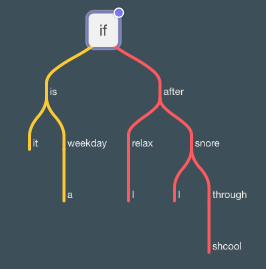
subordinating conjunction: if
main clause: I relax after I snore through school
- subordinating conjunction: after
- main clause: I relax
- subordinating clause: I snore through school
subordinating clause: it’s a weekday
---
### Author:  [@ActiveMind](https://discuss.criticalfallibilism.com/u/ActiveMind)
#### Post date: [October 15, 2024, 7:50am UTC](https://discuss.criticalfallibilism.com/t/fi-grammar-article-part-2-5-am/1968/20 "2024-10-15T07:50:00Z")
> [@ActiveMind](#):
>
> 
>
> 792×374 23.8 KB
With this structure of nesting conjunctions, the main action, which is “you should stamp your feet loudly, and you should clap your hands energetically”, is at the lowest level of the tree. But perhaps that doesn’t matter since it’s part of the top level main clause (“After you throw a small, red ball, while you sing, you should stamp your feet loudly, and you should clap your hands energetically”).
I tried imagining the tree with the “and” node higher up, however it doesn’t make sense for “and” to have more children.
The other option would be to have “and” as the child of “if” and let the rest of the sentence act like a larger subordinating conjunction which specifies when the actions of the main clause should happen. I think this option is the best alternative to what I have. The main critique I have of it is that the subordinating clause wouldn’t be connected in the sentence, it would be “After you throw a small, red ball, while you sing, […], if it’s still daytime.”. It seems pretty good as well though, I’ll make this tree as well.
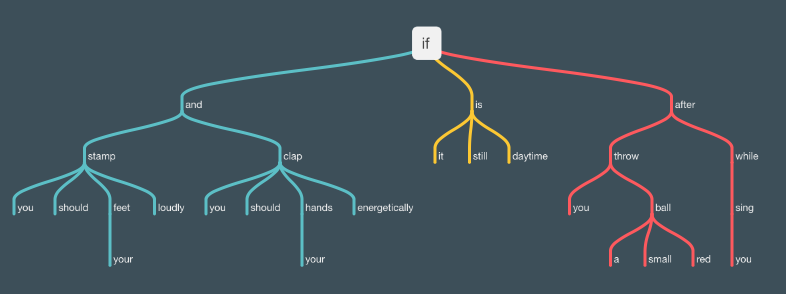
It didn’t come out how I expected it to. It seems that any other structure I could think of a conjunction ends up with more than two children. That could work if subordinating conjunctions were view as governing a clause instead of being a conjunction. However then “and” would have to be root (we can’t treat “if” as a conjunction instead of governing a clause), and I think the rest of the tree would have to thought of as modifying the whole of “you should stamp your feet loudly, and you should clap your hands energetically”, by making a circle around “and” and it’s children. And I think the other conjunctions wouldn’t nest each other, each would just modify the circle.
I don’t like that option too much, I think my original is the best I can do.
[Next page](https://discuss.criticalfallibilism.com/t/fi-grammar-article-part-2-5-am/1968.md?page=2)