I’d like practice breaking things down into parts. I’d like to do it with common activities people do, stuff I look up online, and my own personal things.
Goal:
I’d like to break things down in that are easy to do and in general. Id like breaking stuff down in my life like problems or activities. At some point I’d like to break stuff down related to my Anxiety.
Pillow(s), blanket(s), fitted sheet, and mattress.
Breaking things down like this makes sense if we’re talking about a bed that’s been made. Also, if we’re talking about what someone would need to sleep, it could be good. Maybe they dont necessarily need a fitted sheet or a pillow but it could still be on a checklist of theirs.
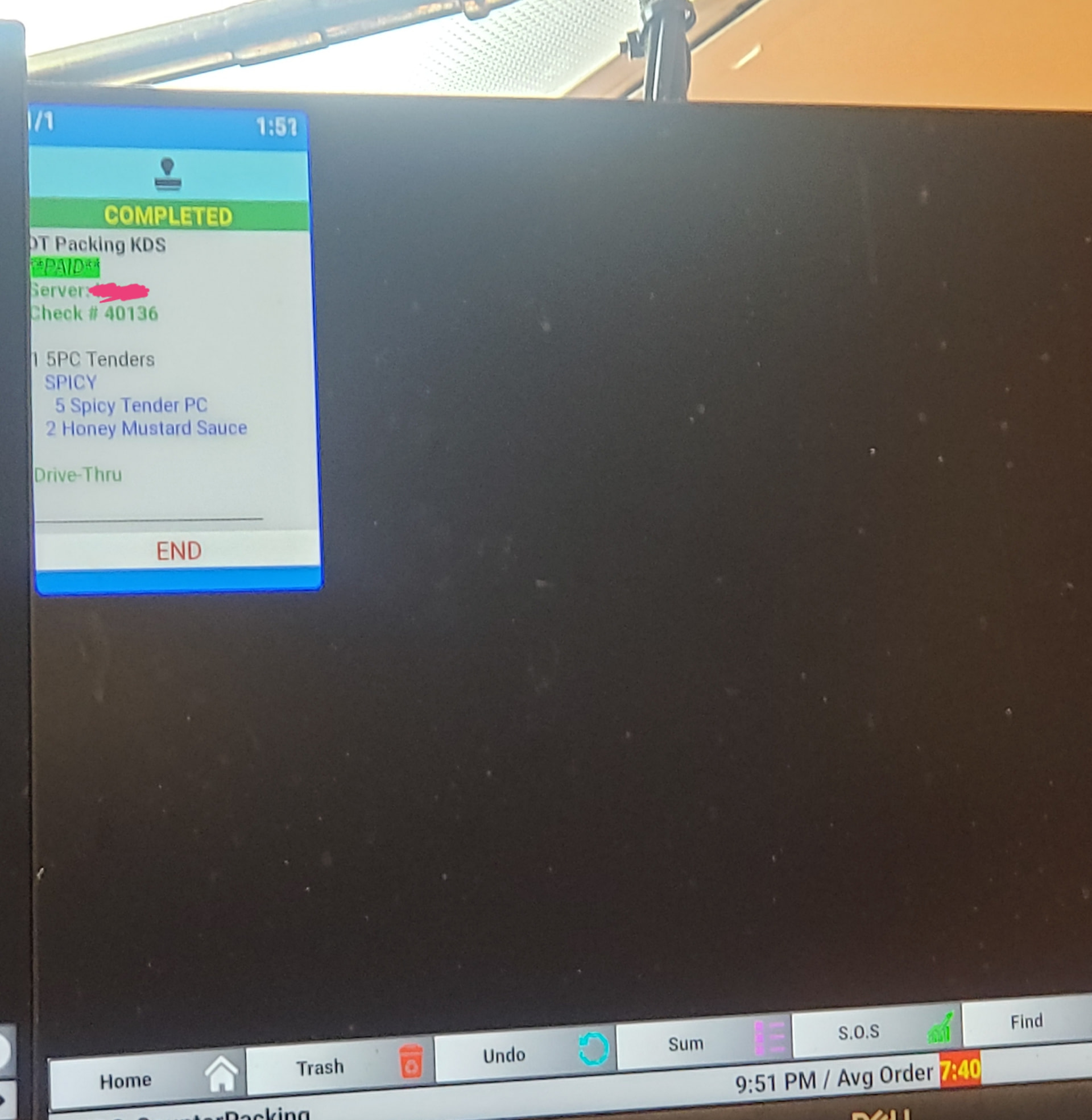
If the pic is hard to see, these are the order items on screen:
1 5PC Tenders

   Spicy

      5 Spicy Tender PC

      2 Honey Mustard Sauce
I’d like to break down the order screen organization… I honestly forgot what that means. I dont know how to break down the organization of something. I think if I know the parts of an organization then i could find out.
I looked a little bit what an organization is on merriam webster, but Id like to use my intuitive sense of that word. I think the organization would be like the entree of a menu item, its sides, its sauces, what flavor, and how many pieces of the entree. Are those the parts of the order screen organization? Not sure
In the pic, I could break stuff down by color. What items are black and what items are blue? The name of the meal or menu item is black. The parts that are nested in that item are blue. Thinking in parts like this could help if you’re trying to only pack one menu item at a time. Are you missing a blue part? If yes then youre not doing packing that part of the order.
Edit: the last sentence is supposed to say “done packing” and not “doing packing”
The order in the pic seems to be made of four parts. The parts are the entree or menu item, the flavor of the entree(spicy, original, or dry rub), the flavor and number of pieces and flavor of entree, and the sauce.
Breaking down the order into parts like in the paragraph above can help if you’re a worker at Church’s and you’re trying to pack the right order. If you wanna know what item menu, flavor of item, and what sauce you need then you could break it down into the four parts.
However, what workers usually do is just break stuff down into two parts. They look at the last two lines to know what to pack. The first part is what menu item, how many pieces of the entree, and what flavor entree. The second part is what sauce and how many.
The problem with the last paragraph’s way of breaking stuff down is that workers(including me) sometimes don’t know there’s duplicates. Like, instead of the “1” on the first line of the order, you could see a 2 or 3. You could miss that you need to make one or two more of the same item.
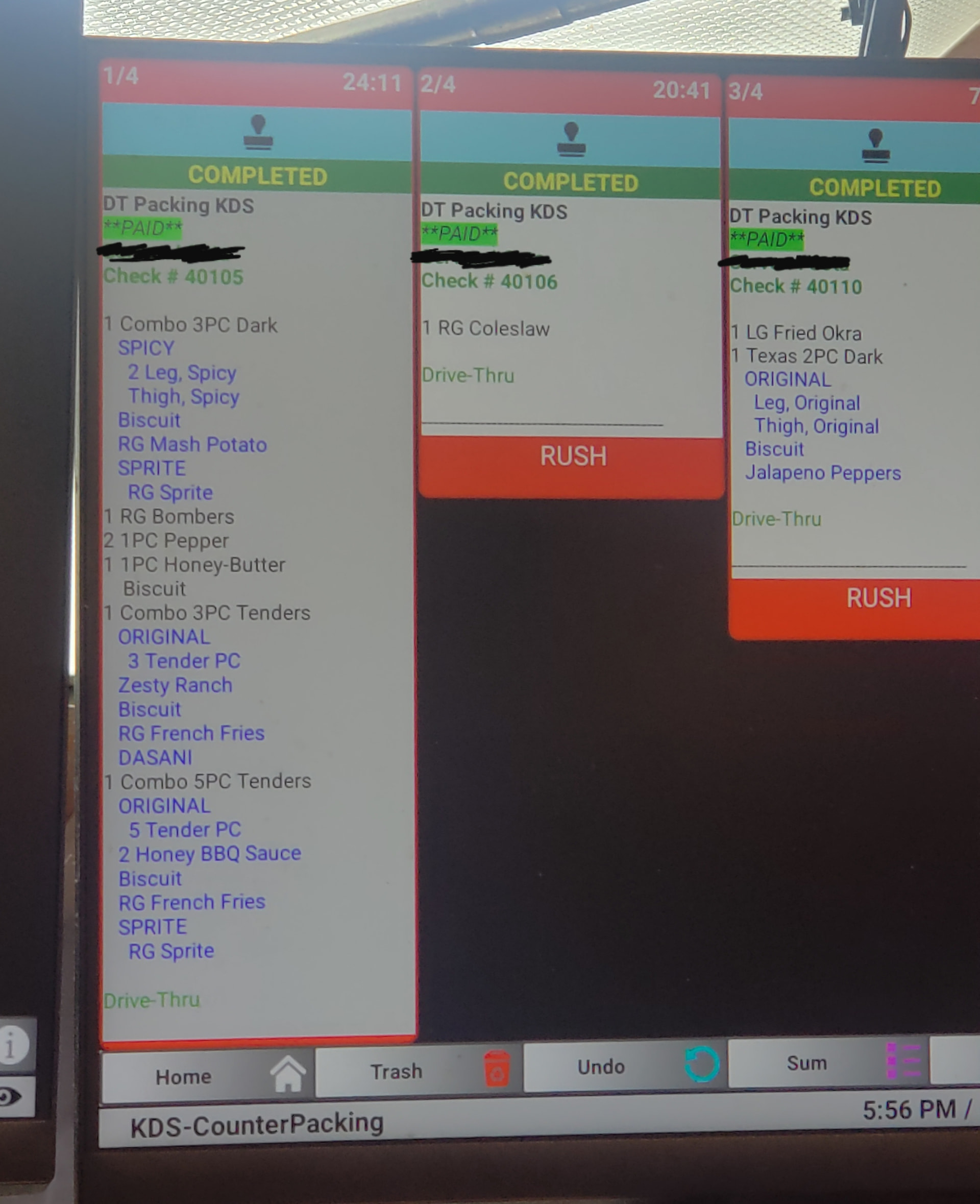
We can break apart the amount of orders there are:
Part 1: the first big order order on the left
Part 2: the middle order with the coleslaw
Part 3: the order on the right with the okra
Breaking things down like this helps if you wanna pack stuff in order from earliest customer to latest. It helps with knowing what to pack for what customer too
The only problem is that the first two orders are from one customer. If you pack only the first order and hand that to the customer then they would still be missing their coleslaw.
The pic is actually one I took after forgetting to give the customer their two orders. It’s to get a pic of a mistake i made and to have some context. Tht could be used I think for a postmortem.
I think I usually have trouble dealing with big orders like the one on the left. I’m going to break that into parts(excluding coleslaw):
1 Combo 3PC Dark

   SPICY

      2 Leg, Spicy

      1 Thigh, Spicy

   Buscuit

   RG Mash Potato

   SPRITE

      RG Sprite

1 RG Bombers

2 1 PC Pepper

1 1 PC Honey Butter Buscuit

1 Combo 3PC Tenders

   ORIGINAL

      3 Tender PC

   Zesty Ranch

   Biscuit

   RG French Fries

   DASANI

1 Combo 5PC Tenders

   ORIGINAL

      5 Tender PC

   2 Honey BBQ Sauce

   Biscuit

   RG French Fries

   SPRITE

      RG Sprite
I could break all the parts that are menu items/entrees. They’re the items with no indents. There would be six parts:
1 Combo 3PC Dark
1 RG Bombers
2 1 PC Pepper
1 1 PC Honey Butter Buscuit
1 Combo 3PC Tenders
1 Combo 5PC Tenders
I think breaking stuff down into parts like this can tell you as a worker how many items might have sub-items to bag. Like, it could be a combo with drinks and sides or a promotional item with an extra biscuit.
You can also treat each part like a mini-project. You could finish the first mini-project by preparing the entree, the sides, drinks, and buscuit. You would put all those in their proper containers. When you finish that mini-project you could move on to the next and prepare the regular jalapeño bombers.
The problem with treating the parts as a mini-projects and doing them one by one is that you should make the french fries and bombers first. Those take minutes to cook and if left at the end can cause a slow down. I think those items are probably bottleknecks idk.
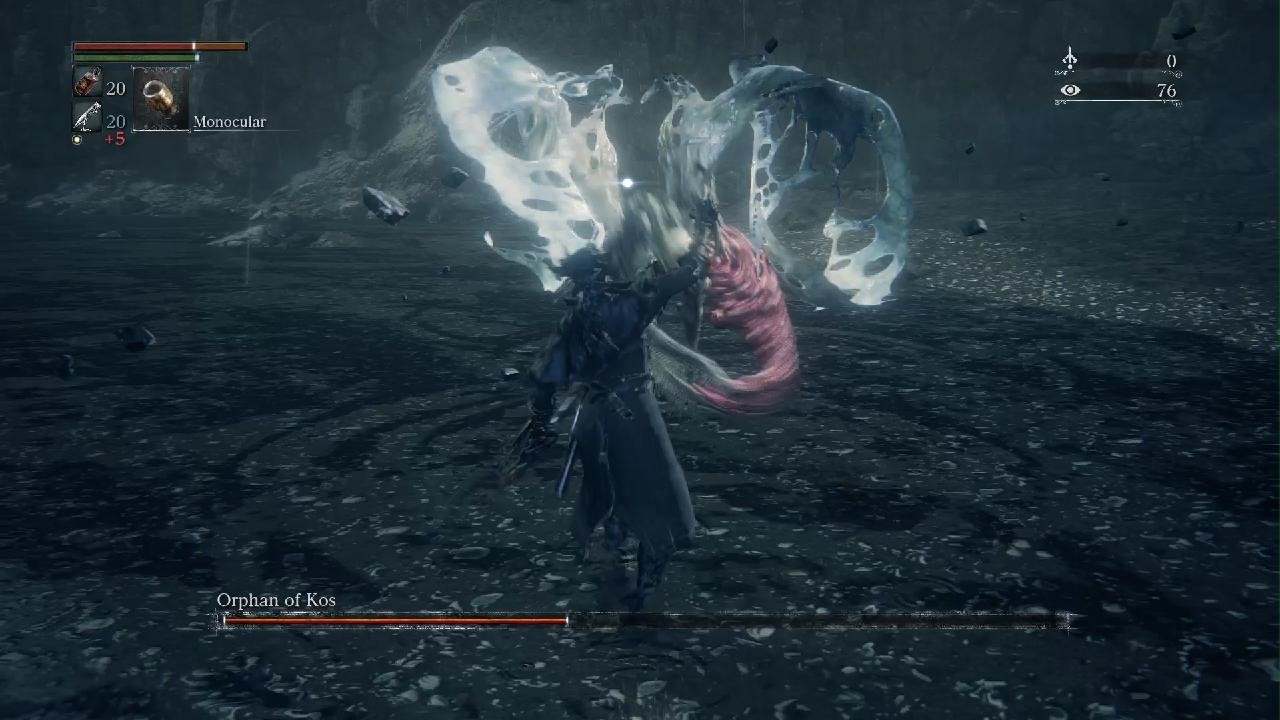
I’m fighting a boss in Bloodborne called the Orphan of Kos. I’m doing a challenge run where Im limited to using one weapon, and I’d like to split the boss fight into parts:
The boss has one whole health bar but two phases. That helps with knowing what phase you have the most trouble in. If you’re getting killed often does it happen in first phase or in the second? For me the first phase is easier than the second, even tho I get killed by the first phase at times.
Another way to break the fight down into parts is to put the boss’s moveset into parts. You could list out all the moves the boss does in the first phase and second phase. There seems to me to be about 10-20 moves per phase. I count moves as combos or single attacks. There’s much more individual attacks than there are combos or single attacks
I think listing the moves can help with checking quickly which move you struggle with the most. You can see that probably you do well for 8/10 moves of the first phase while the other you get hit or die by. Maybe if you work on the move that kills you, it can help you advance to the second phase more consistently.
I can look up online exactly how many moves the boss has for each phase. I could split that too in parts. There’s the part where I search for the list of boss’s attacks, ask gemini, or go to the wiki. There’s the other part where I look for a spreadsheet, paragraph detailing the moves, or watch a video with all the movesets. The last part could be finding the total amount of moves.
I got hit by a sweep attack combo. It’s made up of three hits. The last hit is delayed and has a lot of range. Here’s a vid for reference:
The combo can be broken down into three parts. Each part represents one attack. How does splitting up the attacks into three help? I think maybe instead of suspecting 2 or 5 attacks, you can expect 3. After the third attack you can punish the boss.
The problem with splitting up the combo into three and expecting three attacks is that idk if the boss always does three. I think they do 2 attacks sometimes. Im not sure. If the boss does do 2 attacks then you’re missing free damage there too. You could not commit a strong enough attack or no attack at all to not be vulnerable.
You can also break down the combo into 2 parts. The melee range attacks and the mid ranged attacks. There’s two melee range attack and one mid ranged attack.
If you break stuff down like in the paragraph above, it could help thinking about what range you’re safe in. You could find where you can shoot an arrow, heal, or replenish ammo and not get hurt. You could think about a better time to dodge instead of dodging the same way as the last two attacks.
If the boss does a mid ranged attack and it hits at a melee range, does that count as part 1 kind of attack too? Also, what’s mid-range and melee range? How far are those two?
If you’re not sure, it’s typically best to play defensively (potentially miss some damage) and monitor the situation. This lets you get hit less and live longer when practicing which tends to be better practice.
It’s usually easier to add in extra attacks after you’re able to not get hit much, rather than add in extra dodging if you’re getting hit a lot.
If you can record your footage, then you don’t have to watch for this as much while playing, so it’s easier to focus on playing. Then you can review footage after to see if the boss sometimes stops after 2 attacks of the combo, and you can look for how to tell the difference and figure out when and how to know and then make a plan for how you’ll react to what cues.
I dont think I get what “play defensively” and “monitor the situation” means. Like, what it is exactly. The stuff in the parentheses gives a better idea. I was thinking that playing defensively could be like not attacking so often; you don’t try to punish every “opening” there is. It would be good to look up the meaning.
I think “monitor the situation” could be like getting information about the fight. You could learn how many hits a combo has. Idk what monitoring means
That sounds good. If I get the last sentence then it could help with practicing the boss. Also, the quote I think is saying what could be better practice.
This makes some sense intuitively. I don’t know how to get to the point of not getting hit much or how that looks like. I think I can contrast that to adding in extra dodging if im getting hit a lot.
I think i can play defensively. Instead of trying to add in an attack that could make me vulnerable, I could prepare to dodge. I think I see how playing defensively would make me potentially miss out on some damage. My usual habit in the souls series is to dodge and attack when the boss is done with a combo. Maybe I don’t have to keep doing that habit for now to monitor the situation.
Can I stand really far away to play defensively? I think yeah cuz the boss won’t really have many chances to kill me. The problem with that is that I won’t really see many close range attacks to study. It’s like you’re fighting a whole different boss at that point.
I think I could position myself like I would if I were to attack the boss. I think I know sometimes when I won’t take damage and other times when I’m unsure. For the times I’m unsure I could replace hitting the boss with observing him.
I think monitoring the situation means like monitoring when the boss is going to do a third attack or not. I dont’ think it means to monitor the whole situation like other combos or attacks. You could do that, but I think we’re talking about one of his combos.
From memory, I think I remember the boss not doing the third attack. Like, he doesn’t commit to it sometimes I think. There might be a trigger. I remember looking at the recording and thinking that maybe my position is the perfect place for the attack to trigger. I’m going to try to monitor anyways.
How would successfully monitoring look like? I think I struggle with this a little like I don’t know what to look for at times and have to see the attack multiple times to find something. It’s different to monitor stuff I think in real time vs. looking at a recording. I think I gotta have a goal in mind or something clear so I can monitor the situation well.
I think monitoring would look like counting the times the boss does the two attack combo and the three. I think you could monitor where your position is. If you’re far away that could cause the boss to not commit anymore attacks. Idk if it’s good to only monitor if there’s different combos or also for their triggers.
I think if I don’t know if the boss does two attacks that might mean I also don’t know the cause of that. Like, if I do find out that they do two different combos then it would be good to know about that to do dmg to them optimally.
I think I see how playing defensively and monitoring the situation lets you get hit less. If you get hit less then you live longer. You avoid attacks that could kill you or attacks that damage you over time and whittle you down.
Also, I see it says “when practicing”. I think whenever you’re fighting the boss to beat them you’re practicing. You might not be actively practicing stuff, but there’s still some practicing going on. How else would you beat the boss?
A part of me thinks that getting hit less and living longer when practicing doesn’t tend to be better practice. I think that’s cuz I think I don’t practice stuff well. I’m thinking how do I make progress living longer? If I live longer and get hit less i might not learn anything and not win. I think I’m probably practicing stuff wrong or have a wrong idea about it. I might not know the strategy to play defensively and monitor the situation well.
I think it tends to be better practice cuz if you live longer and survive more hits, you can practice more. That’s different than getting hit and dying and restarting a lot. You lose more time there. I’m not sure.
“better practice” sounds like the practice is better quality. Idk how that looks like tho. Also, I’m kind of questioning what practice means like I don’t really know the definition.
I think the fact that you’re getting hit a lot and not living longer means you’re making errors. If making errors is your default then that could get in the way of beating the boss. You could learn some unhelpful habit that gets you killed and you would have to do deal with that.
If you’re living longer and getting hit less then you’re already being successful. You’re living long enough to kill the boss. You don’t have to deal with a million errors getting hit a lot…I’m not too sure.
Oh wait, I was kind of thinking this like if you’re not getting hit much and living longer then you’re being kind of successful already. It sounds easier to add in an attack or two and see if that kills the boss.
When I read the og quote yesterday I was thinking along the lines that you’re adding in extra dodging to monitor the situation. I didn’t think we were talking about what makes for easier practice. I think I was confused