More aware than what or who?
Hmm. I’m unsure. Backtracking for a second:
I think another reason why I think I’d assume that was just a BS marketing thing, as opposed to outright fraud, is because I don’t chat. I put my own context here for a general analysis of that. I don’t chat. I barely use Twitch. I’ve mainly used it to watch certain events from creators I like. I think when originally looking at the ad you shared I looked at it as something like “look at the fun you could be having in a chat” and not what it actually says where its saying people in chat are missing you.
Your lack of Twitch chat history has no bearing on whether it’s fraud since it was sent to other people who do chat. I’m not sure if you were saying you were mistaken to use your own context so you already know this.
Ah. Sorry. I was trying to say I was mistaken for using my own context. I was just trying to explain why I looked at much more generously and why I wouldn’t think of it as fraud. I did kinda forget that most people do use chats. That’s what Twitch expects and knows, and yeah that would be fraud.
https://x.com/pirat_nation/status/2078435110072791418
A response claims the tweet plagiarized from this YouTube video which I haven’t watched:

1 Like
As someone who has personally spent $500k / mo+ on Google Ads for years, I can tell you with certainty:
This revenue growth in Search is artificial & extremely unhealthy for Google’s business long term
Search volumes are declining as legacy search is being increasingly cannibalized by non-monetized LLM queries
Google’s response?
Manufacture revenue growth via short-sighted, highly extractive, customer-hostile tactics. I.e. charge advertisers more for lower quality clicks, including clicks they do not want and explicitly did not approve Google to charge them for
A few examples to illustrate:
For all of its history until recently, Google operated on a 2nd price auction model
I.e. if you bid $5 CPC and the next highest bidder bids $1 CPC, Google charged you $1.01 for the click (one penny more than the 2nd highest bidder) rather than the $5 you bid
This was a genius move by Google early on as it incentivizes advertisers to input their true maximum willingness to pay rather than trying to play the game of bidding low and constantly adjusting to try to stay just ahead of the next highest bidder while still not paying too much
However recently, Google silently deprecated the 2nd price auction and began charging advertisers as much as their bid and budget caps allow, regardless of what anyone else is bidding
It’s a short-sighted cash grab at the expense of the long term health of the advertiser ecosystem
Making thing worse, Google also recently nerfed keyword targeting precision
Google previously had precise keyword targeting settings that allowed advertisers pick individual search phrases to bid on, defined down to the character w/ exact match or phrase match targeting
This was one of the core features that made search advertising magic, enabling advertisers to run extremely precise campaigns based on exactly what their target customer typed
But now, even if you bid on a specific term or phrase using the strictest exact
-match targeting settings, Google will show your ad across 1000’s of unrelated keywords, labeling them as as “exact match (close variant)”The definition of “close variant” means whatever they want it to and changes constantly. The result is advertisers get billed for clicks that are totally irrelevant to their business and that their targeting settings explicitly forbid Google from targeting. Google does it anyway and there’s no ability to turn this off
So now exact match is broad match, and broad match is just meaningless spam
This is all very bad for advertisers, but for Google, it allows them to show your ad and bill you for clicks across 1000x more searches that were previously going unmonetized (mainly because they’re garbage queries no one wants)
This is how you grow revenue atop declining search volumes
Lastly, and perhaps most egregiously, Google quietly stopped respecting budget caps by a factor of 2x. For example campaigns we’ve been running for years with $1000 daily budget caps suddenly began spending $2000+ per day
And the extra spend is entirely on the garbage keywords Google arbitrarily throws in as “exact match (close variants)” which have no value to our business, but can’t be turned off
Google offers no refunds nor any recourse for overspend or spend on keywords you explicitly did not target
These are not the actions of a healthy business. These are the actions of company whose core business is in decline but desperately needs to pump quarterly earnings so Wall Street will continue to fund insane capex while hopefully looking through their rapidly deteriorating negative free cash flow
Google operated a benevolent monopoly for the better part of 25 yrs
Meaning the value Google captured from Search was but a small fraction of the value it created, and that spread produced a potential energy that justified expectations of high earnings growth far, far into the future
This is now no longer the case
At the alter of AI capex, Google is sacrificing the golden goose
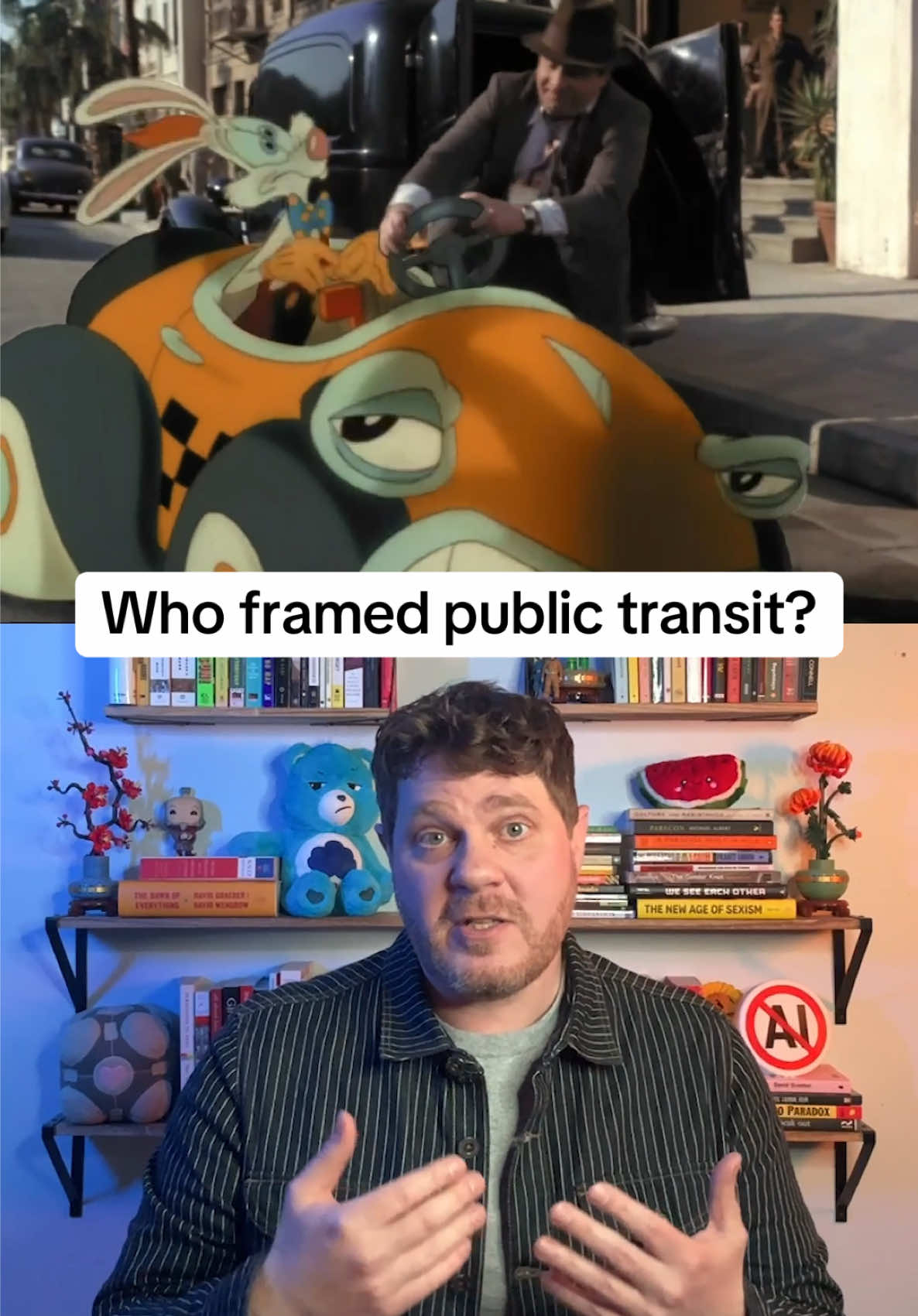
That’s lame. I wonder how far this conspiracy stuff goes with cars. I like public transport. It feels safer (and probably is). Not a big fan of driving.
I wonder how much of the buying up of the railroad system and stuff was clean and honest.
There are people disputing some of his claims. And people agreeing with him. There is controversy. It’s hard to tell what details are true or not.
In general, the difficulty of figuring out which fraud claims are true helps companies get away with more fraud.
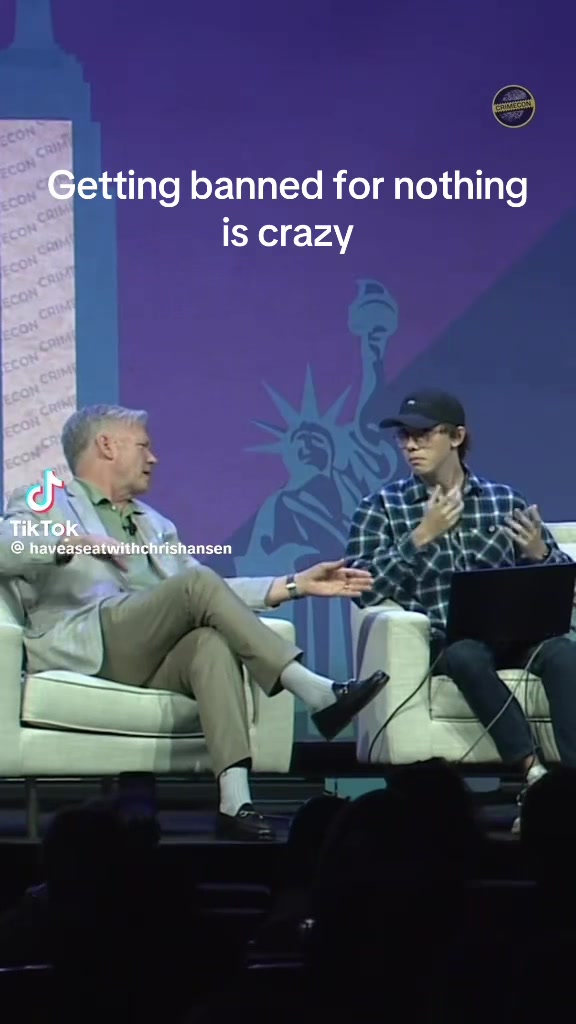
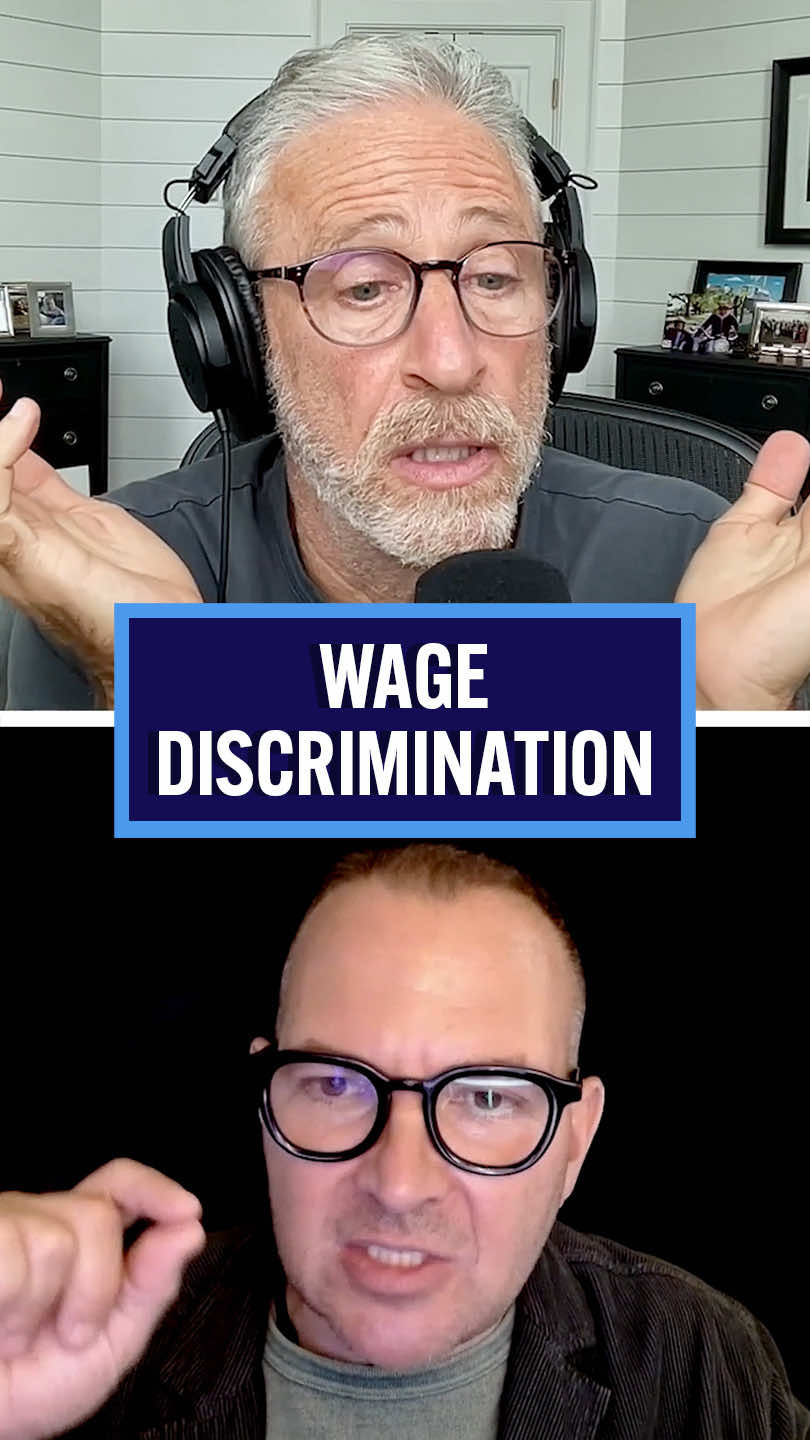
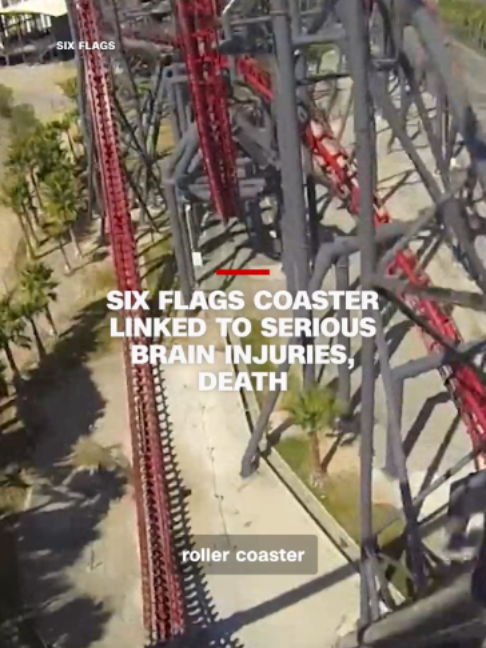
After watching that tiktok, Im thinking twice about going on a roller coaster. How fast does that roller coaster go in the video? Also, it seems that six flags was putting blame on the people that got injured. It’s like they did something wrong while riding. Is that not the responsibility of the theme park? Look up or research a problem like that. They might have made an oversight about how safe the ride is. That or they might need to update their safety precautions to let riders know what to do and not to do.
It’s like cuz the people who got hurt were a minority, the problem mattered less. As long as most people weren’t harm then there’s not much of a problem. I think since people’s lives are involved then the mistakes made matter more.
To some extent, I would agree with this sentiment. I don’t disagree with the earlier part of your post — I think it is reasonable to expect them to update safety precautions or whatever.
But in general, when you are talking about large scale situations, I do think it makes sense that one might see a problem as mattering less if only a small minority of instances result in harm.
I’m not advocating for criminal behavior, negligence, fraud, etc. Nobody should lie about people being harmed or anything like that.
But lots of stuff in society comes with risks of harm. As a society we don’t automatically intervene to prevent any and all possible harm. Driving cars is dangerous, but allowed. Many drugs can have harmful side effects but are still used because the treatment they provide is seen as more valuable than the side effects are detrimental, overall. e.g. if a drug can improve health for most people but approximately every 10 millionth person is more likely to die of a heart attack, that drug probably won’t be pulled from the market.
I might agree with you, but “matter more” than what? It matters more than mistakes that were less harmful.
Likewise “not much of a problem” is a bit vague. I disagree with dismissing it as a non-problem. But how much of a problem something is treated as could be related to how many people are being harmed. It seems sensible to at least partially gauge problem severity by how much harm the problem is causing.
“in general” means in a wide number of cases? I gotta look tht up in a dictionary. Also, “large scale situations” is what’s described in the tiktok? The term ‘large scale’ makes me think it involves a lot of people. In the rollercoaster situation, there’s gotta be at least 1000 people that ride the roller coaster per day. I think thats across the nation.
For this part of the quote above:
Would that problem matter less than if a bigger amount of cases resulted in harm? How much bigger? Let’s say a majority of cases. I think im using the word majority right.
If you use the word “less” do you gotta compare one thing to another? I think when I used it the comparison is implied:
I think the problem in my quote mattered less than a regular problem. I think that would be if the roller coaster was malfunctioning…Another thing I think I compared was the problem of giving people a fun experience mattered more than the minority of people who got hurt.
By “in general” I mean when looking outside of this specific problem situation. Like, looking at what you said here:
And applying that idea more as a principle than a comment on this one situation.
In general, when a minority of people are harmed by a problem, that problem matters less than when a majority of people are being harmed.
The specifics vary from situation to situation. And there could be other stuff going on, like breakpoints or qualitative differences. For example, maybe someone believes that for a leisure activity like roller coasters there is no amount of acceptable harm. Even a tiny minority of people being harmed could be unacceptable to them in that situation, but they might tolerate other harms for non-leisure problems, e.g. in the case of prescription drug side effects.
I don’t necessarily agree with this hypothetical position, but it could make some sense, could be internally consistent, etc.
The main thing is that when you said this:
I interpreted this as you making an observation that could have some reach beyond this specific situation. That’s what my comments were mainly about. I tried to signal that I was doing that by using the phrase “in general”.
Ok I think I see what you’re talking about. I think I was making an observation that could have reach like that.
Now that I think about it, me interpreting my own quote above can have mistakes. Like, when I quote myself and I make a comment, it’s like im talking to someone else. I think it’s possible to misquote yourself or make a wrong interpretation.