Learn Intro to Fractions[Dface]

Project Summary:

Learn intro to fractions as a CF prerequisite. I’ll be using CF ideas to help me learn like postmortems or decisive criticism.

Goal:

Get better at fractions while practicing CF ideas

Success criteria (& optional failure criteria):

Read at least one fractions article and get problems right while practicing a worksheet

Big picture goal, why you want to do this, or CF relevance:

Learn part of a CF prerequisite, work to get good at something, use CF ideas for practice and being more successful.

Plan:

Read Introduction to Fractions - Math: Basic Tutorials - The Learning Portal at Ontario Colleges Library Services

And find practice problems to do and get right.

Context: (optional – fill out or delete the context section):

  • Few hours to do this project like dont spend a whole week doing it.
  • I’ll be using my phone and computer to work
  • Playing music in the background and maybe youtube stream(try to have youtube stream almost at zero volume)
  • Be taking breaks every 20-40 mins of work

I want to make the goal clearer:

Get better at fractions by improving my understanding of them or practicing problems better.

Below is a link and quote from the intro to fractions article:

A fraction is a way to represent parts of a whole. Fractions are written as one number over another number (e.g. ½ ). The bottom number (the denominator) represents the number of equal parts the whole has been divided into. The bottom number the numerator represents how many parts are included. This section will give you a brief introduction to fractions and explain some types of fractions that are important for you to know.

First sentence of the quote:

A fraction is a way to represent parts of a whole.

I like that it says “way” and “represent” cuz those are words I use more often everyday. That instead of just using math language that it makes fractions look like just an isolated thing to learn.

So according to the quote above fractions are a way of doing something. Like, it’s a method of doing something.

Fractions are a way of representing something. It’s just like how I could use sign language to represent english words and ideas I think. A potential goal here is being good at understanding how sign language can represent english. That way maybe I can compare and see how fractions represent parts of a whole.

If I think of “to represent parts of a whole,” as a goal then fractions are a way of doing that.

When I think of “parts of a whole,” I think about things like the ideas in a person are a part of them and the person is the whole.

Fractions are written as one number over another number (e.g. ½ ).

This is the format fractions are written in.

The bottom number (the denominator) represents the number of equal parts the whole has been divided into.

So the bottom number shows the number of equal parts the whole’s been divided into. So from what I’m getting from all that is that there’s a whole. And the whole has been divided into equal parts. The whole being divided into equal parts is the similar to a division problem. Like, 1 / 5. In division, we divide the 1 into five equal parts. I think the quotient is how much each equal part is worth.

The bottom number the numerator represents how many parts are included.

This sentence seems like it’s worded weird like it seems that there’s two subjects to the sentence (“The bottom number” and “the numerator”).

I think the sentence makes sense if it just says: The numerator represents how many parts are included.

Does “included” mean that the denominator is a set and the numerator is a subset?? Idk

So what the quote is saying is that the numerator represents the number of parts included. In 1/5, there’s 1 part included.

This section will give you a brief introduction to fractions and explain some types of fractions that are important for you to know.

The webpage’s section is going to introduce the listener/reader to fractions and talk about some fractions that they think is important for the listener/reader to know.

This post took about ~25 mins. I didn’t actually time myself but I should start doing it so I can know when to take a break

Started this reply at ~6:15pm July 31

For the next part of the project, I’m going to watch the article’s video about fractions and I’ll analyze it a little bit.

Some goals I might be interested in while watching the video:

  • Stop every time I want to write something down and analyze it
  • Write something down the video author or slides said and analyze that
  • Write at least three things the video author or slides said and analyze that.
  • Analyze by defining individual or groups of words
  • Say what I think each phrase or or word means of a sentence
  • Don’t spend too long(how long and why?) on analyzing a part of the video
  • Explain a concept in my own words and compare what’s different from my explanation and theirs. Maybe use decisive arguments here???
  • Ask questions about any amount of things I’m curious about
  • Analyze by asking questions, comparing my explanations with the author’s, or saying what I think a word or phrase means
  • Cover the most important stuff of the video(what’s most important?)
  • Work out any amount of math problems in the video

My three goals I chose to do while I watch the fractions video:

  1. Write at least three things the video author or slides said and analyze that.

  2. Analyze by asking questions, comparing my explanations with the author’s, or saying what I think a word or phrase means

  3. Work out any amount of math problems in the video

The video:

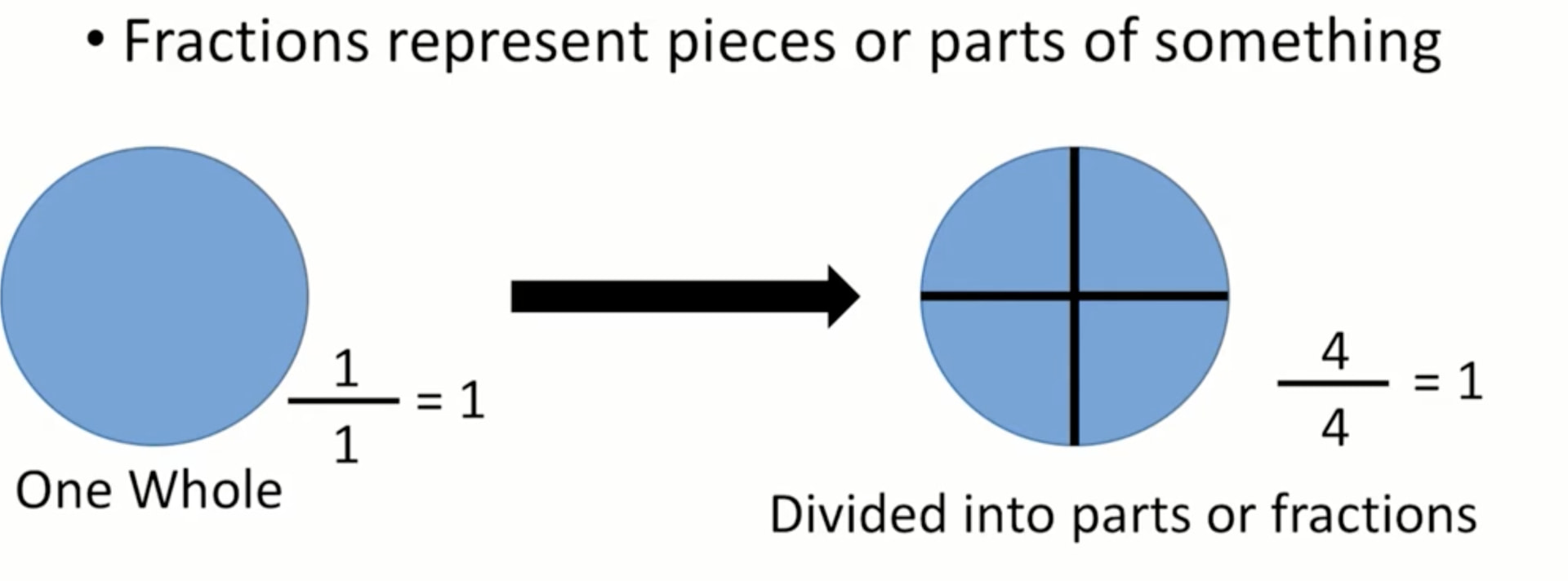
The very first slide says:

“Fractions represent pieces or parts of something.”

My way of saying what fractions are/do is:

Fractions are numbers that represent parts of a whole

Compared to the slide, my explanation fails at the goal of being clear about what parts are. The slide kinda succeeds at that by using other words like, “pieces.”

My explanation does an extra thing where it talks about what fractions are. Saying that they’re numbers.

I think compared to what fractions actually look like, my explanation fails at the goal of mentioning that the numbers are separated by a line. Fractions are actually numbers tho so I think people would get my explanation if they already worked with fractions before.

Here’s a pic of the first slide of the vid:

So from the first slide of the video, I get more that wholes are equal to one. I was talking about wholes earlier:

A whole is equal to one. I think there could be more than one whole like in the mixed fraction 2 2/3, there’s 2 wholes and 1 whole was divided into three equal parts. There’s only 2 parts of that whole.

I think have a problem with my plan cuz it’s taking so long to watch the video and write notes. I think my inexplicit goal for this post was to not take more than ~45 mins, cuz i had to go somewhere by tht time.

Continuing after a few hours of errands(@0:00):

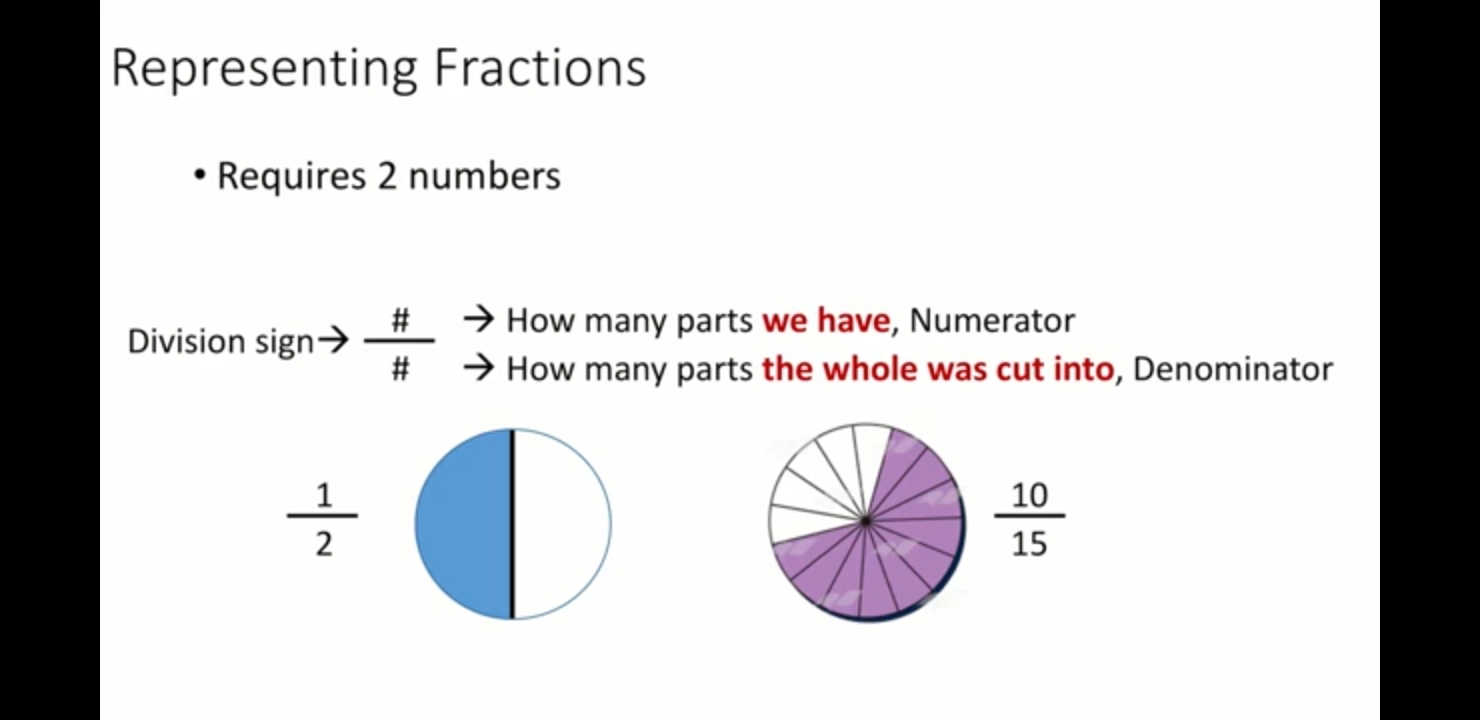
I like this slide of the video at ~53 secs cuz it talks about what the numerator and denominator are. I remember I was talking about it in my last reply, but from the pic above i get more about what a fraction is. The numerator is how many parts there are of the fraction while the denominator is how many parts the whole was cut into. It makes more sense now tht when u convert fractions to have equal denominators u multiply it by a whole.

Imma analyze the video pic below at 1:32:

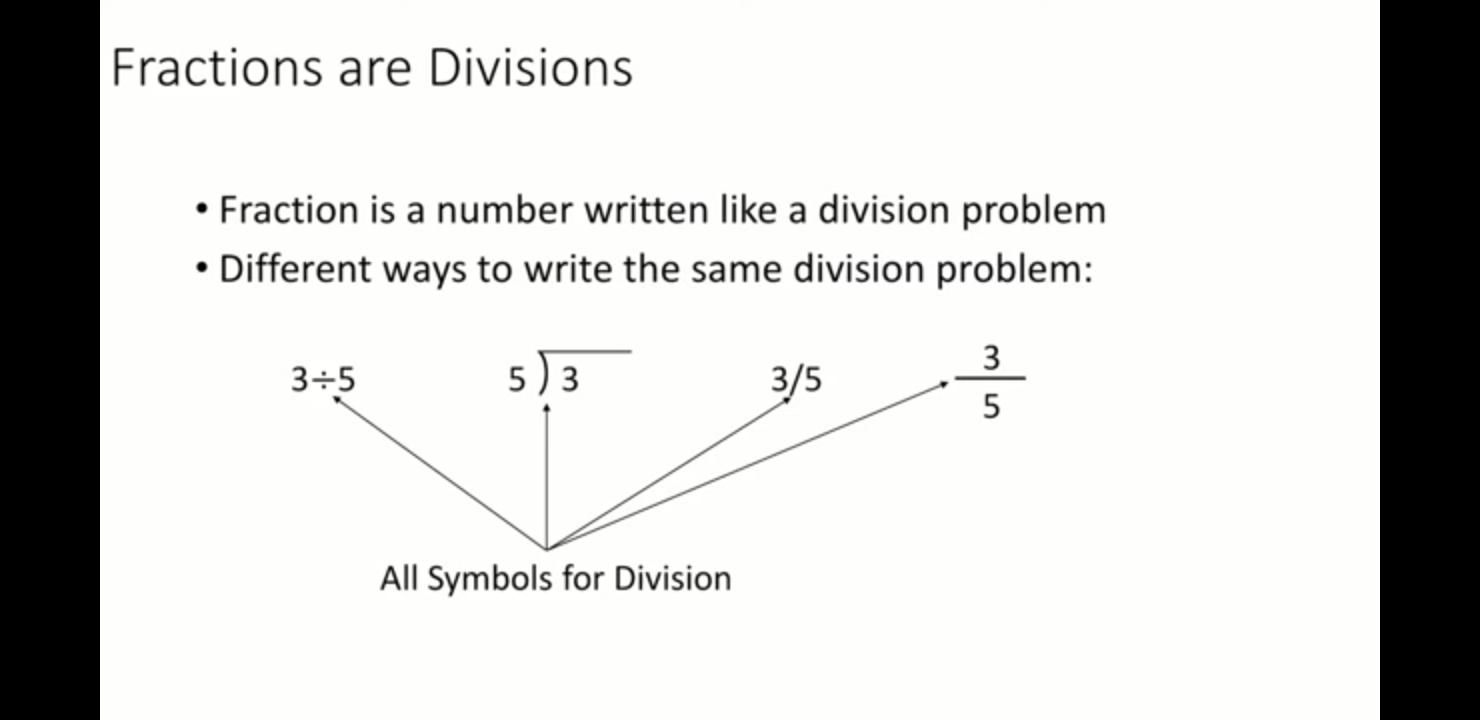
I was thinkin if you have a fraction like 3/5 and given what a denominator is, then to find the quotient you can actually divide the whole by 5(e.g. 1/5) and then multiply that by 3 cuz there’s 3 pieces present. I was thinking about how much you can use multiplication for division and how that’s related to universal logic operators. How u can use “and” to make an “or” function.

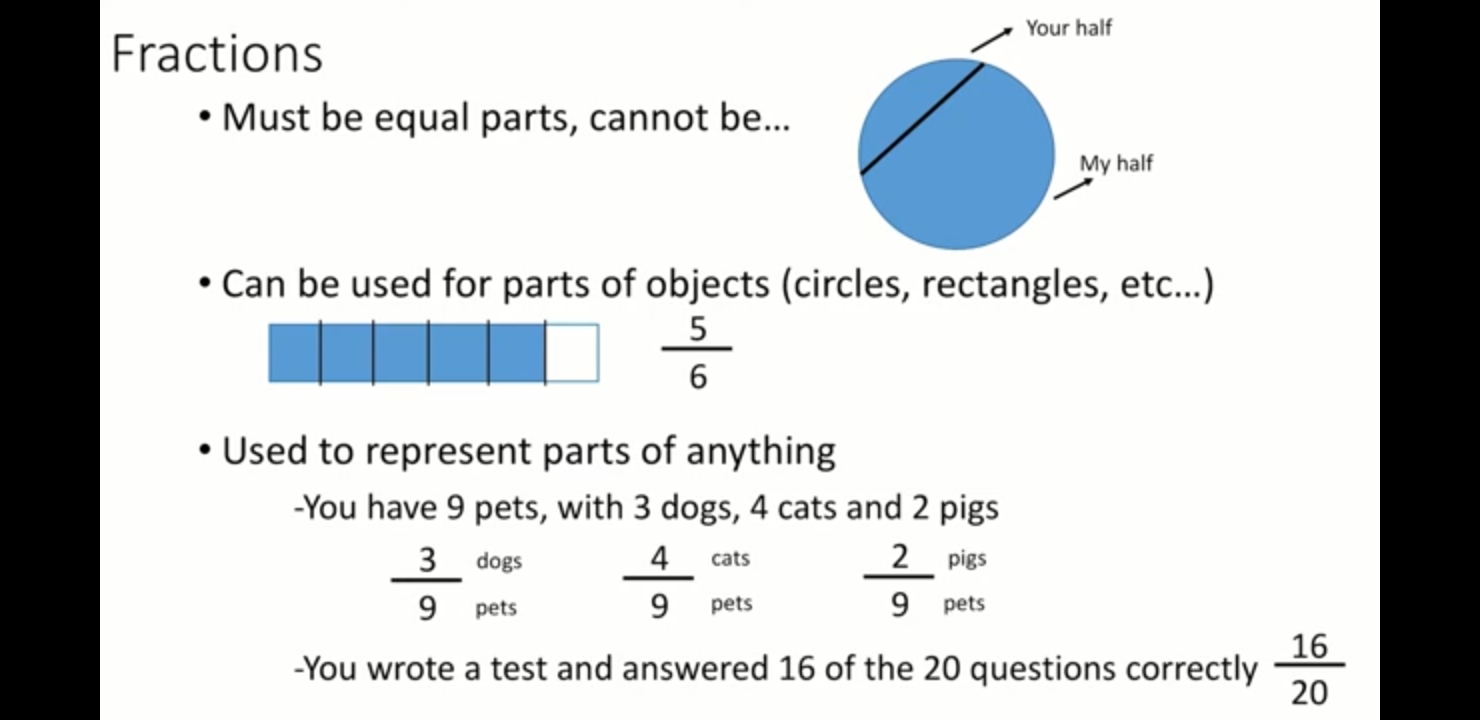
Slide @2:07:

I think the slide is explaining the rules about fractions. On the third bullet point it’s talking about what “whole” could mean. It could be anything. Like, if you have pets that could be considered a whole and you can describe with fractions how many dogs, cats or pigs you have out of all your pets. You can use fractions to divide concepts/conceptual units into parts I think.

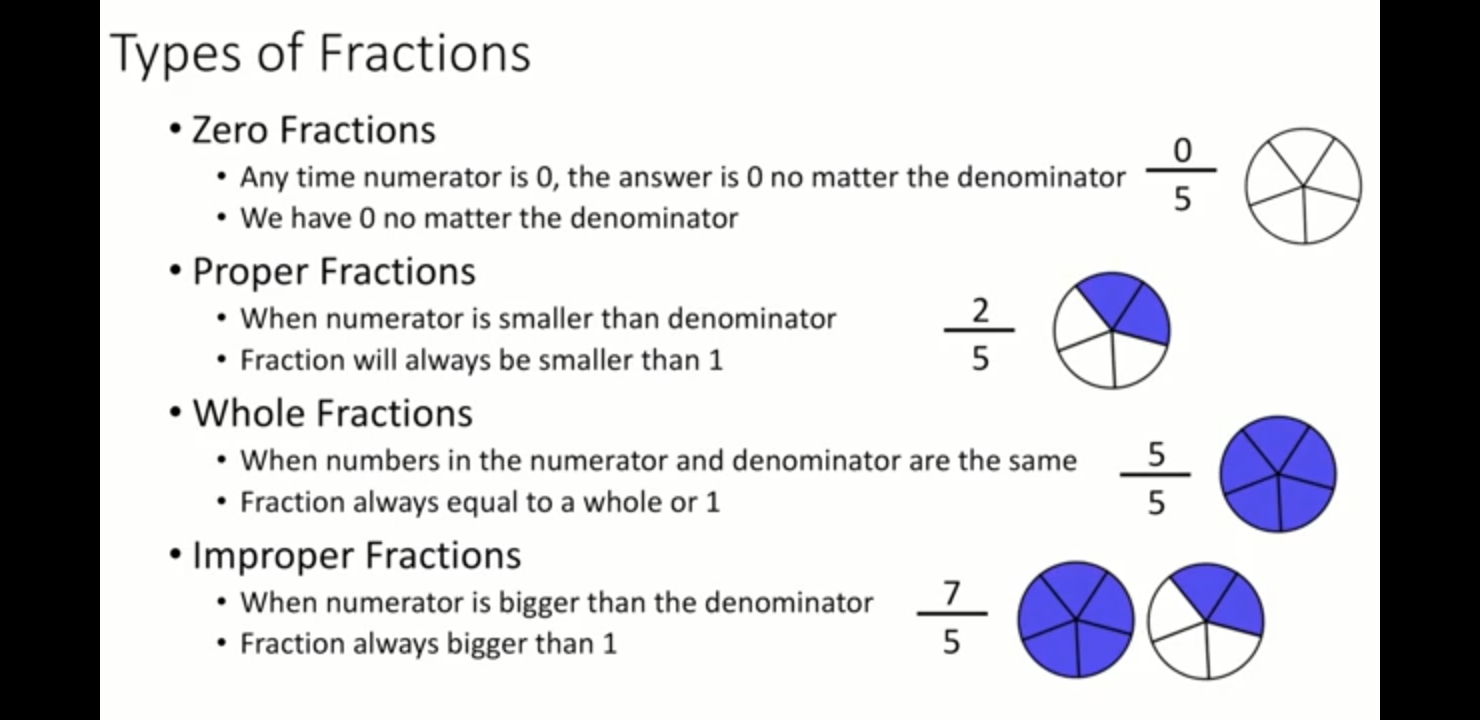
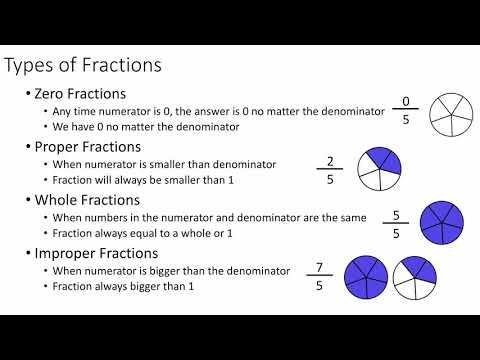
Video slide talking about types of fractions(@3:12):

On the fourth bullet point, I see that 7/5 makes 1 whole with 2 pieces left. Those pieces were made by splitting a whole into 5 equal pieces.

I finished watching the video after.
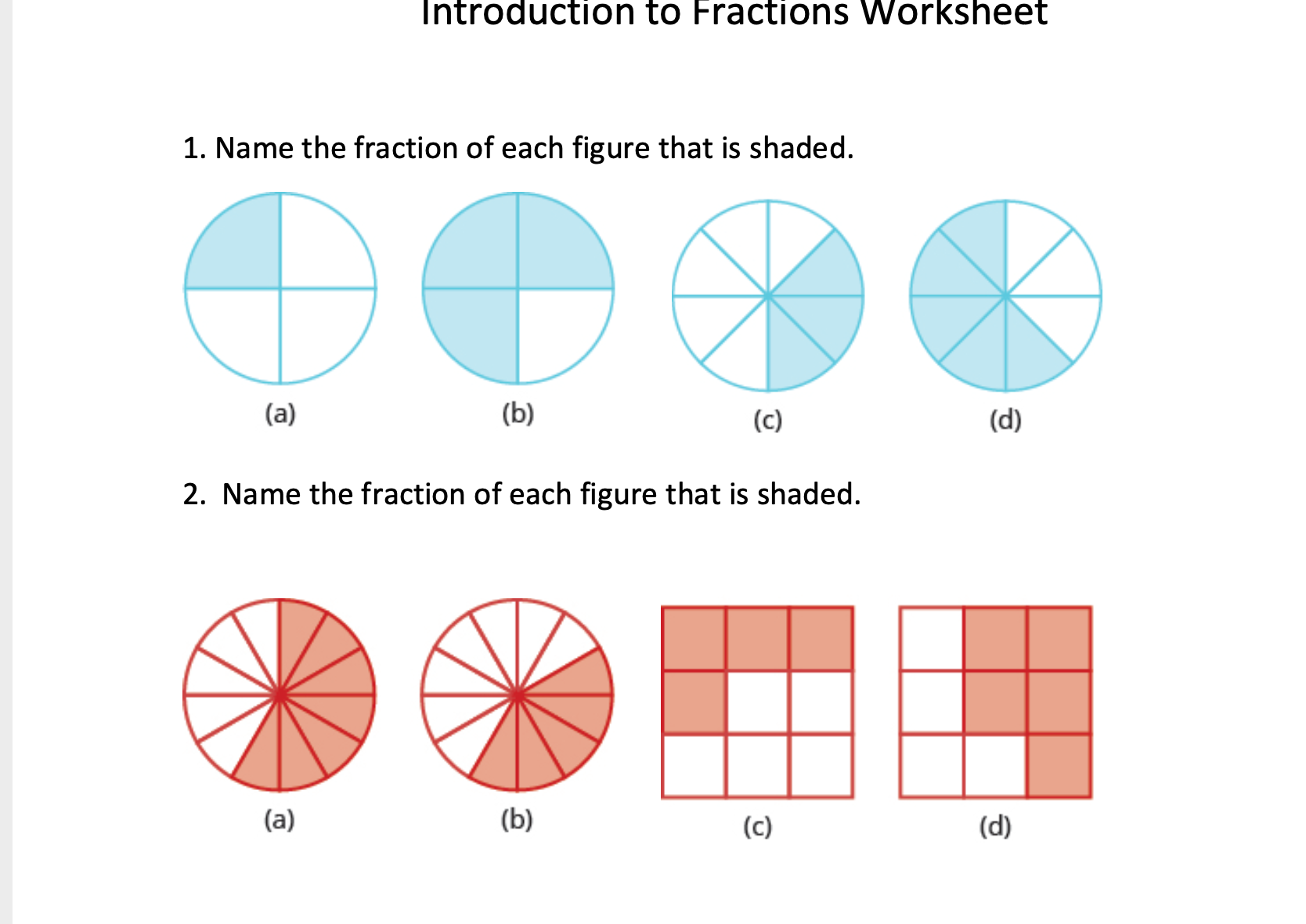
The picture below is from the worksheet provided in the article:

Work for problem 1 below:

1.)

(a) is going to be 1/4. Since the whole was split up into 4 equal parts and there’s one part that’s shaded that’s present.

(b) is going to be 3/4

(c) is going to be 3/8. The circle was split up into 8 equal pieces and there’s 3 pieces that are shaded

(d) is 5/8

Work for problem 2 below:

2.)

(a) is going to be 7/12. (I notice im double checking if I counted the right numerator and denominator)

(b) is 5/12. The circle looks the same as (a)'s so I think the denominator is 12

(c) is 4/9

(d) is 5/9. (I used knowledge of visualizing a 3x3 grid and subtracting how many shaded areas away from the total amount of blocks(9). I have the want to double check my answers for 2)

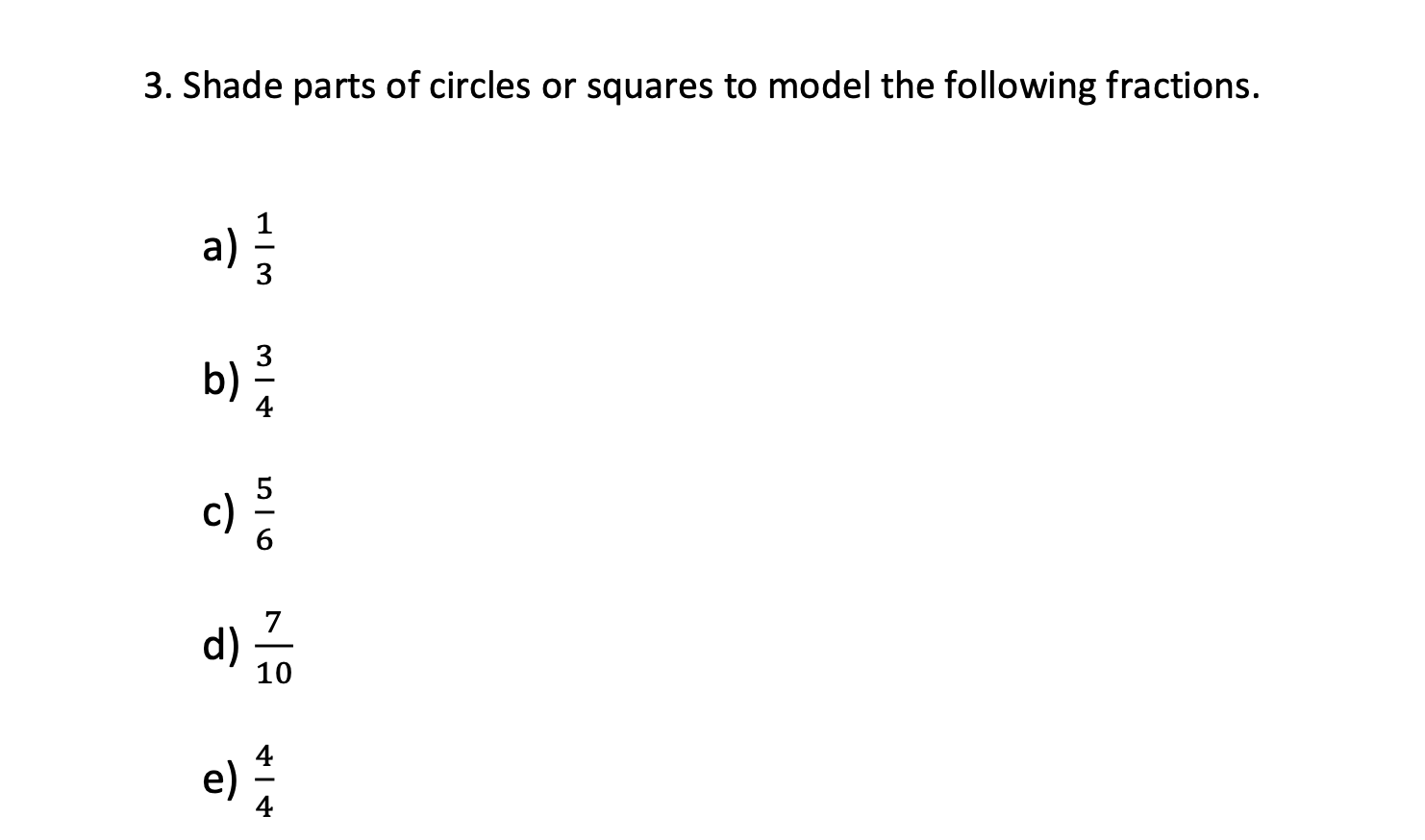
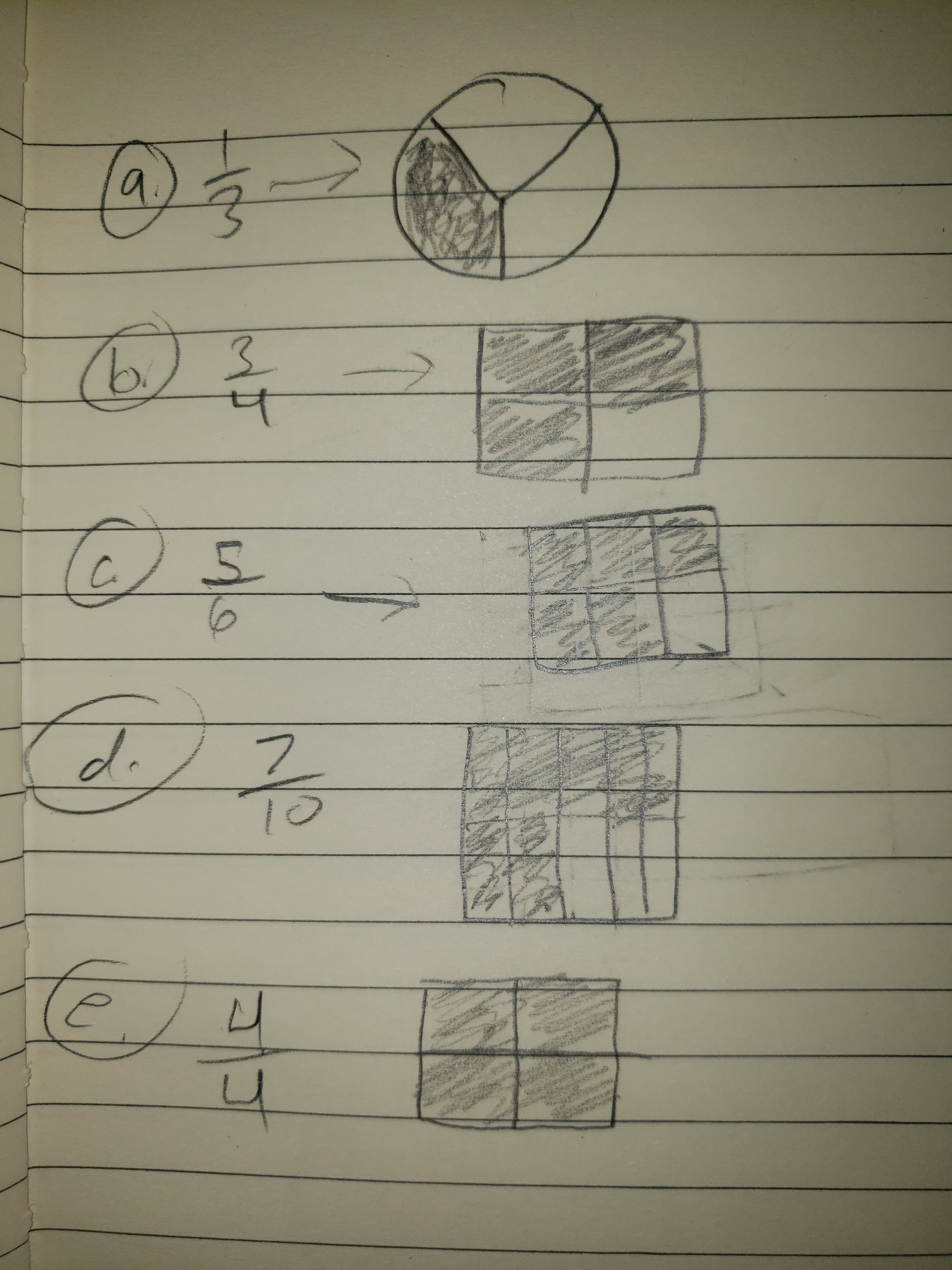
Below is a picture and work for problem 3:

3.)

3 took longer than i thought cuz i had to think of how to draw the squares/circles and with what program. I didnt have a drawing program in my mac and it was difficult to use the screenshot feature to draw stuff.

The shapes in my drawings are obviously not perfect but I think I got what the directions were asking for. I think if I were to do this in grade school I wouldve gotten 3 wrong without knowing or teachers checking it much. Since the circles and squares werent provided, it made the difficulty of getting the problem right higher.

I’m gonna be reviewing the project now:

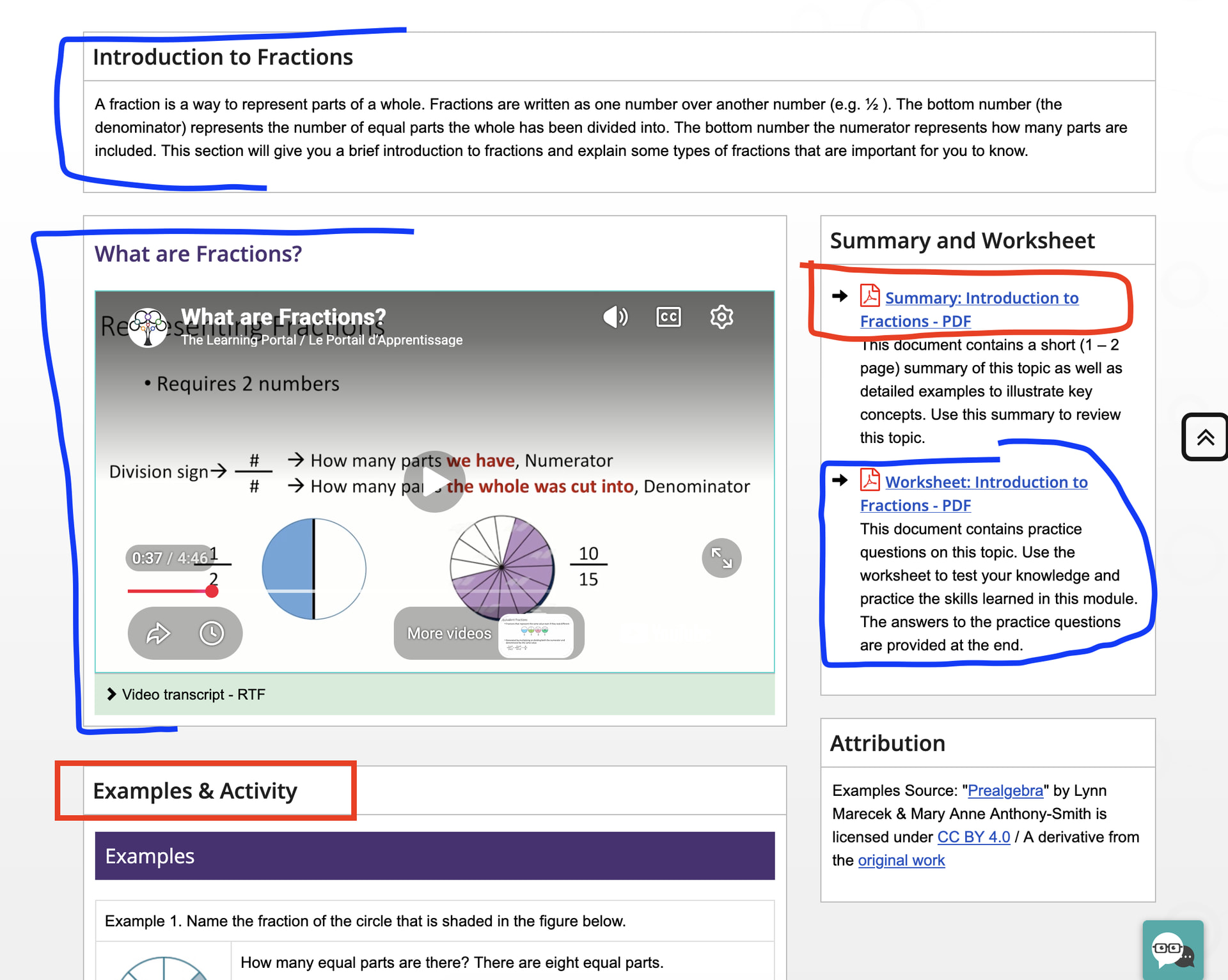
So I wanna say that the project is done, but since I kept the success criteria and goal kinda vague it’s technically not done. I said I should read at least one fractions article, but what I did is read parts of the article. I did three of the article’s things; I read the initial descriptor about fractions, watched the video and did a worksheet. There were some things I missed technically. In the following pic I marked what I missed in red and what I finished in blue:

So I worked on 3/5 of the article’s things. I didn’t want to do the red cuz I thought I was gonna get the idea by just doing the stuff in blue. I think next time if I want to be more successful, I should specify my goals before making a mini project or maybe when I’m about to get to work. I think I automatically selected the parts I thought were going to help me.

I think next time I could look over an article and write the success criteria then. It could look like this: Read the initial paragraph of the article explaining fractions, watch and write notes on the video, and work on the downloadable worksheet. Those sounds like goals tbh tho. I think success criteria could be: explain what a fraction is, describe three things I learned from the video, and get every problem right on the worksheet.

Honestly, I think I’m confused about what’s a goal vs success criteria