Non-Tribalist Politics Megathread

Hmm. Something I’ve been wondering about: have any right leaning people had these new concerns with Trump? I know there’s been some apolitical stuff being shared but idk.

I’m still subscribed to a podcast that is quite right leaning and its interesting to see how they still think Trump is “winning”. I haven’t watched anything of theirs to hear their reasoning. I just get email notifications and I see the the titles.

Reason I share is because I kinda feel that:

1.) I stopped caring about following politics (partially due to Elliot’s influence)
2.) anti-trump stuff, i feel, has always been more mainstream.
3.) i feel by not following those same conservatives types as I used to before I now think Trump is really bad

This isn’t to disregard anything negative about him being shared. Just a thought that comes to mind. Is the reason I’m more hostile to Trump now is because he’s actually worse or because I stopped caring to follow this stuff and mainstream people never liked him anyway. Was he actually better when I followed more right leaning stuff years ago?

idk. I share this because maybe other’s have a similar sentiment?

You’re right i have a similar sentiment. Before joining FI and CF I thought Trump was like all bad(I voted for Hilary 2016), but after reading pro trump stuff on Elliot’s blog(i think around 2018), I convinced myself that Trump was doing good stuff(around his first presidency). I wanna say though that I kept this political outlook to myself and didnt put it up for criticism so it’s on me I think that I believe certain positions about trump like he’s going to drain the swamp and make politics less corrupted by the career politicians.

Simiarly I stopped caring too but cuz I think I have a lack of knowledge to know what ideas are good and bad. Also it’s hard sometimes to see politics with a non us vs them mentality. It doesn’t help though that so many people have their mind up about who are the bad guys. Like I know people say things that are correct but also it’s hard to engage and know what’s right from wrong in convos. There’s so many varying viewpoints

1 Like

Yeah same. I stopped also because I was like: I have no ability to effectively judge any of this stuff anyway at some point.

1 Like

Yeah I think i wanna come back to politics another time and take it seriously but for now no.

Side thought: i do however use political ideas with friends and family to discuss with them so maybe it would be good to use some time to address those ideas

I never followed any particular political commentators in the past, or been particularly interested in politics, but if anything I absorbed left wing stuff. I’ve too become less interested in politics partly due to Elliot’s influence (which I like. It feels good being able to focus on my life and skills and interests and I don’t feel guilty about not following politics.)

I live in a quite left leaning place, like I’ve never heard anything but hatred and contempt for Trump from everyone I’ve ever met irl. I never liked him, but I had the sense the hatred and contempt I was seeing was almost entirely tribalist stuff. Like they laughed and ridiculed him and thought he was a big joke and everything he said was ridiculous. I always thought how people I knew talked about him was very shallow. I didn’t participate in that kinda stuff, but I didn’t like or respect him at all.

I had a very apolitical upbringing. My family never talked about politics. I think they just don’t really care. But now I see they’re left leaning ish. So I hadn’t learned much about what right-wing ideas were until I started learning about economics and some Rand stuff in the last 3-4 years.

So these are some things which I think are perhaps different than your situation, but I feel the same as you that Trump is much worse now. Not that I followed closely before what was going on, but previously I was never concerned about Trump. Now I would say that I am.

1 Like

Yes I feel the same. I became convinced that I didn’t have the skills to engage in current political stuff and reach good conclusions.

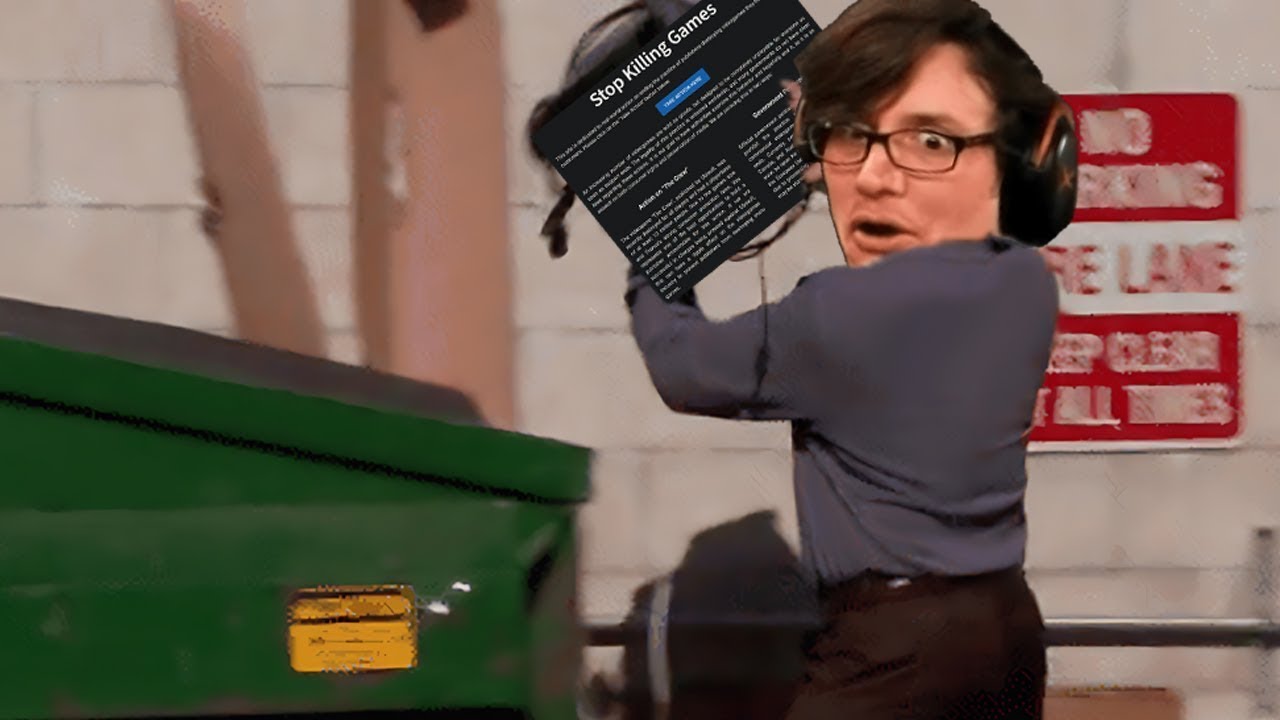
Anybody hear about the “Stop Killing Games” initiative? Apparently this Youtuber Ross Scott (Accursed Farms) got mad when The Crew game got shut down in 2024. The game needed internet even for single-player stuff, then servers died and your “purchase” became worthless.

His solution is to mandate games having end-of-life plan like releasing offline patches or letting communities run servers. The petition hit over 1 million signatures in Europe.

I don’t get why you should legally force publishers to do this. Just make sure consumers know what they’re buying whether that be subscription, license or full purchase. Make sure there’s no fraud going on with marketing, police fraud effectively when it does come up, and let the market decide the rest. If people want to buy more games with end of life plans, then people are free to use their dollars to pay for such games. Or a competitor can come in and take space, providing the market with more games with end of life plans. Thoughts?

Yeah I saw that! A lot of the internet sided with the stop killing games initiative after it got more popularity. I thought there would be more of a discussion after PirateSoftware brought up some problems with the initiave but no.

I saw a point that PirateSoftware rose was that having publishers make an end of game plan will kill a lot of live service games. Like it will prevent a lot of those games from being developed.

There’s a lot of dislike for live service games and I see people are ok with bad things happening to them. I dont like live service myself but it doesnt sound right that a business should suffer and pay high costs and maybe go bakrupt. I think there should be a middle ground

1 Like

What do you think game companies should do?

(This is just off the top of my head, no research.)

This kind of sounds like you’re saying the issue is fraud related to whether a game is a subscription, license or full purchase. Is that correct?

Also, I don’t think is necessarily the correct way to look at it but, this initiative sounded to me like its making game companies keep their promises. I guess publishers shouldn’t be forced to do this, but I do feel that most publishers publish their game in a way that you expect it to always be supported.

Also, have you read the initiative? I probably will soon because I’m interested in it, but the exact plans he’s proposing could be more reasonable than not. I think its fairly reasonable to say that you should have a end-of-life plan for a single player game that for some reason requires internet. Most single player games games like this are always sold as full purchase I feel. It could be he’s saying if you do have a full purchase (I’m just assuming this means you bought a game expecting full ownership or something like that) there should be a plan to keep the product you bought useable if the servers go down.

Yeah interestingly enough some people are saying PirateSoftwares criticism of it has done more for the initiative than anything else. People really didn’t like his take on it. I don’t think thats a great way for this to get publicity and stuff. Then again I think Pirate himself is not open to discussion. So even if people were better at discussing, one of their opponents(?) is not really open to being wrong.

I’ve only seen the out of context clip of him saying this will kill live service games. I doubt it, but maybe his full argument explains his point better. idk i’ll look into it.


Have you looked into this at all?

Gaming companies should be transparent about what kind of product they’re selling. If it’s a license, not a full purchase, and the law requires explanation in fine print, I would go a step further and put it in normal-sized lettering, so it’s clearly visible to the consumer (I think Steam already does something similar). Have a FAQ page that explains subscriptions vs. licenses vs. full ownership.

Gaming companies can also release more games with end-of-life plans, if they have the resources. It seems like it’s something many consumers want or at least think they want. Market it as such and take advantage of the buzz around it if they can make it profitable.

But, above all else, just make great games. That’s a worthy goal for a company.

The government should crack down on fraud, especially when it’s big gaming corporations. They should read your essay “Capitalism Means Policing Big Companies”.

A little bit here is his video on his thoughts about the initiave:

It’s from 11 months ago. There’s a part two linked to it as well

Yeah, Pirate made some good points. People accused Pirate of misrepresenting the initiative though. Pirate mentioned that the initiative would require every game to be in a playable state when a company abandons it. He gave World of Warcraft as an example. It’s a multiplayer game, so he said you’d need a massive overhaul to make it single-player. Ross Scott said it was a misrepresentation. Multi-player heavy games can just release server code for community-hosted servers, not force a single-player redesign.

I dot think either of those end-of-life plan options should be forced on companies by the government.

Would that cost a lot money and resources? If not idk if it goes against copyright for a company to just release a bunch of their code. Like it’s theirs. Idk how it works

What should game companies do? Sell arbitrarily revokable licenses to single player games which they later brick, or not?

They shouldn’t cuz we used to own games ourselves before. I don’t know what was wrong with that. Why did it have to change with non physical games?

If they make the revoking not arbritary then that would be better. Like let people know that the game is doing well or not. Kind of like stock trading. There could be a graph to tell people how well the game is selling. Idk tho sounds unnecessary in a way.

Edit 1: I didnt mean to type the stuff before the second quote. I edited it out.

I do not think it “had” to change. But some game companies did change anyway. So to rephrase your question… why did those companies change?

A cynical answer might be: “because they could.”

Once technology allowed game companies to license games in that way, let them revoke licensing in future, require “always online” to play, etc… many companies switched their model.

They have incentives to do so. It gives them more control over their product. It lets them force updates, and implement more effective anti-cheat measures.

It also lets them brick old games when they have moved on to sell a new game. If you remove players’ ability to play the old game, then people who want to play your games might buy the new one.

It’s also yours, if you buy their product.

If I write a novel and sell you a copy, you now own all the words in that novel. I assembled those words to tell a story, and you own all the words now. You don’t own the rights to the story, but you do own that specific copy of the words. Also, if you want to you can carefully dissect my novel and learn all the words I used, and the style I wrote them in. And you can try to copy my style and write your own similar (competing) novel if you want to.

I am not sure how much changes if you write code, assemble the code into an application, and then sell the application. They seem analogous to me.

I think in the old days of computing, it was pretty common for people to buy products and then take them apart to try to understand how they worked in order to make another (often competing) product. They did this for both hardware and software.

I think these days companies invest a lot in trying to prevent this behavior. I’m not convinced that’s a good thing. Seems to me it is a situation of spending creative resources being adversarial, and is probably worse overall in terms of advancing the field as a whole.

I also think something is especially fucked up about the world when big companies can blatantly steal (m? b?)illions of dollars worth of data with zero consequences in order to create LLMs and make huge amounts of money from investors… and at the same time, big companies do not want you to even have access to the data inside a product you actually bought.

That doesn’t seem right to me. I have sympathy with the idea that we ought to avoid forcing companies to do stuff when possible, but there’s a big mismatch going on in tech right now. I think that pisses people off, understandably.
1 Like

I think it’s between billion and trillions, not millions and billions.

They used maybe 50 million books. The normal average price of those books (new) might be $20 but I don’t think that provides a license for LLM training. What would the authors/publishers charge for a license that allows LLM training if the AI companies had asked to buy that kind of permission and just not used any data they didn’t get a license for? Presumably a lot more than $20 so I suspect books alone puts this well over a billion dollars.

They used maybe 100 million academic papers.

Gemini thinks AI training has used billions of images from the web. What would the creators have charged for those images, for AI training licenses, if given the option to set a price for their work?

How many blog posts did they take? What would I have charged for all of my blog posts to give a license to use them for AI training? What contractual terms would I have demanded which the AI companies are currently violating, and what is the monetary value of those violations? Gemini estimates there are 600 million blogs.

How many social media posts did they take? Every tweet. Not just every Facebook post but every Facebook comment/reply too. Is that over a trillion social media posts? Some people would have sold those cheaply, some expensively, and some not at all which makes it problematic to convert what was taken into just a dollar value.

2 Likes