I was thinking something similar like i thought i would detract from the convo and i think i was going to bring something meta up which sounded off topic. That on the other boyfriend feminist thread.
1 Like
Should they?
Also that reminds me: one of my first assignments involved coming up with decisive arguments. I didn’t get any direct feedback on it but I think your reply was pretty much saying I had issues. Here’s where that assignment starts: Eternity Async Tutoring - #31 by Eternity
Should I work on decisive arguments? Tbh I don’t think I even know what makes an argument decisive in my head.
To the responses I gave? Sure.
Do you want me to continue with the optional assignment?
Your responses or the topic.
sure
At least from my perspective, I wouldn’t care if you interjected when the active 1v1 discussion was happening. I think it was only 1v1 incidentally because me and Neo were the only ones posting regularly back and forth.
1 Like
Yeah.
Same speech, literally seconds later.
Here is a 39 second clip where he talks a bit, makes 2 nazi salutes, then puts his hand over his heart and says “my heart goes out to you”.
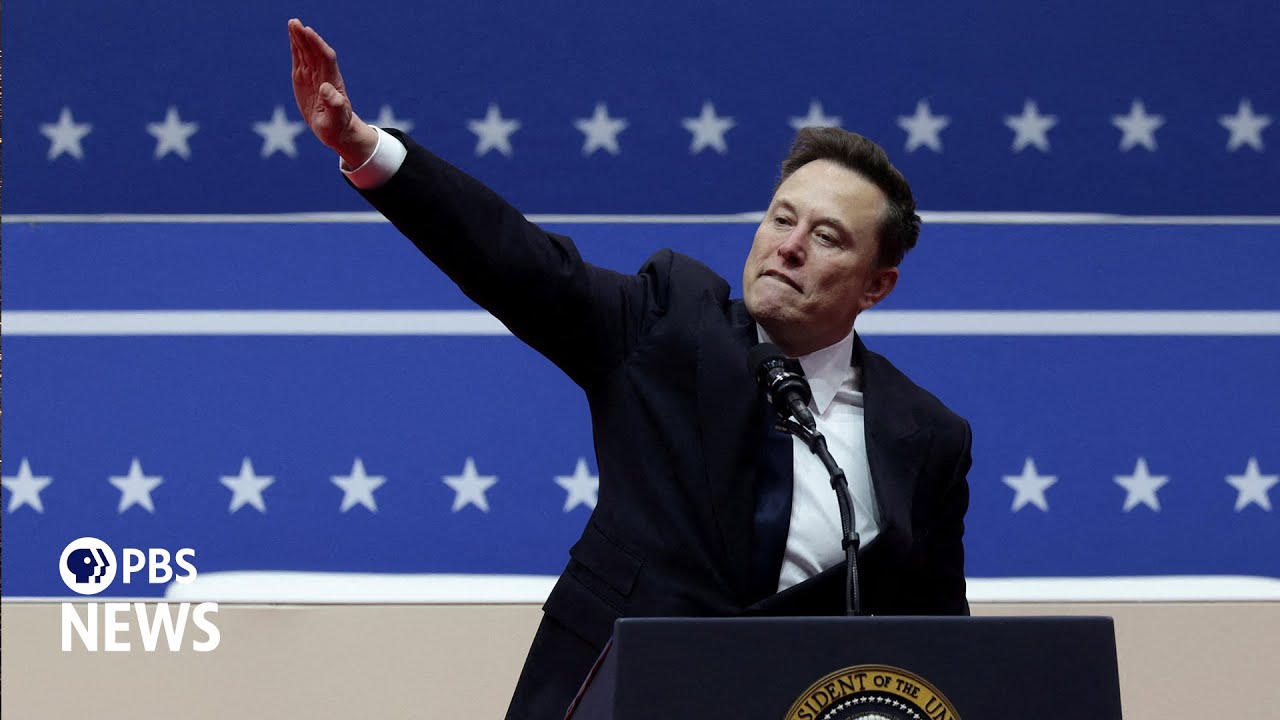
The proximity is very close, which is why people claim the nazi salutes are also related to him saying the phrase right after.
But nazi salutes aren’t normally associated with that phrase. The hand-over-the-heart is. Why would he not just skip the salute and do the other gesture by itself?
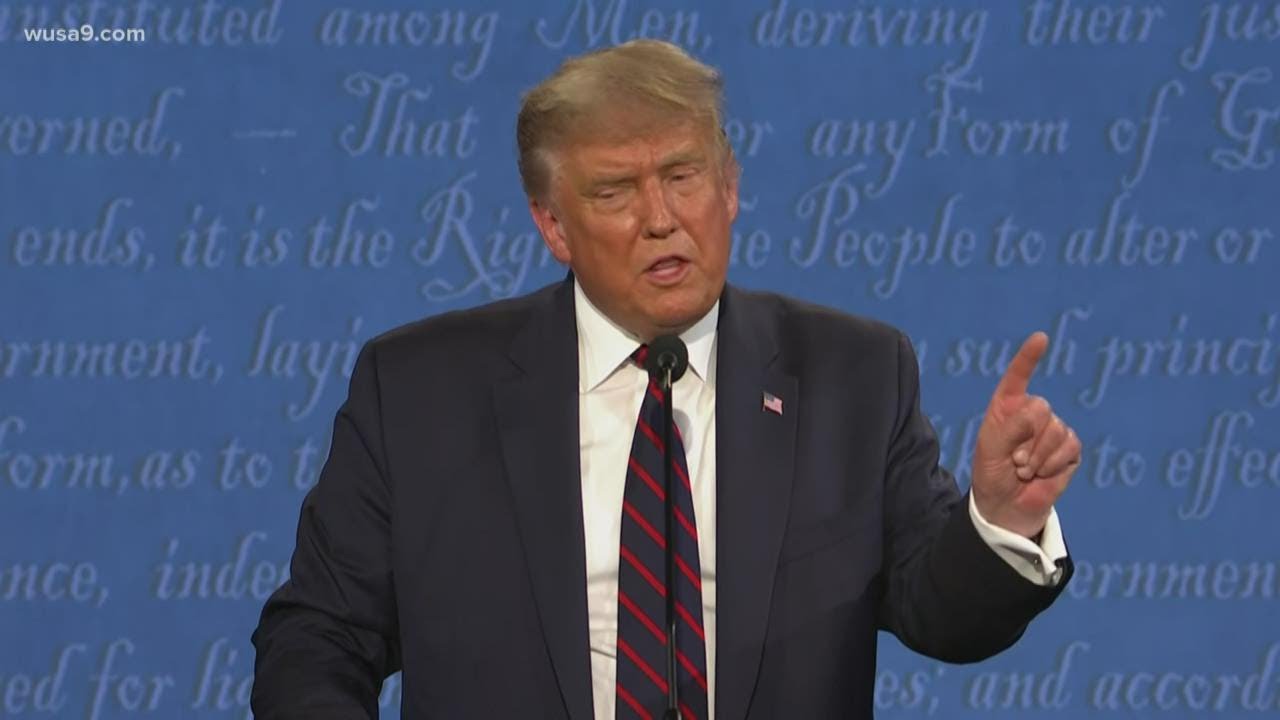
This is a bit confusing due to the context of why Trump said “stand back and stand by” in first place.
He was specifically asked in a debate if he would tell them to stand down. The moderator & Biden both asked about it. They asked about white supremacists, militia groups, and Proud Boys got mentioned by name.
Here is a clip:
I don’t think they saw themselves as terrorists in a bad way. They saw themselves as loyal patriots willing to do whatever it took to save the country from the evil left wing and ensure Trump won the election.
I am not sure why that changes anything I said before, though. They did stand by. They did then attempt to help Trump secure power after the election.
Yes, when Trump’s team tried to slate false electors and steal a win in the electoral college. And Trump used the violence and agitation of the mob he stirred up, particularly groups like the Proud Boys, to try to pressure Mike Pence & others to go along with his scheme and give him the election.
How familiar are you with the coup attempt? Unfortunately it seems like a lot of people on the left and the right don’t care much and have no idea what actually happened.
I would say so. I think in most of my lifetime the extreme fringes were more sidelined. If people gave subtle nods to them, they were much more subtle. The right wing tried a lot harder to distance itself from nazis and white supremacists 10+ years ago.
That has changed a lot and seems to be continually changing every day. There’s an even more recent example, with the leaks of Republican group chats that many on the right (including the vice president) have defended. Not sure if you’re familiar with those:
https://www.politico.com/news/2025/10/14/private-chat-among-young-gop-club-members-00592146
Is that the gesture usually associated with “my heart goes out to you”?
Oh it was very close together. I see. Huh. If the usual thing is to put your hand over your heart, then yeah I’m confused as to the hand raising gestures. He’s an elite and someone who, probably, has lots of prep for speeches. I never saw the clip and assumed it was something along the lines of random movement. Or it happened in a speech that was more spontaneous.
Yes, though it often would then include a gesture from the heart out to the crowd. That is optional but common.
I think it is pretty easy to imagine what that step would look like if he had done it after putting his hand over his heart in that clip. It doesn’t seem very similar to a nazi salute to me.
Oh. In my head I assumed it was either a tweet or a passing comment on the Proud Boys.
Hmm. I’m not/was not aware of that. Not saying that in a manner where I think your making something up or whatever. I just haven’t followed stuff.
The reason I brought that up was because if the Proud Boys are a terrorist group, they really weren’t presented that way to the right leaning media I followed a few years ago. Hell, I don’t even think any violence they did was shared about them. Not even violence that could be viewed in a “good” manner. They were just kinda explained to me as like a small right wing group of boys who liked America and peacefully did stuff. So I kinda gave Trump the benefit of the doubt here in my head because he was just telling, in my mind, a bunch of right wing young adults to stand by (in a lighter manner like for peaceful gatherings and stuff).
Not too familiar. I’m vaguely familiar with the left wing idea that it was a coup. I used to follow a lawyer who gave his opinions on it and shared that it was peaceful event. I believe he was near D.C. that day in legal related matters when all that occurred.
Really? I don’t really have a good view on this, but the feeling I get is that on the left extreme fringes have always been kinda accepted. Maybe not? I do think this is true:
My main right wing influence was Ben Shapiro. I remember him hating on all this stuff a while back. I wonder if he’s still consistent and how the right feels about him.
No, but damn. This reminded me of something:
I used to make a lot of offensive jokes and stuff in high school. Long story short I eventually stopped because I realized that some of the friends around me weren’t joking. I believe it was a joke made about black people being monkeys stuff. I don’t know how to put it but it didn’t have the usual humor to it and I realized he was serious and asked him about it. At that point I stopped making offensive jokes irl and am wary of those jokes irl, but I never really expanded that idea to online. I kinda thought that people online are not actually racist, but are just making offensive jokes. I don’t think so anymore.
What about the current rights opinions/actions are evil (not asking in defensive manner)? Like which specific things are they doing that you consider evil? Like the ICE stuff going on? I haven’t kept up much but I assume there’s some generally bad stuff going on different from something “evil”.
Also what do you consider pretty far back? I don’t think it was too too long ago that big movements(?) happened with racist policies and stuff.
So you wouldn’t abstain from voting?
I think they say that and I think maybe many do. I don’t know what political opinions you had before exactly, but I think a common thing shared by the right was how actually how the left doesn’t want to help. Like wanting to do stuff that harms western civilization and all that. Did you know about those things? Agree/disagree with them before and now changed your mind?
That makes sense.
I think he’s pretty close to Orren Boyle. I forgot a lot about him but I remember a big thing was his huge loan from the government and how’ he’s a crony capitalist. I think that fits Elon well.
In a similar manner Elon is rich and so was Boyle. Boyle wasn’t rich because he was amazing. I don’t know if they covered it much, but I assumed he was rich because he still produced somewhat. You don’t have to be good to be rich.
Is there a politician that isn’t a red flag? Idk.
That makes sense. Its hard to know the ways Kamala would’ve been bad for us. Also, @anonymous105 mentioned how predictions about Trump were mostly wrong for his first term. So I get why people may have voted for Trump (though red flags were showing through the whole process afaik).
I know this conversation went down a different line, but something came to mind:
how long have you followed Elliot for? He used to talk about politics a fair bit. Do you think things are worse because Elliot stopped dealing with politics as much? Would things have been better if he continued?
Do you think you’ve been able to do anything on a local level? With your peers, friends, coworkers, classmates (if in school), family, etc. ? Convince them on anything? Did they listen and care?
Are you aware of political philosophy and are confident in applying it to the real world? I’m not. I’ve just read a bit of Rand. I don’t think that’s sufficient.
It is a complicated issue that I don’t want to go into in full detail here. I would recommend researching it independently to verify what I say and learn more, if you’re curious.
But, broadly, one misconception is that the riots on J6 and the mob breaking into the capital building was the coup attempt. I think the right loves to push this idea because it give them cover. But also a lot of people on the left play into this narrative because they just focus on the flashy optics and don’t care about the details.
The key thing is that the coup involved 2 primary components.
The less well known component was the false electors. Do you understand how the Electoral College works? If not, look it up or this won’t make much sense. Basically, Trump’s team had people in several states (where he claimed fraud, but had failed all of his court cases to try to prove fraud) lie on documents and claim to be the duly appointed electoral college representatives. They then went to Washington DC and tried to go in and have their false votes certified. Basically, if accepted, this would mean the EC votes for those states would go to Trump even though Biden won those states.
The false electors were turned away. But the goal was for the false electors to be slated, and Trump’s team thought they could do this because of the second component, the riot.
Trump had a big rally and whipped people into a frenzy and told them to march on the capital building. The crowd began rioting outside, chanting to hang Mike Pence if he did not “do the right thing”, attacking police, and breaking down the door to the capital building. Part of the reason for this was to delay the certification of the vote, which worked.
Trump then tried to pressure Mike Pence to go along with his scheme. This is because one of the VP’s roles is to oversee the electoral college casting their votes, so Pence was well-positioned to take action. Trump basically used the riot and the mob to put pressure on Pence (and congress in general), so that they would slate his false electors and certify a false electoral vote that would give him the presidency.
Mike Pence refused. The vote was delayed successfully by the riot, but ultimately the riot ended and the votes were certified. The electoral college votes were tallied based on the representatives sent by the states, and Trump’s co-conspirators were not slated. Trump’s coup failed.
One thing I’ve noticed is that people who mostly consume right wing media are often totally ignorant of a lot of these facts even though they are very widely available. Nothing about the coup is meaningfully disputed, instead republicans mostly just ignore it and try to pivot to just talking about the riot as if it was an isolated event. Though it’s possible I misremembered some detail or nuance since I have not discussed this issue much since 2022 or so. If someone wants to challenge me on details and present a coherent alternative right wing version of events, I can brush up on the facts to engage with that. The last time I looked into it, none of the right wing defenses stood up to real scrutiny.
If he only discussed the riot and not the false electors, that’s a huge red flag. I think that basically proves he is a partisan hack trying to sell you his agenda.
–
I think it is remarkable how little most people care about this issue. To me, the coup attempt is a red line dealbreaker. I think basically anyone who supports Trump after the attempted coup is either an uninformed fool (at least in terms of their political opinions), or they have anti-liberal fascist inclinations. It’s disappointing.
You weren’t asking me but I thought this question was interesting.
I’ve read Elliot’s writing off and on for a really long time. I think Elliot has interesting ideas, but I don’t think he was ever particularly influential in politics. I don’t think he changed the minds of any major political figures, or has ever been well-positioned to do so. I don’t think he has ever been in a position to dramatically alter the political landscape.
I also don’t think having good ideas is enough to even make a small dent in US politics. In fact, having good ideas might be a hindrance for that. You need to be persuasive and have high status and lots of other stuff. Many of the things necessary to be politically powerful are things that Elliot has actively avoided pursuing for most of his career as far as I can tell.
Do you disagree? Why?
Most of the racist actions of the 20th century (in America!) were either:
A) Based in some sort of misguided belief that was in some way grounded in reality. For example, Japanese internment camps were evil, but the US was actually at war with Japan. There was a coherent logic behind them, even though it wasn’t a good idea.
B) Cases of conservatives defending an existing racist status quo. Segregation, denying rights to women, etc. I think that stuff is very bad, but is meaningfully different from trying to roll back progress and reinstate evil racist policies that society had seemingly figured out were bad.
Current evil policies have no basis in reality or fact, and are not defending an existing bad status quo.
ICE behavior is especially egregious. But really, the list is quite long. Infringing on women’s rights & LGBT rights, gutting institutions, demonizing and canceling cheap foreign aid that saves millions of lives, using the state to punish citizens for speech, demanding loyalty oaths from journalists, destroying US relations with other countries, it just goes on and on.
Trump’s first term was mostly just regular right wingers. This is why his first term was comparatively tame. His generals and attorney general and other key figures refused to do what he wanted.
I think most of Trump’s administration this time around is comprised of evil sycophants. JD Vance isn’t an ignorant fool, he knows how bad Trump is, he literally wrote about how Trump was “America’s Hitler” — he just decided he wants to be on Hitler’s good side.
No. I think the current administration should be opposed. Voting doesn’t take much time or effort.
Ben Shapiro accurately described the January 6th insurrection attempt on January 7th. But he has abandoned that lately. I think he wants to stay relevant and the right wing has moved so far that he has to chase after them now. Even so I think he gets a lot of hate for being semi Trump critical, and for being a Jew.
Yeah a lot of people have this realization at some point. It sucks.
Edgy jokes can be funny sometimes, but they are supposed to be funny because they are a shocking subversion of norms and morality. Lots of right wingers tell edgy jokes and think they are in the observational humor “it’s funny because it’s true” category instead.
Here’s a recent example of a Republican US politician, with a congressional seat, denying an alleged Nazi association. There was allegedly an American flag in his office with a modified design with a swastika in the middle. This is the kind of statement that Musk chose not to make.
Here’s his statement which I think illustrates what a serious denial looks like:
I am aware of an image that appears to depict a vile and deeply inappropriate symbol near an employee in my office. The content of that image does not reflect the values or standards of this office, my staff, or myself, and I condemn it in the strongest terms. Upon learning of this matter, I immediately directed a thorough investigation alongside Capitol Police, which remains ongoing. No further comment will be provided until it has been completed.
The next day he issued another statement:
“New details have emerged from a coordinated investigation into the vile symbol that appeared in my office. Numerous Republican offices have confirmed that they were targeted by an unidentified group or individual who distributed American flags bearing a similar symbol, which were initially indistinguishable from an ordinary American flag to the naked eye. My office was among those that were subjected to this ruse. After a full-scale internal investigation, I am confident that no employee of this office would knowingly display such a despicable image, and the flag in question was taken down immediately upon the discovery of the obscured symbol it bore. As I’ve said previously, I unequivocally condemn hate in any form and continue to collaborate with Capitol Police and the Committee on House Administration to uncover additional details in this investigation.”
2 Likes
I havent voted in a while, but looking up the issues for what to vote for sounds like it’ll take a lot of effort. I don’t wanna just vote to oppose the administration, I wanna know why im doing it. I dont want to just pick a side and go for whoever looks worse. It’s hard for me to even make smart decisions in real life. Politics sounds harder.
Im not too sure about this but i think people aren’t that rational at decision making and makes me think they make lots of mistakes deciding on who to vote for.
Like, you have to think about candidate x and y and think about what issues they have a good take on. They have issues like issue a,b,c,d etc. to think about. That and who knows maybe one issue to decide on is what makes the candidate not worth voting for. Thats a lot of difficulties that could go wrong
I think these are reasonable concern to have. There are a few considerations I’d like to offer, though.
Political decisions impact approximately everyone in the country and often lots more people globally. They will happen whether you participate or not. Unlike various decisions in your own life, such as whether or not to have kids, you can’t really pause the political landscape until you feel equipped to engage with it. It will continue to happen without you. And it can have a big impact on your life.
Also consider what you said here:
It logically follows that many mistakes are currently being made already. For your vote to be a very tiny increment towards positive change, you don’t need to be super informed or particularly competent at any of the stuff you listed. You would just need to be marginally better than the median voter. I think the median voter is pretty bad. I don’t think they’re making great choices most of the time.
(Edit: arguably, you don’t even need to be better than the median voter, you could just be better than the worst voters and still potentially be helping a tiny bit. But that feels more debatable to me, so I’ll set that aside for this post.)
Even if you make tons of mistakes and vote badly 49% of the time, that could still be better than the alternative where you don’t vote.
Another thing to consider is what a lot of people call "deal breakers” or “core issues” — these have some overlap with CF’s concept of decisive criticisms. If you have one or more dealbreaker issues, maybe all you need to do is review candidates and vote based on them failing one of those dealbreakers, since that is a decisive criticism.
Voting this way would require you to invest a lot less effort and time in studying up on every issue. Maybe your chosen candidate sucks in 10,000 ways, but if they are good enough to pass all your dealbreakers then perhaps they were still better than the alternative candidates.
I think that right now this has been made easier than normal. Most dealbreakers I’ve been aware in my life have been stuff like abortion, gun rights, taxes, civil rights, etc. And I would argue that the current administration fails on all of those dealbreakers. But it’s even easier than that, IMO.
There are other dealbreakers that most reasonable people ought to have implicitly, but have not really been meaningfully tested in my lifetime until recently. Stuff like “is not an authoritarian fascist” and “respects the basic rule of law” are examples of implicit dealbreakers that haven’t been tested very much in the USA.
Unfortunately for the world, but fortunately for you in terms of this discussion, these dealbreakers are currently being challenged. So e.g. you could have the dealbreaker of: “Might this candidate plausibly try to remain in power indefinitely, and use the military and/or his anonymous unaccountable secret police to kill or imprison anyone who tries to stop him?”
If you had that dealbreaker, then you could at least reliably vote in the next presidential election. If you had the dealbreaker of “will this congressperson support an authoritarian takeover of the country and ignore violations of the law?” then maybe you could vote in congressional elections, too, such as during the midterms in 2026.
At the moment, I think it is especially easy to vote solely on basic principled dealbreakers. You could choose to vote in the short term, and then stop voting once the candidates are less clear in their differences and you have no dealbreakers being violated. (Or, more bleakly, no candidates that pass your dealbreakers.)
1 Like
How do you know? We don’t yet know who the candidates in the next election will be. Maybe the Republicans and Democrats will both run awesome candidates. Or maybe they’ll run about equally terrible candidates.
As to the broader issue about voting, it reminds me of the wisdom of the crowds concept. Basically if lots of people just make intuitive guesses with no research, sometimes the result comes out pretty good even if none of them individually have fully thought things through and lots of them are wrong. More people is better. You don’t have to be an expert to contribute.
If you don’t want to vote because it takes up time or you’re not in a swing state or you want to abstain to protest both major parties being bad, that’s fine, I don’t care. But if you’re avoiding voting because you think you need to do more research first, I doubt your attitude is correct.
And I agree that voting based on a single important issue you care about is fine. You don’t have to consider all the issues to contribute in a wisdom of the crowds style way.
And yeah lots of other voters are dumb so leaving voting to the more overconfident people isn’t better.
1 Like
Good point!
I should have clarified that my statement was assuming Trump’s explicit stated plan to run for a third term will actually happen. It might not happen for various reasons, but at this point I think it would be foolish to assume it definitely won’t. But I don’t know what will actually happen. A lot can change in 3 years.
Maybe I should have said “you could have voted in the 2024 election” since that already happened and isn’t speculative.
This is also a good point that is kind of similar to a thought I had after posting.
One could use the dealbreakers idea to say that there are decisive criticisms of all candidates, and thus they abstain from voting. I am sympathetic to that idea, but I have some issues with it, too.
You could set high standards and then basically all candidates will always fail. I dunno if that’s practical or very useful though. Since someone is going to be elected, it might be worthwhile to make at least some effort to narrow down specific dealbreakers and see if both candidates are actually comparably bad.
Like say gun rights is your dealbreaker and both candidates are bad on that. But is that really your only dealbreaker? What if one candidate has the policy of “kill half the population at random like Thanos, and also restrict guns” and the other candidate just wants to restrict guns?
It might make sense to have tiers of dealbreakers. Once all candidates pass a tier, move on to the less important tiers in order. So then maybe the Thanos-snap agenda is actually at a more important tier than gun rights.
I actually think people do this intuitively a lot already. But given some of the unprecedented things happening right now, it might be good to examine those intuitions and make them more explicit.