I haven't read Aaron Stupple's book, The Sovereign Child: How a Forgotten Philosophy Can Liberate Kids and Their Parents, because he and others aren't open to debate and criticism. (If any fan of the book wants to debate me, email me at curi@curi.us Also if any fan of the book posts a rational debate policy, please let me know.)
Many parents believe that without restraint children would resort to a diet of chocolate and coke and never look at another vegetable again. Why? Do adults who have no one to monitor and regulate their food intakes routinely resort to irrational diets that might endanger their health? Sadly, some do. However the likelihood is that adults with poor food ideas about food, who struggle all their lives with their relationship to food did not have childhoods where they could freely choose the foods they liked without ‘good’ or ‘bad’ labels being placed on them.
Surely, though, we can’t simply let out children eat anything? As in other areas, we should certainly be sharing our ideas with our children as trusted advisors, but, tentatively and without scare mongering or overstatement.
Health is obviously an important factor to take into consideration when we are choosing foods, and we do well as parents to share health related information about food in non-manipulative ways,
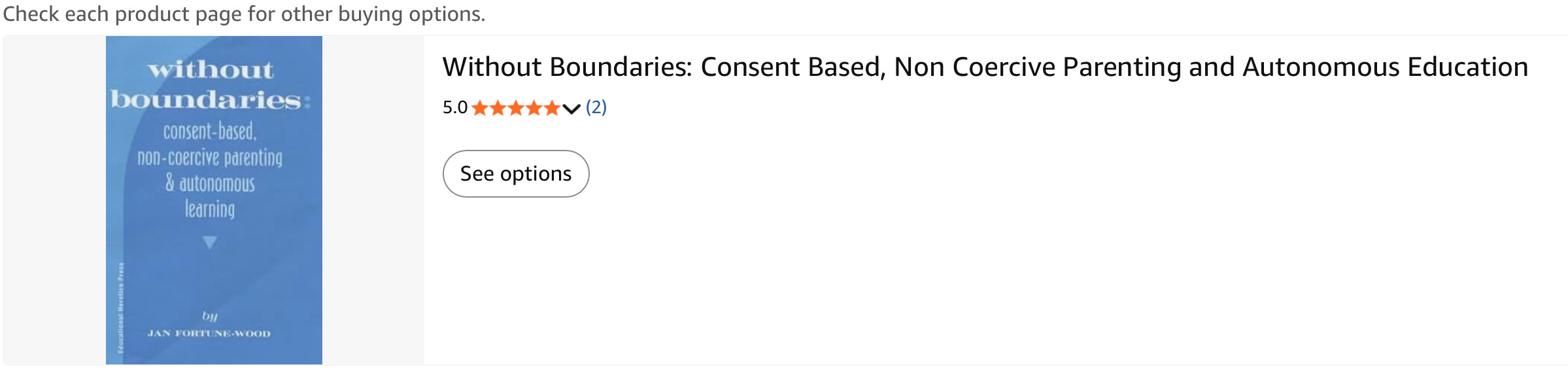
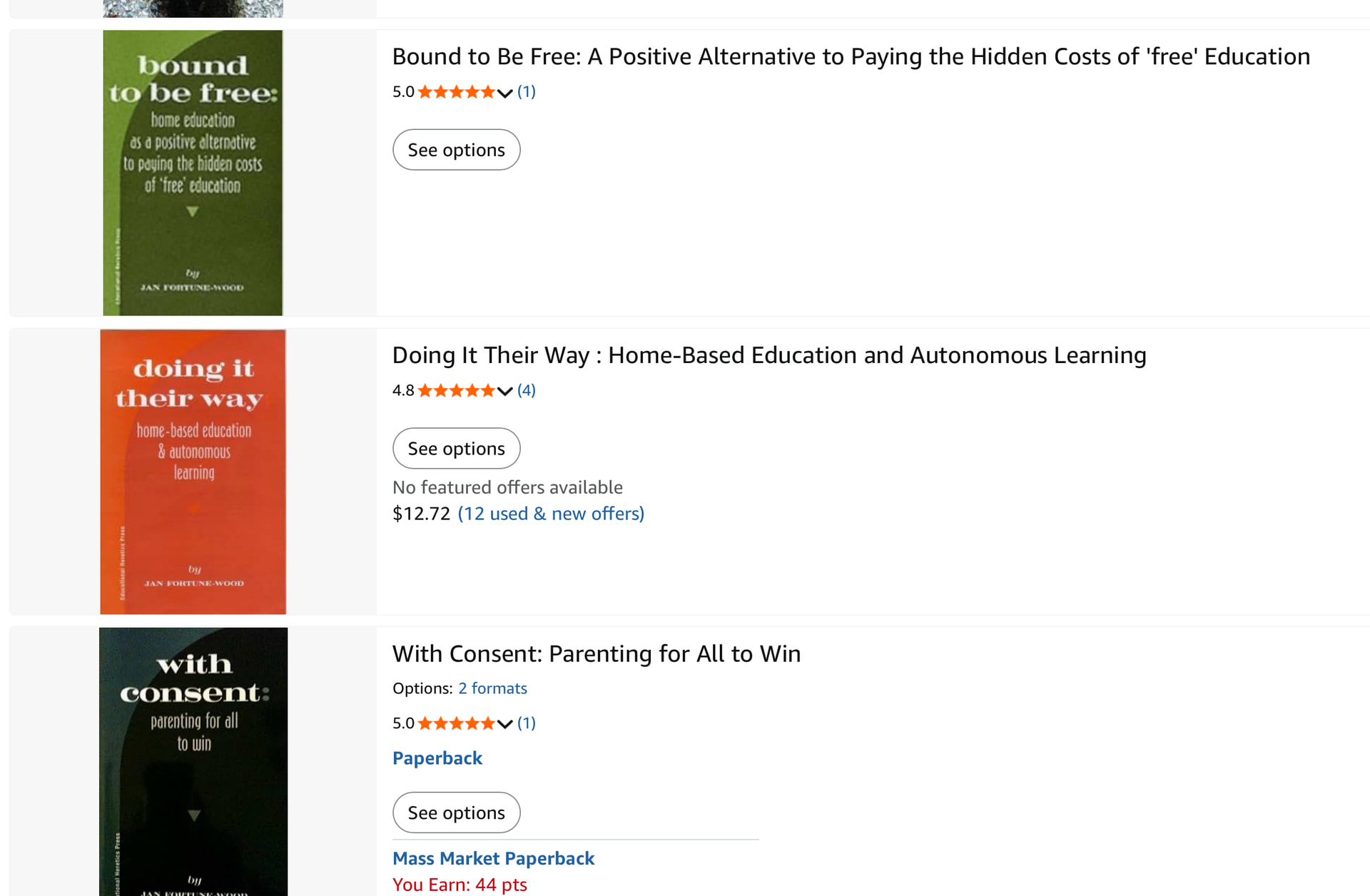
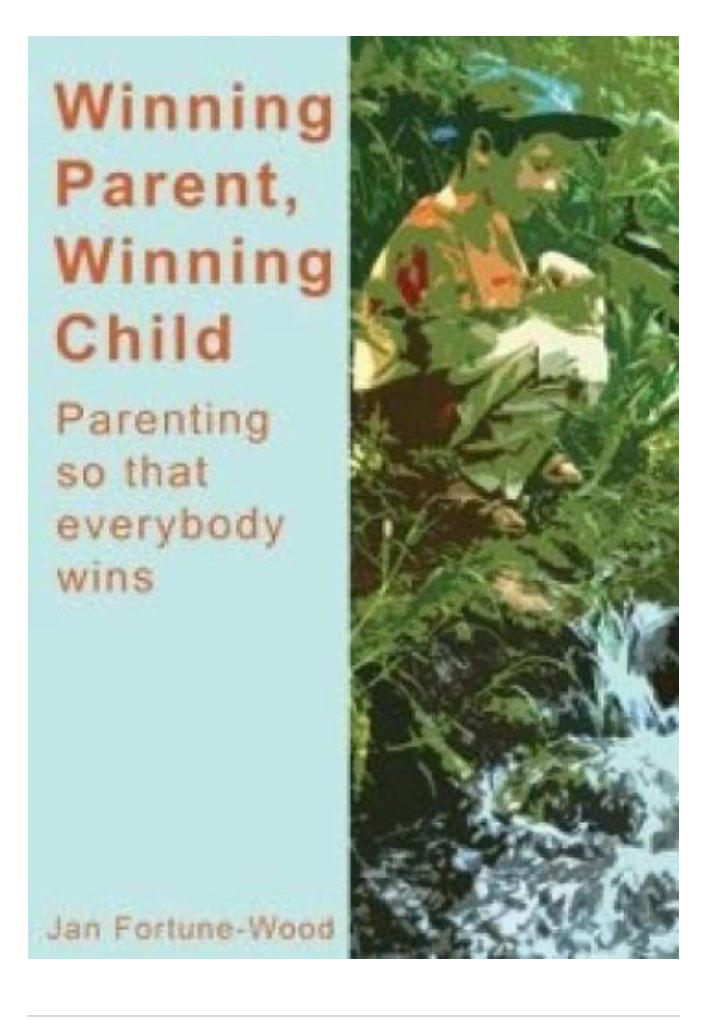
This is better than The Sovereign Child.
Also, in general, Jan Fortune-Wood’s books are more philosophical and theory-oriented than Stupple and Chipkin’s book.
So strange to write a whole book having no fucking idea about the ideas involved in it. Also your point about their child only being 6 is so true.
Is it like, they just wanted to write a book, without much regard for whether it was worth anything? Like just a hobby project for themself or something? I wonder if that’s the kind of way some people think about writing books.
They care whether people perceive them as smart intellectuals. Lots of them want it to be their career, not a hobby (Stupple in particular is a doctor; I don’t know if he wants to quit that job to be an intellectual or not). They made an Institute.
My basic take on those people is they left my community, and dislike me, because I have high standards. They don’t know how to and are unwilling to learn a lot, and instead want to already be smart and rational, and already be good enough to be top, elite, intellectual thought leaders. They don’t read much Popper or understand much about Popper either, but they try to present themselves as Popper experts. They won’t debate and don’t want to deal with criticism about how they should study more or criticism that reveals their ignorance. They associate in a group where everyone flatters and talks up everyone else, for social climbing purposes, except unlike most such groups they also claim to be Popperians who are into criticism. Also Stupple and other leaders were unwilling to say or do anything against the harassment I’ve received from their community.
You’d think they’d care whether the actual smart people perceived them as smart. Why want normal people to think you’re a smart intellectual, while the actual smart intellectuals think you’re stupid?
I didn’t know Stupple was part of your community and left.
Right they’re trying to impress their peers which also have low standards, and who also avoid giving feedback and criticism to each other. They are also harass or sanction the harassment of their greatest critic. It’s no wonder they don’t understand the ideas.
Assume they consider themselves actual smart people. Their standards probably also make a lot of people they’re impressing count as actual smart people too.
I think you’re dismissing most professors and authors as “normal” and not actually smart? They aren’t looking at the world that way.
I just wish people trying to be thought leaders would engage in debate…
Stupple didn’t post at my forums but he knows who I am and has friends like Chipkin who did post at my forums. They intentionally splintered a community that isn’t big enough and they’ve never been willing to discuss/debate/explain why.
I can see that they wouldn’t look at the world that way because of their low standards.
I guess I do think most professors and authors aren’t smart. I’m thinking I should be more skeptical about that because I don’t really know a lot about the world, and I myself have a lot to learn about being smart.
Yeah and it’d be fine to be writing books that were bad if you were also trying to debate and discuss with critics about them and trying to improve your writing.
That’s not what books are for. The concept of a “book” has a meaning and using books this way would confuse audiences and violate their reasonable expectations. It’s OK to write this way. Blog posts would be a reasonable format for this type of writing.
Good point. People expect if you write a book that you’ve done a lot of that kind of work on figuring out the ideas already. Book’s are considered more of an official statement on one’s views.
Also that seems like a bad kind of thing in general, no? Like it’s harder to fix a bad habit instead of starting one. Seems like not a great idea to wait until something is a problem to address it, especially if it’s something you know could end up being a problem.
Is the popular opinion talking about guarantees? Maybe? I think most parents would just take it as something that just has a high chance of occurring.
~that makes sense. children don’t know a lot of things. They may not share something thats “wrong” with them because they have no frame of reference for whether its wrong or not.
Hmm. I wonder if he just read some random parts, found it convincing, and then proceeded to think he understood it well. He understood it well as permissive parenting instead of understanding it for what it actually(?) is.
Did the founders of TCS have experience parenting a child for the whole age range? Like did Fitz-Claridge write stuff after her kids turned 18 or?
! They helped promote it? That’s weird. I wonder if it’s something along the lines of a sunk cost. You mentioned
but I wonder if even after wanting to bury it (for whatever reasons) they still felt bad ruining a big(?) project and so they were glad to see someone interacting with it.
~kinda? I think it’s closer to most people have low standards for ideas. Or they are fine with an insufficient idea. I mean just off the top of my head there are books written that just strawman people. It’s not the same as having no idea about the ideas involved but I think it’s similar.
mmm. are you saying its not worth anything? i more-or-less agree. though i haven’t read it for myself, but based on this article from Elliot I doubt I’m missing out on anything.
are you saying they should/would know its not worth anything? idk about that
I wonder if part of it is that they also want to get to a point where they stop having to learn. Like he’s a medical doctor (hopefully a good one, but probably not?). He had to learn a lot of stuff to get there and I think he wants to be done after that(also it’s debatable how much he actually learned ig).
I think Miss Rand commented before on how people want knowledge that’s done and final that they don’t have to keep putting effort into.
Do you think actual smart intellectuals think they’re stupid? Elliot thinks their stupid (or, well, I’m assuming that). But, uhh, outside of him who else are we talking about? Or are you talking about something along the lines of if a different smart intellectual came along they would think Stupple is bad?
~same one thing I thought of: I don’t think most professors are as smart as they claim/are purported to be, but I do think they still are smarter than me in certain aspects and are generally kinda smart.
No. David Deutsch doesn’t have children. Sarah Fitz-Claridge started writing about TCS when her children were quite young and stopped writing much around when her children hit their teens. I think that’s bad.
Another way Stupple’s book isn’t TCS is it provides too much information about his children, like about their diet. TCS advocated much more privacy. Fitz-Claridge said basically that her own parenting outcomes were irrelevant to TCS theory and avoided sharing information about her children with the online community. Lots of people don’t even realize who one of Fitz-Claridge’s children is because they don’t share a last name.