I’m reading a book called: The Stress Management Handbook: A Practical Guide to Staying Calm, Keeping Cool, and Avoiding Blow-Ups by Eva Selhub M.D. , and here are my trees so far:
1st Paragraph of the introduction:
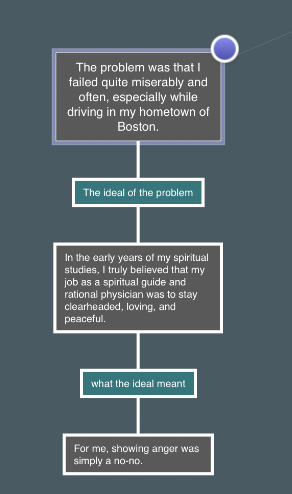
In the early years of my spiritual studies, I truly believed that my job as a spiritual guide and rational physician was to stay clearheaded, loving, and peaceful. For me, showing anger was simply a no-no. The problem was that I failed quite miserably and often, especially while driving in my hometown of Boston.
Paragraph Tree(pd link):
2nd paragraph:
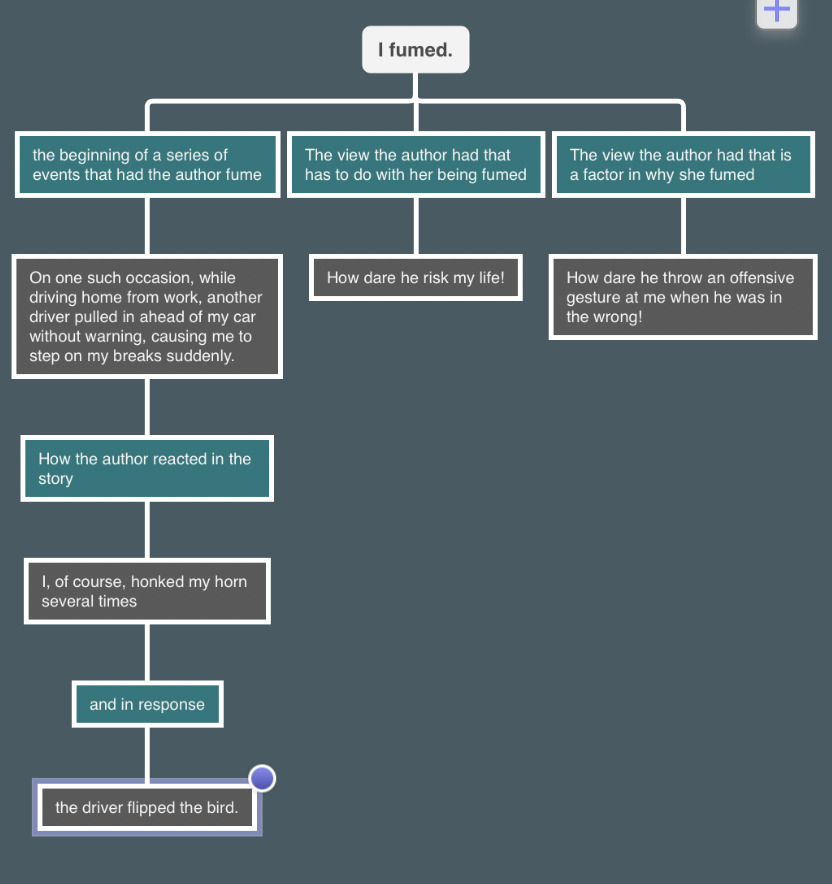
On one such occasion, while driving home from work, another driver pulled in ahead of my car without warning, causing me to step on my breaks suddenly. I, of course, honked my horn several times and in response, the driver flipped me the bird. Obscenities flew out of my mouth. How dare he throw an offensive gesture at me when he was in the wrong! How dare he risk my life! I fumed.
2nd paragraph tree(pdf link):
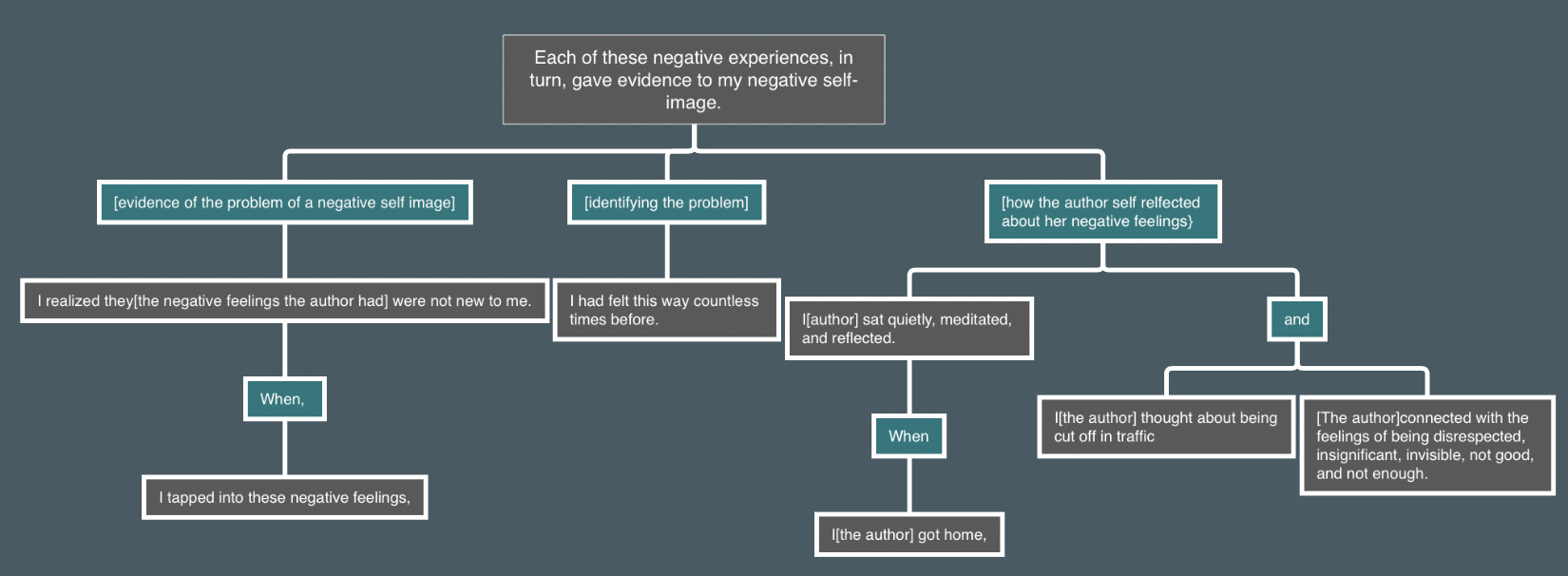
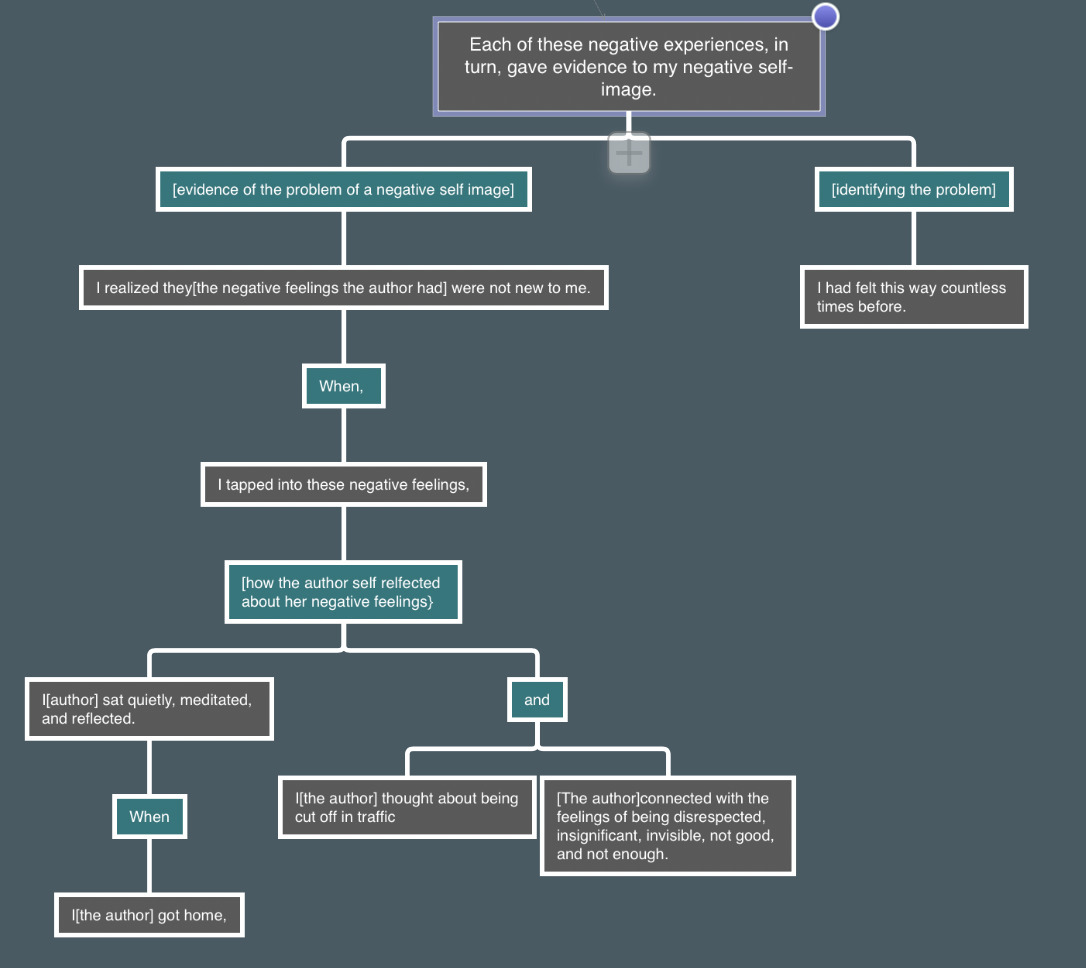
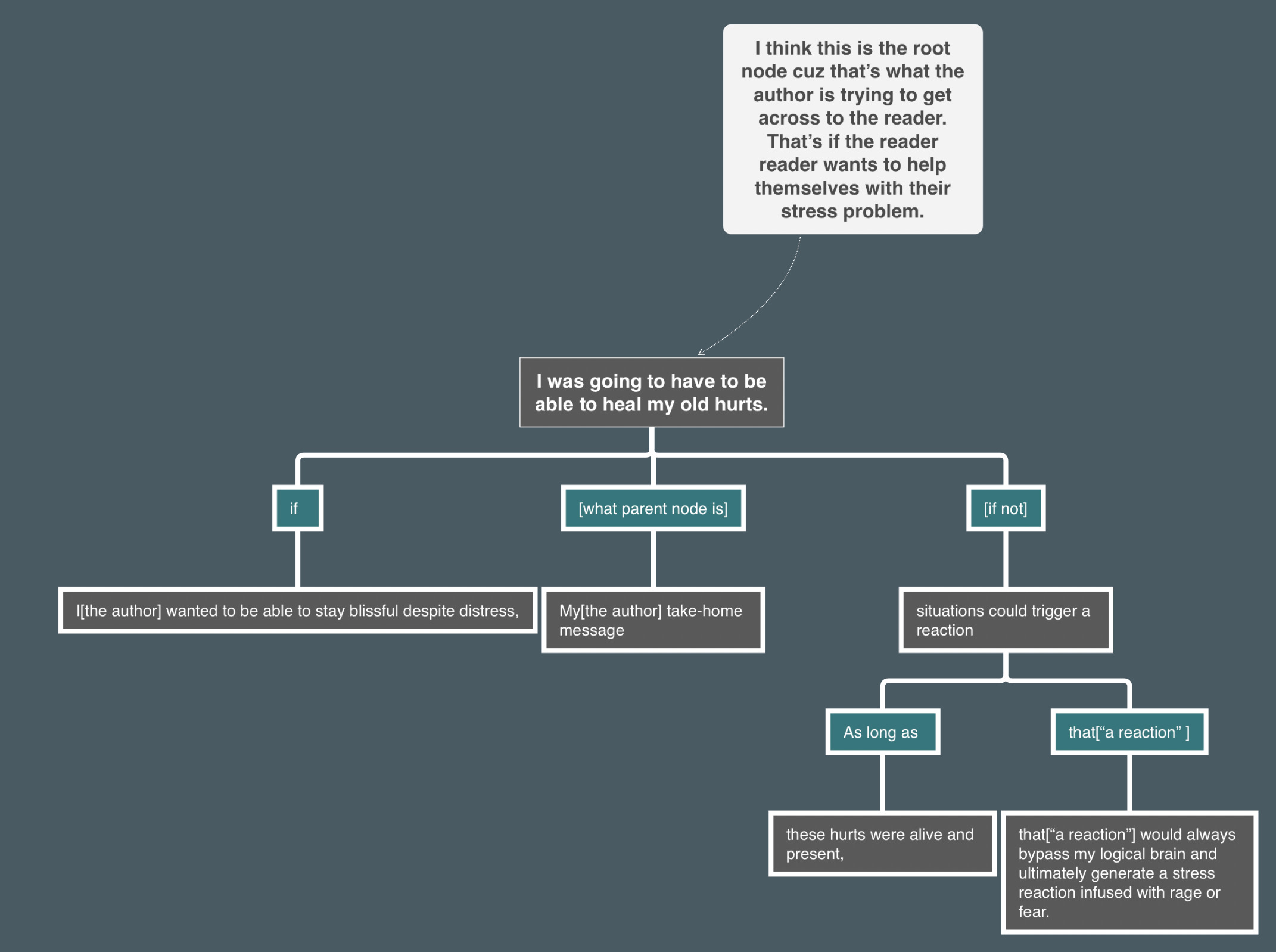
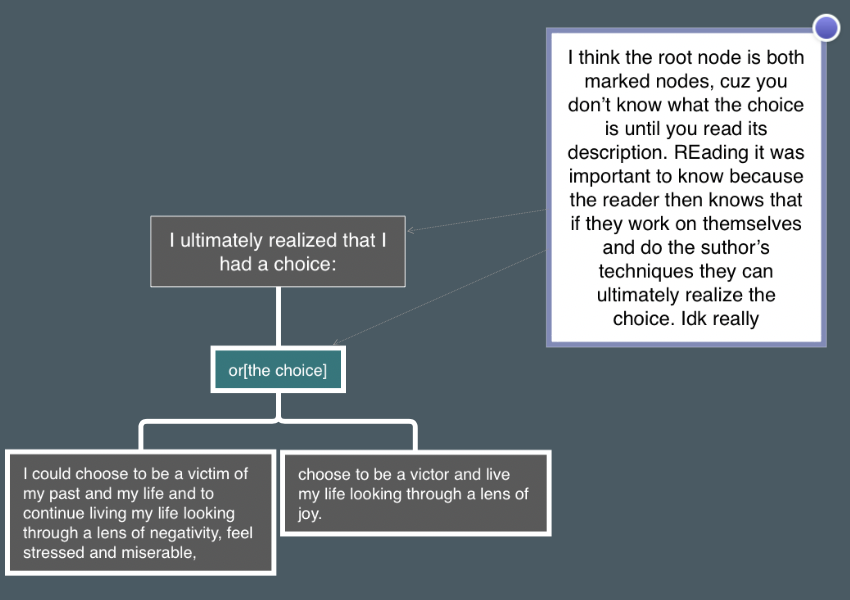
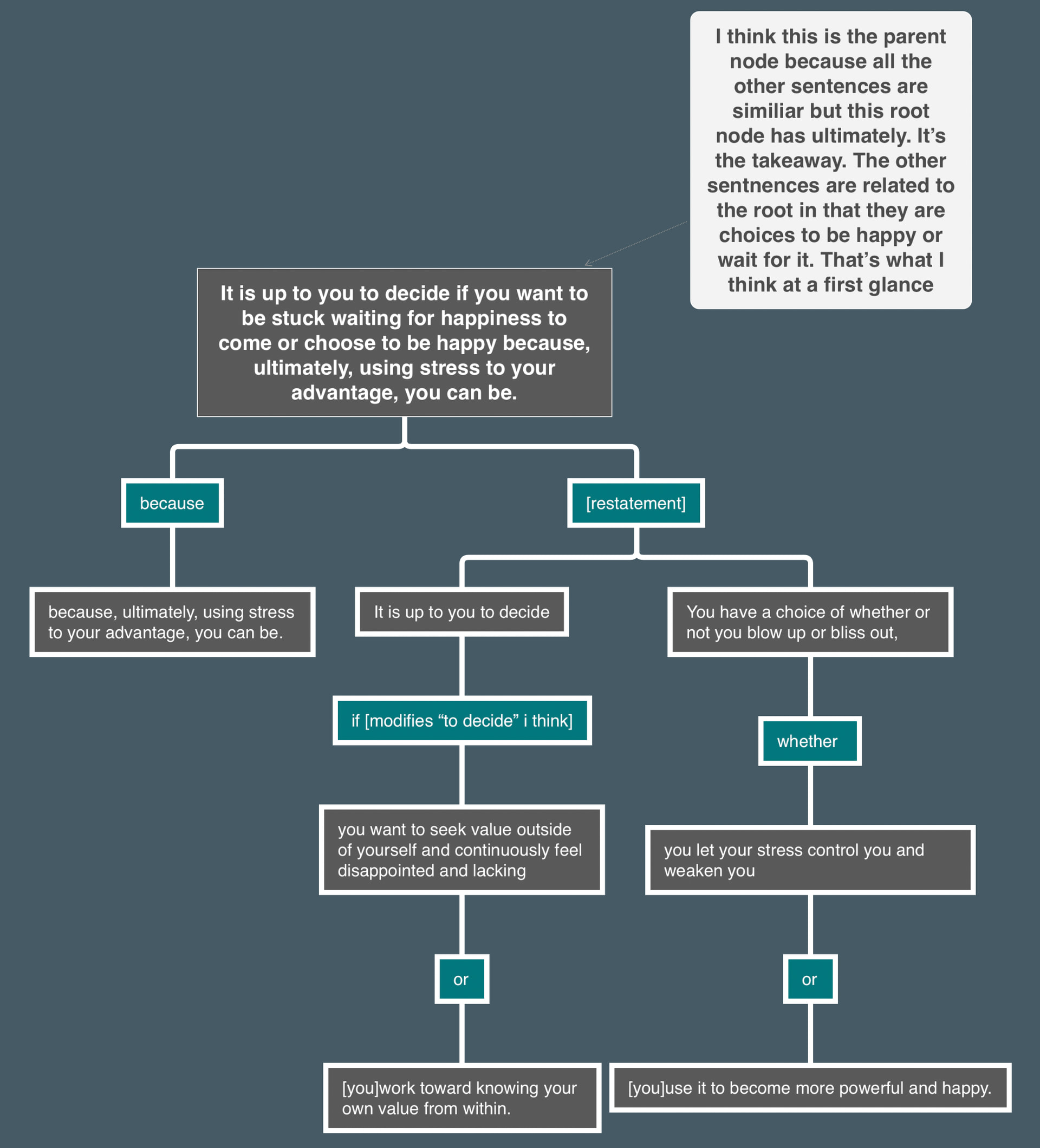
I feel like i need work on the relationship aspect of making the nodes(the nodes in blue). Like, they should be simpler using single words like “because” or “and” or “restatement”. I also think tho the words for relationship nodes are indirect, so you gotta figure out what it is. That makes things more difficult
3rd paragraph:
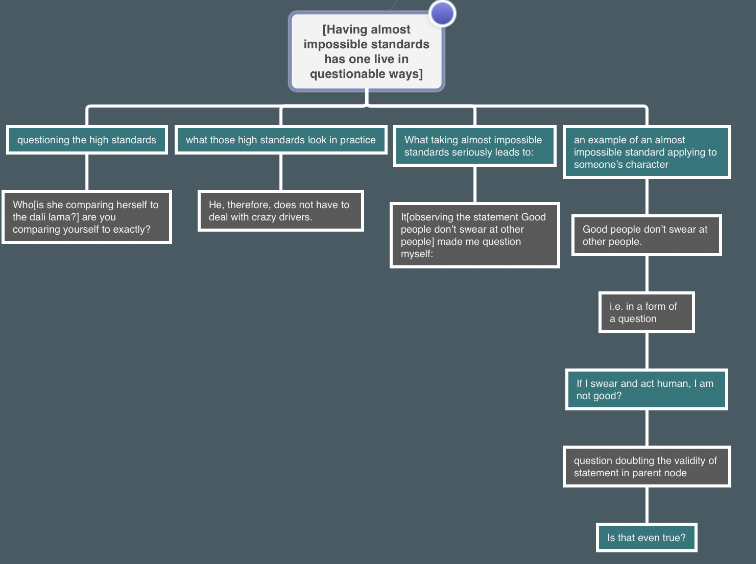
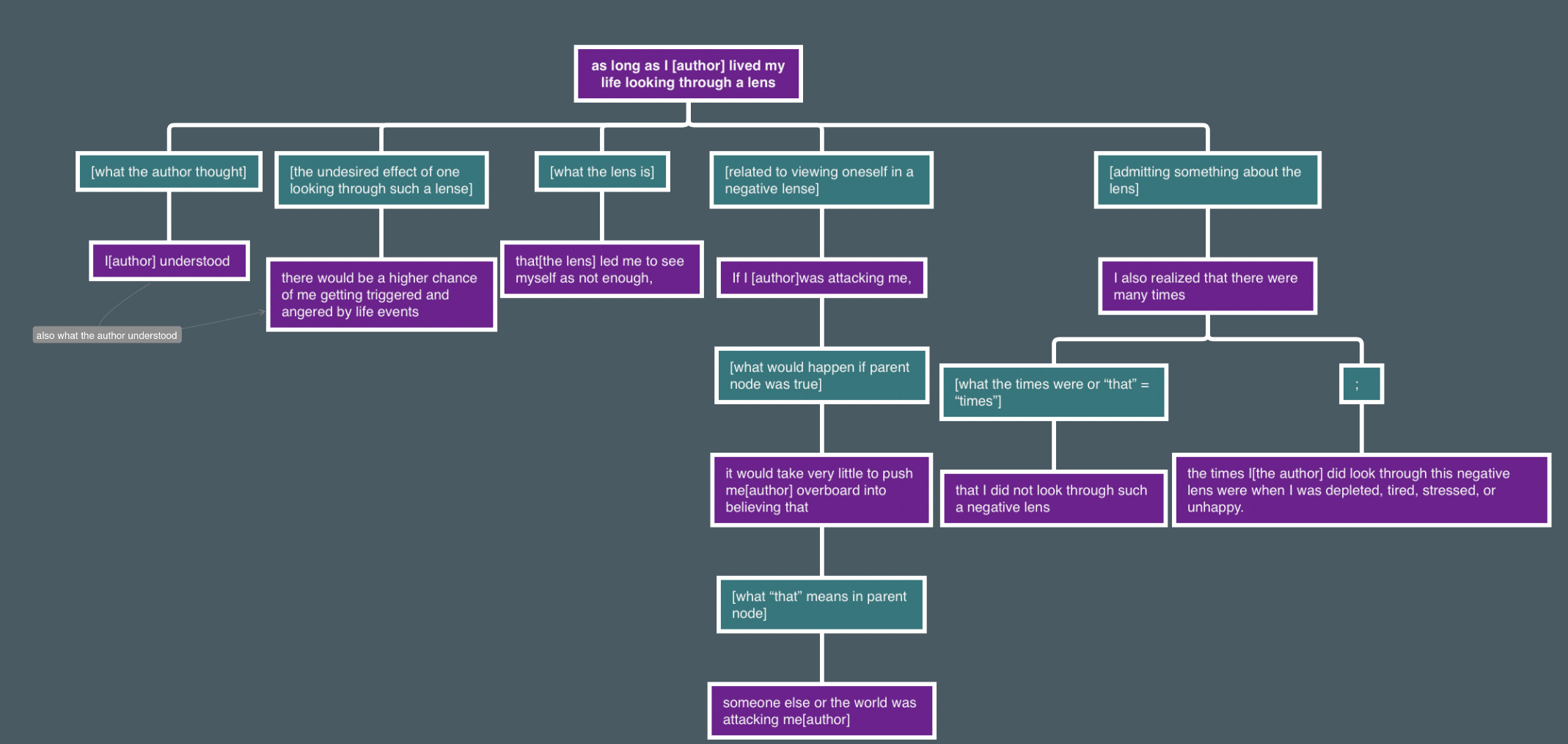
Within a few minutes of blowing up, I started to feel guilty. I thought to myself, How could you do that? You are a spiritual person and a meditator and you just lost it. Good people don’t swear at other people. The Dalai Lama never would have behaved this way! It was the last line about the Dalai Lama that stopped me in my ranting and raving tracks. I actually started laughing as my thoughts switched to, Who are you comparing yourself to exactly? Not only are you not his Holiness, but you have no desire to be him either. In addition, the Dalai Lama doesn’t drive. He has drivers. He, therefore, does not have to deal with crazy drivers. Lightening up with laughter also allowed me to take a momentary step back from my anger and observe the statement Good people don’t swear at other people. It made me question myself: What does that mean? If I swear and act human, I am not good? Is that even true?
Paragraph tree attempt( pdf link):
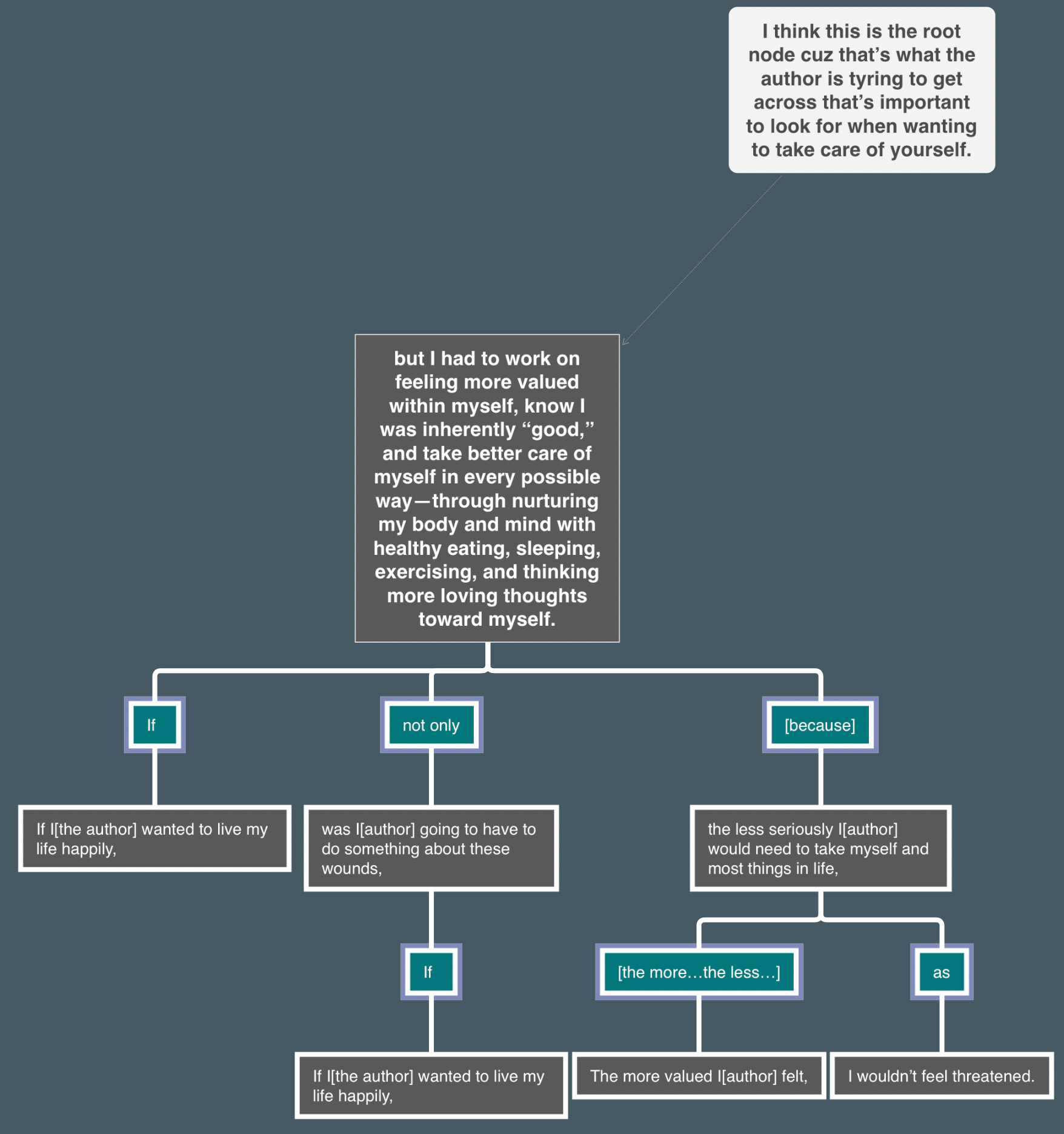
It was a big paragraph, and it made me think I should work on smaller ones first before doing one so big. I tried separating the important details from the unimportant ones, and the tree above is mostly what i got for the important ones. It was hard to tell what was an important detail so that’s something to work on. I noticed a lot of questions and events that happened in the paragraph. That’s different from direct claim+reasons kind of paragraph.
Paragraph 4:
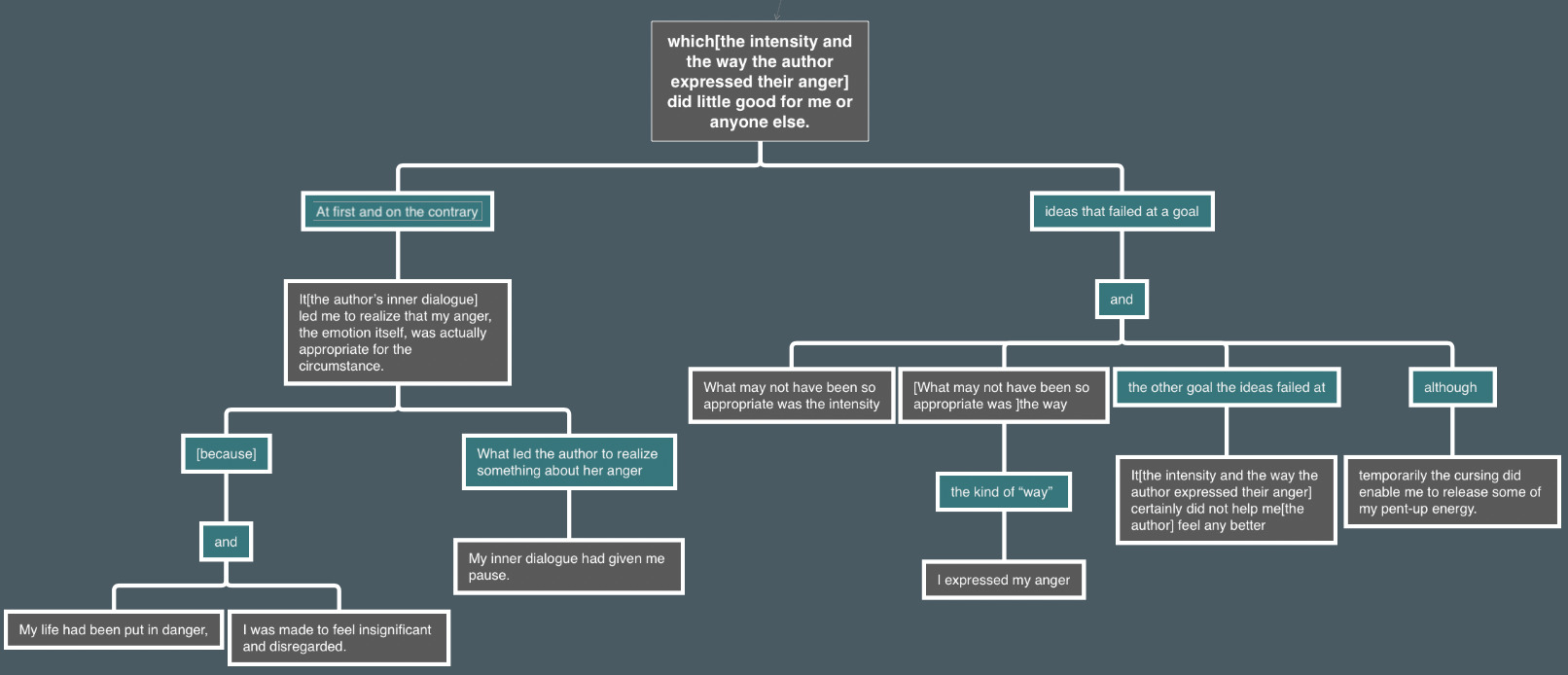
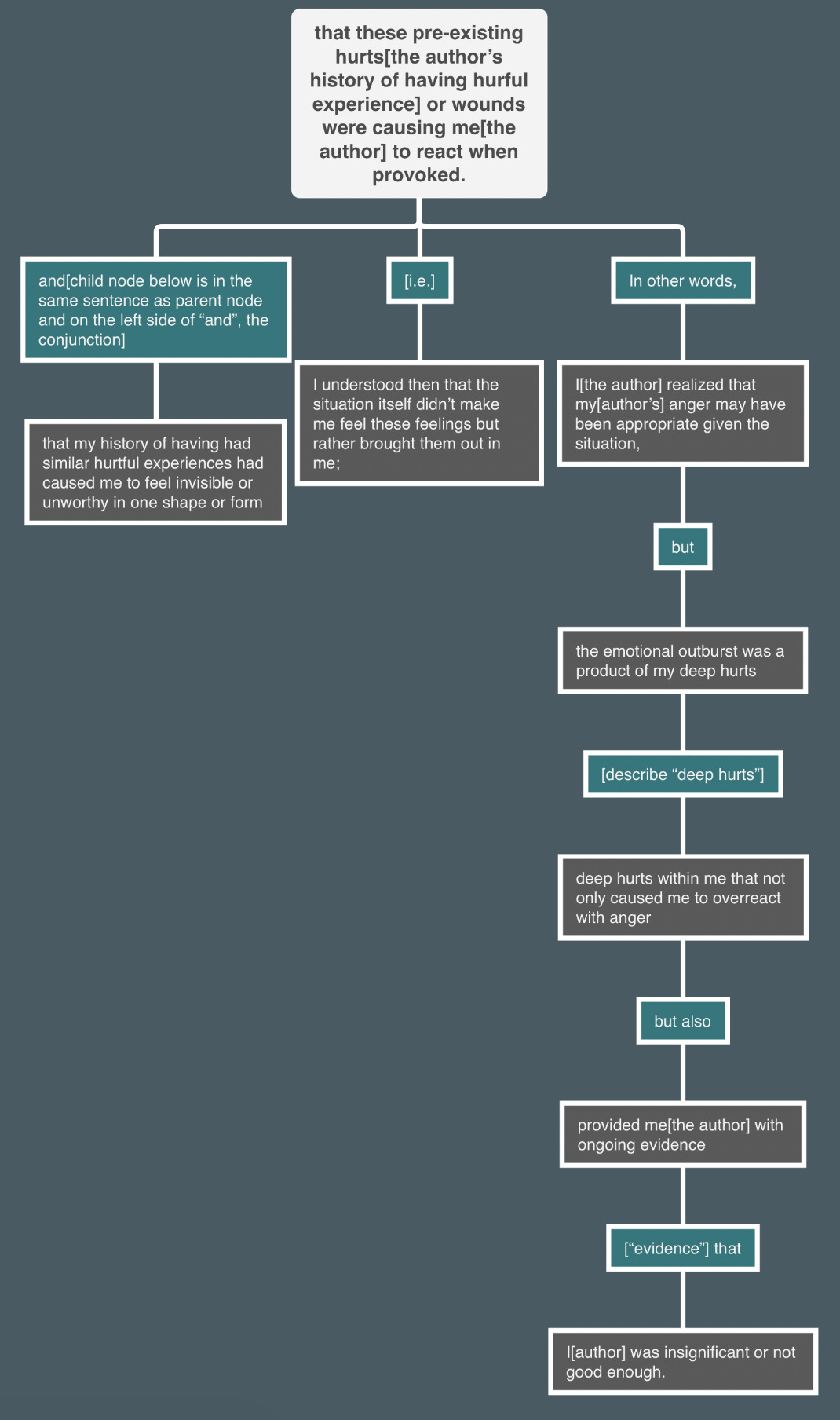
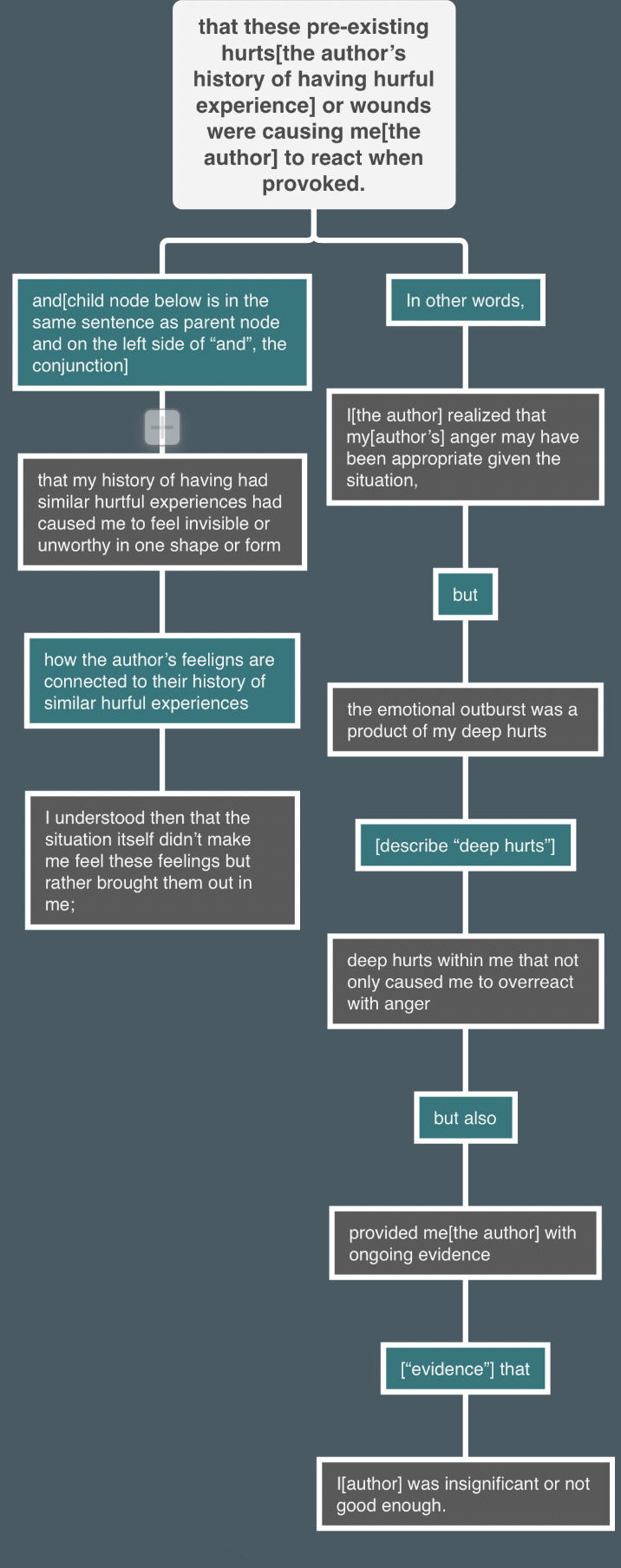
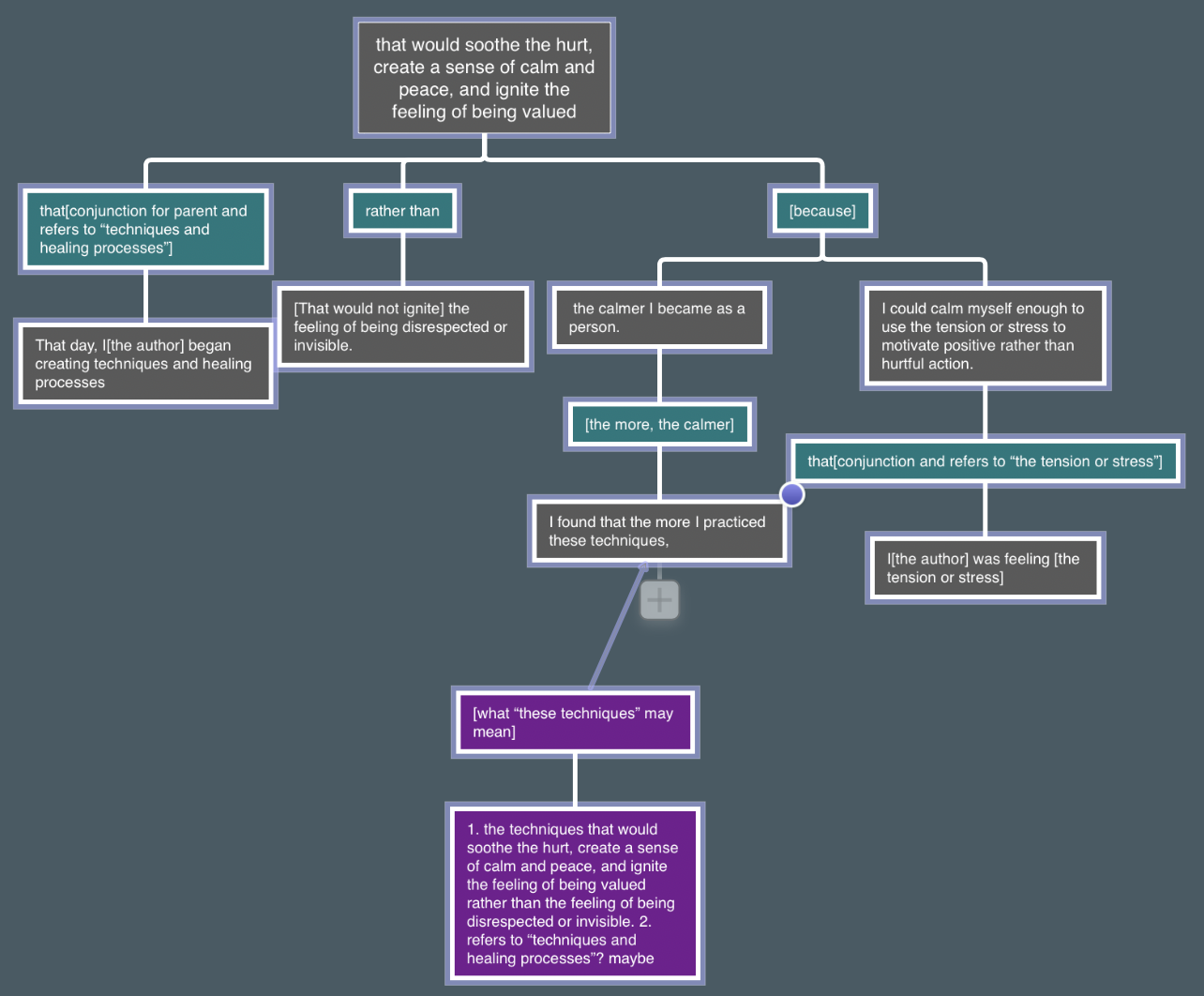
My inner dialogue had given me pause. It led me to realize that my anger, the emotion itself, was actually appropriate for the circumstance. My life had been put in danger, and I was made to feel insignificant and disregarded. What may not have been so appropriate was the intensity and the way I expressed my anger, which did little good for me or anyone else. It certainly did not help me feel any better, although temporarily the cursing did enable me to release some of my pent-up energy.
Paragraph tree(pd link ):
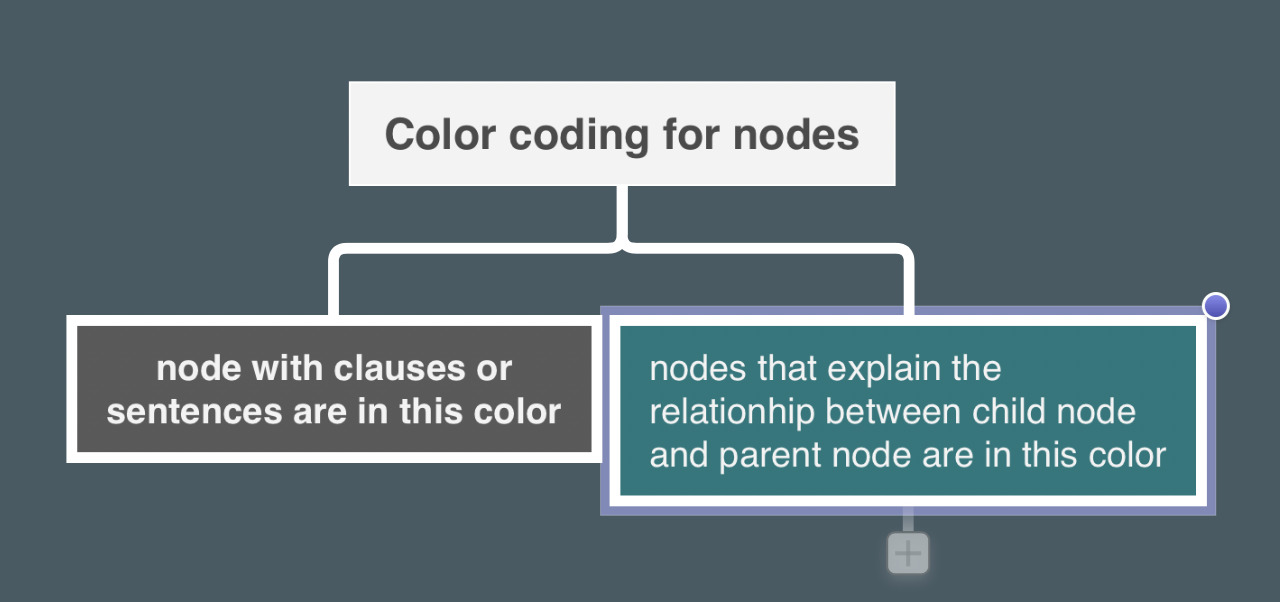
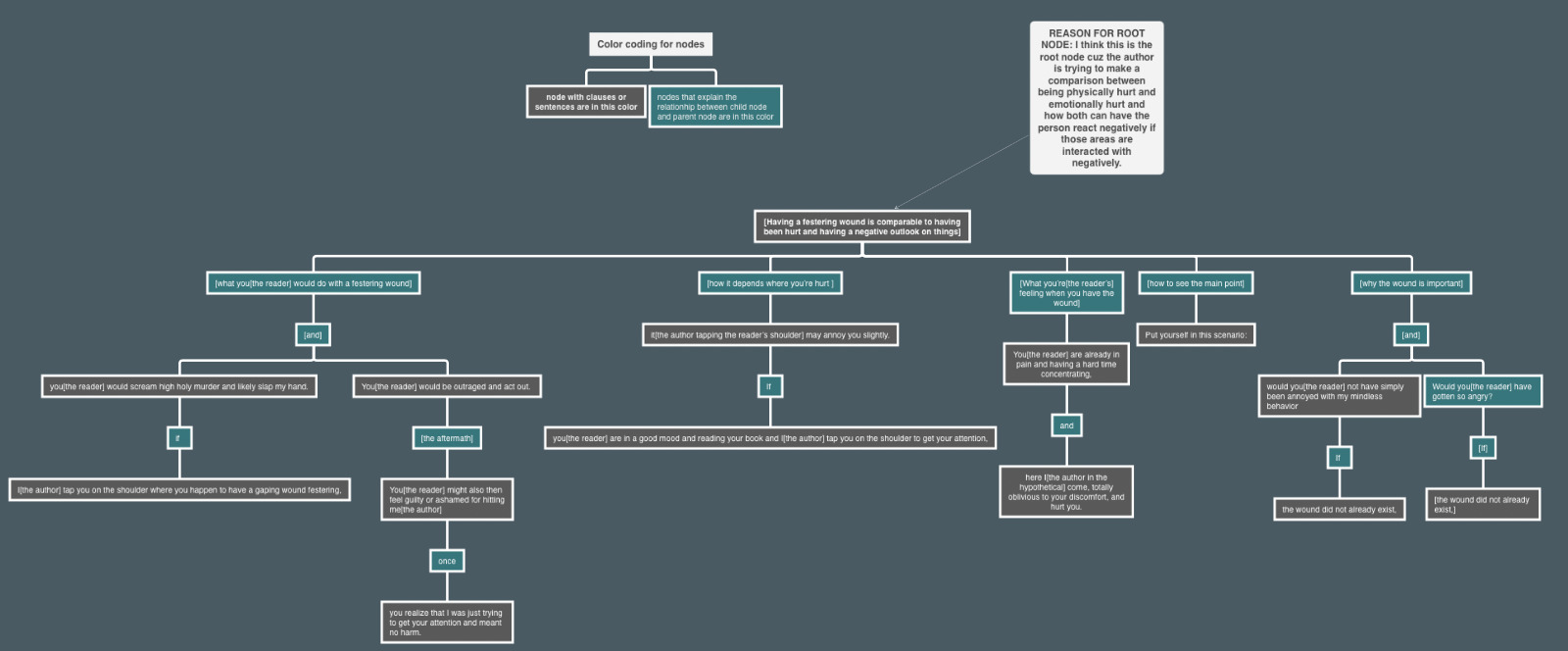
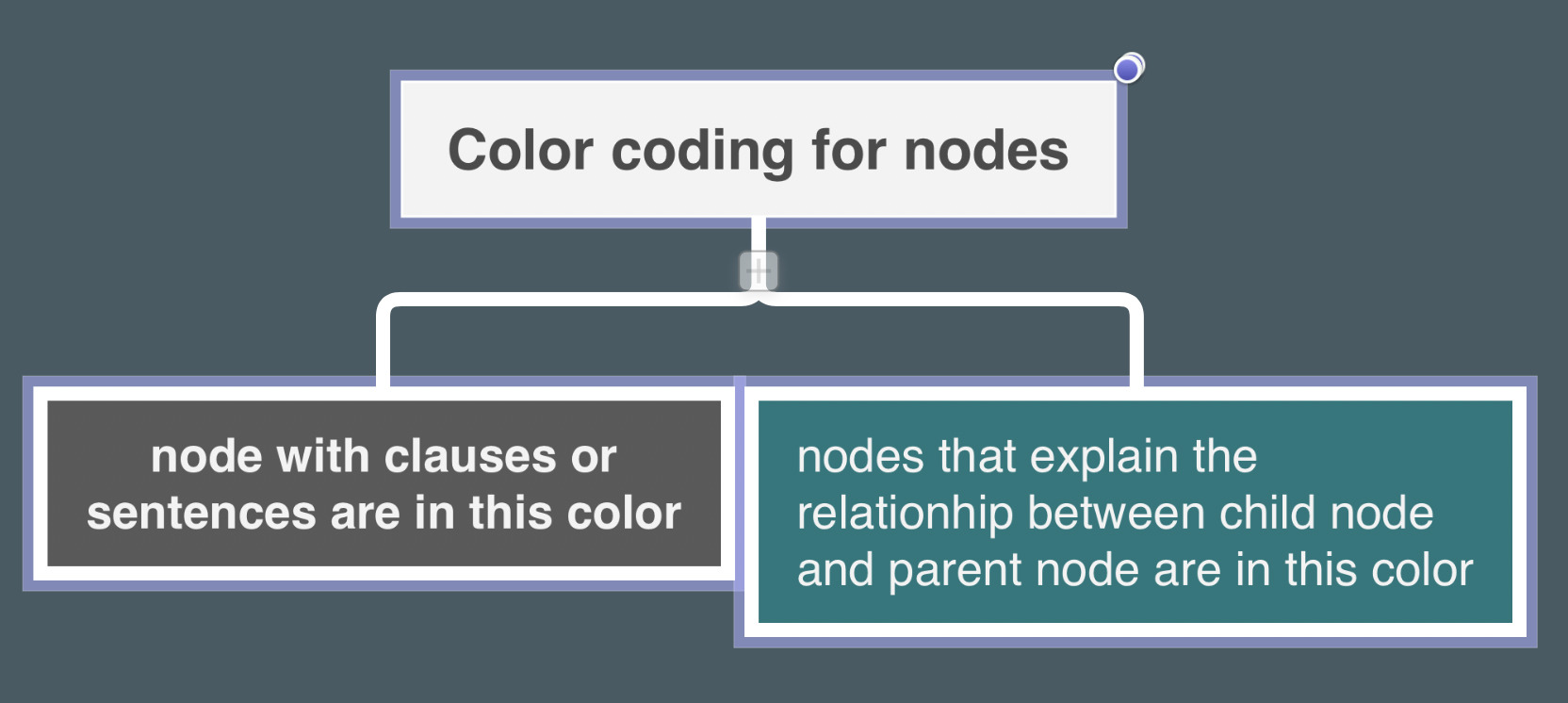
Edit: Here are the color codes for nodes: